


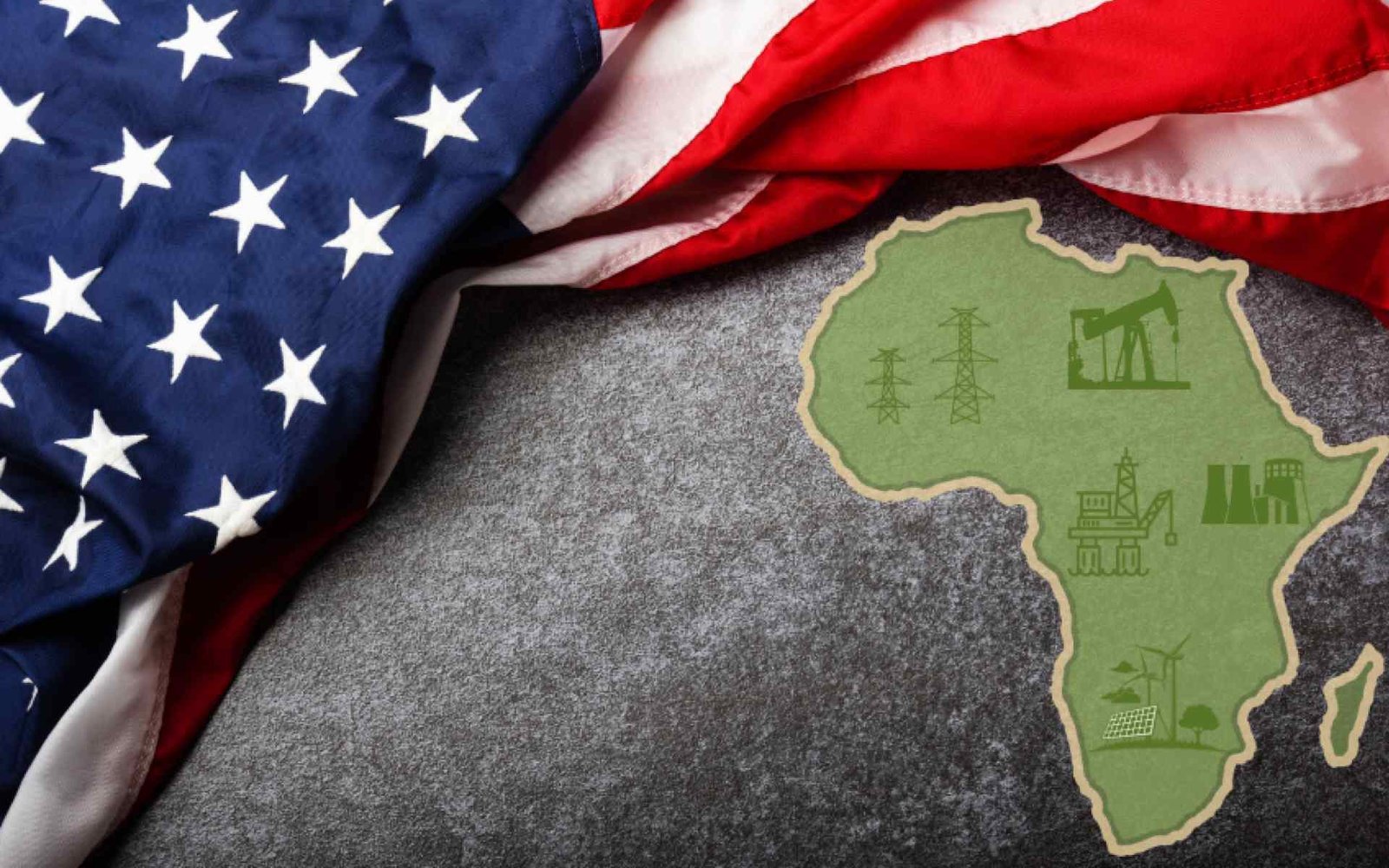
President Trump reauthorized AGOA to exercise access and facilitate strategic trade discussions.
AGOA extension will support South Africa’s exports, but infrastructure, tariffs and the short term will limit the impact.
This renewal will foster Africa’s industrialization, regional supply chains, value addition, and strategic U.S.-Africa trade connections.
US President Donald Trump has signed legislation reauthorizing the African Growth and Opportunity Act (AGOA), restoring preferential market access to eligible African countries for the first time in five months. The update provides temporary certainty for exporters, while restarting discussions between the United States and Africa over tariffs, geopolitics, and supply chain realignment. The prevailing question now is whether this extension can provide more than relief and catalyze long-term industrial and strategic change.
Energy Capital & Power first reported on the strategic implications of the renewal in late January, highlighting the narrowing room for action. As AGOA enters its final year of authorization, the real test is whether Africa and the United States can transform temporary relief into a permanent economic partnership.
South Africa at the forefront of AGOA return
For South Africa, the extension of AGOA until 31 December 2026 provides immediate relief to manufacturers and agricultural exporters who rely on duty-free access to the US market. Auto exports, citrus, wine and processed foods are expected to benefit, although growth remains constrained by a separate 30% tariff imposed by the United States in 2025. Industry groups view the extension as a maintenance pattern rather than a reset.
Infrastructure and logistics capacity will determine how much benefit South Africa can gain from the final year of AGOA. Although port backlogs and rail inefficiencies remain, the stabilization of electricity supply in 2025 has improved prospects for industrial planning. Export-oriented manufacturing industries have cautiously resumed investment decisions, but many companies remain hesitant to inject capital due to policy uncertainty and the short extension period.
In energy and critical minerals, AGOA is increasingly seen as a strategic instrument rather than a trade reference. The United States sees preferential access as a lever to diversify its supply chain from China, particularly for clean energy inputs. South Africa holds some of the world’s largest reserves of platinum group metals and manganese, but limited downstream processing and infrastructure bottlenecks limit impact, leaving the minerals a strategic but secondary consideration.
AGOA’s far-reaching impact on Africa
AGOA’s renewal will strengthen Africa’s role in U.S. trade and development policy at a time of increasing global competition across the continent. Currently, 32 countries benefit from duty-free access for more than 1,800 products, supporting manufacturing, agro-processing and light industrialization. However, this short extension underscores the US government’s intention to reevaluate eligibility criteria and unlock mutual market access.
Industrialization and value addition are becoming central to AGOA’s strategic realignment, as African countries are encouraged to move beyond raw material exports to higher-value manufacturing, from textiles and processed foods to renewable energy components. U.S. policymakers see this as a way to create mutually beneficial trade while promoting local jobs, technology transfer, and resilient supply chains that reduce over-reliance on the single market.
“African resources need to partner with American innovation,” said Dr. Guevera Yao, deputy director of the U.S. Africa Business Center at the U.S. Chamber of Commerce, at the 2025 U.S.-Africa Energy Forum in Houston. “We must create the right environment for American capital to flow. Capital follows trust, and trust follows policy.”
Regional supply chains are also emphasized, with intra-African trade seen as complementary to exports under AGOA. Countries with complementary industrial capabilities, such as Ethiopia’s textiles, Kenya’s agro-processing, and South Africa’s automotive sector, can integrate production networks that serve both domestic and U.S. markets. This approach will strengthen Africa’s global bargaining position while supporting economic diversification and industrial resilience.
Short-term extensions of AGOA are being used to encourage investment in local processing and manufacturing capacity. As such, the United States aims to encourage African producers to capture more value domestically through a combination of duty-free access, technical assistance, capacity-building programs, and market intelligence. If successful, this could move the continent away from export dependence towards a sustainable model of industrial growth in line with global trade standards.
Can AGOA provide more than just a breather?
Extension of AGOA answers the pressing question of continuity, restores duty-free access and avoids disruption for African exporters, including South Africa. But their duration is one year, and preferential tariffs limit their transformative impact. The evolution of AGOA into a strategic platform for industrialization, energy transition and supply chain restructuring will depend on reforms, infrastructure development and sustained political will on both sides.
