


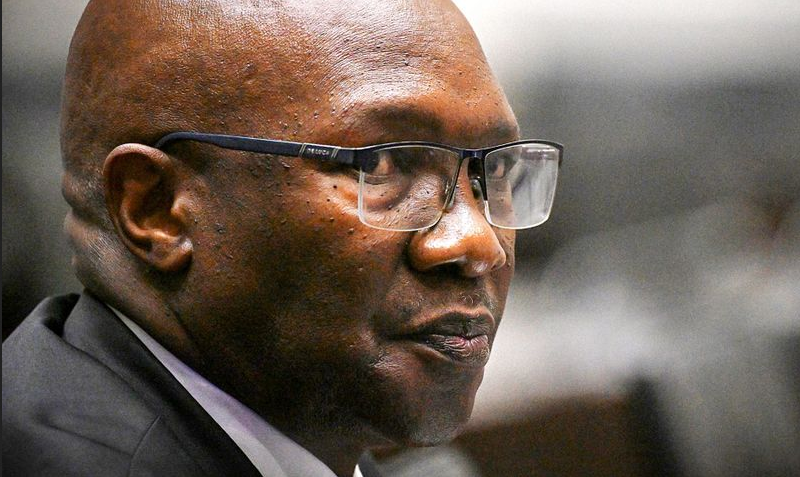
Dumisani Khumalo, South Africa’s head of criminal intelligence, says close proximity to politicians, law enforcement officers and business leaders ensures criminal cartels thrive, and also claims that almost all police officers in Gauteng work for cartels.
National Criminal Intelligence Director-General Dumisani Khumalo has claimed that based on previous threat analysis, almost all South African Police Service (SAPS) personnel in Gauteng are working for criminal cartels.
He testified on Thursday, January 15, 2026, before a parliamentary select committee investigating accusations that cartels known as the Big Five are infiltrating South Africa’s criminal justice system, law enforcement, politics and civil security.
Khumalo made startling confessions and allegations, including that police officers provided protection for a fee to members of criminal organizations.
He also detailed issues related to two related but separate high-level police operations focused on criminal suspects Katiso “KT” Molefe and Vusimuzi “Kat” Matlala.
Mr Molefe and Mr Matlala are each facing criminal charges of murder and attempted murder, and are accused of being members of the Big Five cartel (although they have not been charged in this case).
On December 6, 2024, as part of a careful police investigation, Moolfe was arrested and Matalala was brought in for questioning (he was arrested a few months later).
These police operations required special support from members of the KwaZulu-Natal Political Killings Task Team (PKTT) to the Gauteng investigation team, where Mr Khumalo was managing the project.
“Cartel Police”
Mr Khumalo testified that through an assessment of the threats and risks involved, “almost the entire SAPS in Gauteng was found to be working for cartels”.
He said there had been interference in the Moolfe arrest operation, some of which came from the police’s national organized crime chief, Major General Richard Siviri.
The force falls under the jurisdiction of the National Crime Commission chairman, Lieutenant General Shadrack Sibiya, who was previously suspended as a result of this entire scandal.

Mr Sibiya previously told parliament he was not corrupt.
Mr. Sibili has not had the opportunity to formally respond to the allegations against him.
In his testimony on Thursday, Mr Khumalo said that as far as he was aware, the investigation into the allegations against Mr Sibili was progressing smoothly.
He also testified that the name of the absent Minister of Police, Senzo Mchunu, happened to be mentioned in both operations on December 6, 2024.

“Mention of Mchunu”
Molefe’s operation raised questions about whether the police officers who were there to detain him were aware that he was a “friend” of the minister. Mchunu was still in that position at the time.
Meanwhile, Mr Khumalo said Mr Matlala appeared to be planning to meet Mr Mchunu when police searched his home.
It was previously reported that Mr Matala, who once made a fortune but has now canceled a R360-million contract with the police, was suspected of funding Mr Mchunu’s political aspirations, which Mr Mchunu denied.
The political police scandal broke in July last year when KwaZulu-Natal police chief Nhlanhla Mkhwanazi first claimed that organized crime cartels were infiltrating law enforcement, politics and civil security.
Mr Khumalo is of the view, based on his testimony on Thursday, that this is clearly what happened.
He previously testified about cartel activities at the Madranga Commission of Inquiry, a hearing held parallel to the special commission.
But testimony before Congress on Thursday was even more detailed.
syndicate, police, protection money
“The key to any syndicate’s survival is its proximity to politicians, law enforcement officials and business leaders – close relationships and connections,” Khumalo said.
“This gives syndicates access to sensitive information, access to investigative processes and circumstances, and ensures that they are always in a position to manipulate or obstruct legal proceedings.”
He added: “What makes it even more difficult these days, especially within SAPS, is that we have syndicate members within our ranks…”
“Offering protection for a fee from SAPS has been a career-long career. I don’t know if that constitutes extortion…
“It is true that (this) is only being done to sustain or protect the activities of the syndicates and these professional criminals.”
Mr Khumalo told the Select Committee that organized crime cartels have criteria that potential members must meet.
He said this includes:
• Be a career criminal who has graduated from law violations such as robbery and has more serious incidents. These fraudsters had to show that they were breaking the law with impunity for more than half of the time. “They should have a proven track record.” • Owning multiple companies registered both domestically and internationally – this made it easier to move “goods” and “allow for rapid money laundering.” This also paved the way for “tenderpreneurship” to illegally enter into government contracts. • Because having dual citizenship means they and their “goods” can move more easily across borders. • Provide access to firearms, including the “easiest route” through private security companies. (Matlala was a director of a security company.)
Thursday’s Select Committee proceedings focused on Mr Mchunu’s actions at the end of December 2024.
wrong identity
On the last day of that year, Mr Mchunu, then in his capacity as Minister of Police, issued controversial directives to dissolve KwaZulu-Natal’s PKTT and freeze the filling of vacancies in the Criminal Intelligence Unit.
Mr Mchunu has previously said he acted in good faith to ensure that police resources were used effectively, but refuted accusations that he was influenced to issue the directions because some criminal suspects believed it would benefit them.
Testifying about Mchunu’s instructions, Mr Khumalo said on Thursday: “In my view, this letter was supposed to be a personal letter to myself.”
Read more: Mchunu “unlawfully” usurped power from Masemola in political killing case, Madranga commission hears
As Mr Mkhwanazi claimed in front of him, Mr Khumalo believed that the order to disband PKTT was a “misperception”.
This is because the Gauteng cartel suspects appear to have believed that PKTT was investigating the case.
However, what was actually investigating them was another unit with the help of PKTT members. It was this unit that policed Molefe and Matlala.

Accusations based on false information
Earlier on Thursday, the focus was on what Mr Khumalo described as opposition to his appointment as head of crime intelligence at the end of 2022.
For decades, accusations of infighting, corruption and slush funds surrounded the force.
Khumalo testified on Thursday that resources were being misused even after he became head of crime intelligence. He said plans to correct this resulted in incorrect information being used against the force.
For example, “competent” senior executives were identified, transferred, and promoted to implement the new performance plan. Mr Khumalo said this led to him being unfairly accused of appointing someone who was aligned with him.
He said that after every decision was taken to improve the force, misinformation was spread on social media and print media.
He mentioned another example where state vehicles were removed from senior management and redistributed to operational level executives as needed.
Mr Khumalo said misinformation “started flying around” that crime vehicles were “gathering dust” and were not assigned to members of the force.
He said the other “well-known misinformation” was that informants were being paid just R3,000, and this story surfaced after control measures regarding informant pay and remuneration were introduced.
Read more: Khumalo arrested — police warn that sweeping criminal information will spark state-capture-style backlash
In June last year, Mr Khumalo was arrested along with six colleagues on suspicion of fraudulent appointments. They denied the charges.
It is alleged that his arrest was part of a plan to thwart certain Crime Intelligence Bureau investigations and protect criminal suspects.
Mr Khumalo was removed as head of the criminal intelligence unit following his arrest, but he reportedly returned late last year.
As for Thursday’s Select Committee proceedings, committee members were slow to begin questioning Khumalo’s testimony and related issues.
Asked about the Big Five cartels, he said he was aware of their existence but could not provide a profile of all those involved as the investigation was ongoing.
He claimed so far that Mchunu had indirect ties to the cartel and that the police minister’s political comrade Brown Mogutoshi, who was also implicated in the scandal, was a “cheerleader” for the cartel.
Mr Khumalo is expected to continue answering questions from MPs on Friday. DM
In an age of information overload, Sunrise is the Namibian newspaper’s morning briefing, delivered Monday to Friday at 6am. We offer a curated overview of the most important stories of the past 24 hours, sometimes with a light and witty touch. This is an essential way to stay informed. Subscribe to our newsletter and join our community.

Namibians use AI tools to help improve quality, accuracy, and efficiency while maintaining editorial oversight and journalistic integrity.
Stay up to date with The Namibian, your trusted source of journalism. Get in-depth reports and opinions for just N$85 per month. Invest in journalism, invest in democracy –
Subscribe now!
