


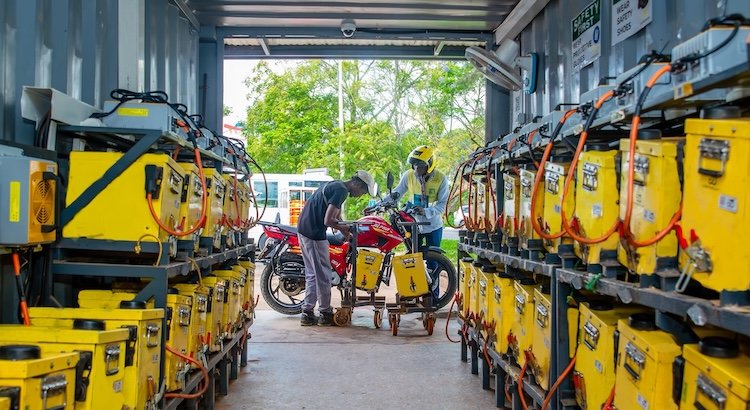
Ampersand Energy has taken a decisive step towards reshaping Africa’s electric mobility landscape by opening up its battery exchange network to third-party electric vehicle manufacturers, starting with a ground-breaking partnership with Wylex Mobility. This move positions Ampersand not just as an electric motorcycle manufacturer, but as a key energy provider for Africa’s rapidly growing commercial two-wheeled transportation market.
Founded in 2019, Ampersand has built its reputation through deep vertical integration. The company designs and builds electric bikes, develops its own batteries, operates swap stations, and runs the software layer that connects the entire system. This end-to-end control helped solve persistent challenges faced by many African EV startups: unreliable batteries, short vehicle lifespans, and costly downtime for riders whose livelihoods depend on daily uptime.
After six years of research, deployment, and scaling, Ampersand is now intentionally separating out the most valuable part of its business: its energy infrastructure. By opening up the battery and exchange network, the company is betting that mass adoption of electric bikes in Africa will be driven by a shared, reliable energy system rather than proprietary hardware.
Ampersand CEO Josh Whale said: “This is a landmark moment for Africa’s power transport sector.” “We have built a world-class energy infrastructure that is open to any vehicle partner that meets our quality standards. Ampersand is the first and only company in Africa to offer an open battery exchange network.”
Wylex Mobility is an established electric motorcycle manufacturer with almost 30 years of engineering experience and is the first external partner to connect to Ampersand’s network. The Wylex motorcycle is designed for commercial use in Africa and features an 8,000W motor, a reinforced extra-long seat and a 200kg payload capacity. After passing Ampersand’s rigorous quality and durability tests, the bike will be deployed to Ampersand’s exchange network across East Africa.
Under the partnership, Ampersand will supply batteries, swap access and energy software, while Wylex will focus on vehicle manufacturing. The bikes will be assembled in Nairobi and distributed through existing asset financing partners, lowering the barrier for riders to switch from petrol-powered bikes.
This collaboration creates an unusual but intentional dynamic. Ampersand’s own Alpha bike will directly compete with Wylex bikes on the same infrastructure. Whale describes this as healthy competition, arguing that passengers will benefit from more choice while using the region’s most reliable energy network.
“Customers want more motorcycle options, but they still want to stay in our network for reliability reasons,” Whale said. “It tells you where the real value is.”
The scale of that value is important. Ampersand currently performs more than 20,000 battery swaps per day across Kenya and Rwanda and has powered more than 400 million kilometers of travel. Each replacement costs about $2 for a range of about 80 kilometers, reducing fuel costs by about 35% and significantly increasing take-home pay for passengers.
The opportunities in Africa are enormous. It is estimated that there are more than 27 million motorcycles in sub-Saharan Africa, most of which are used for commercial transportation. In Kenya alone, electric motorcycles will account for more than 7% of new motorcycle registrations in 2024, and this number is expected to rapidly increase as energy infrastructure improves.
Ampersand’s goal is to build 50 to 60 strategically located exchange stations in each major city, each capable of serving thousands of passengers. The company believes that by being located at the center of the energy layer, it can accelerate electrification on a continental scale.
“The bike energy business in Africa is likely to be much larger than the bike business itself,” Whale said. “The more great bikes riders have to choose from, the faster the market will grow, and each new bike strengthens the system.”
With its open network strategy, Ampersand may have just defined the blueprint for the future of electric mobility in Africa.
