


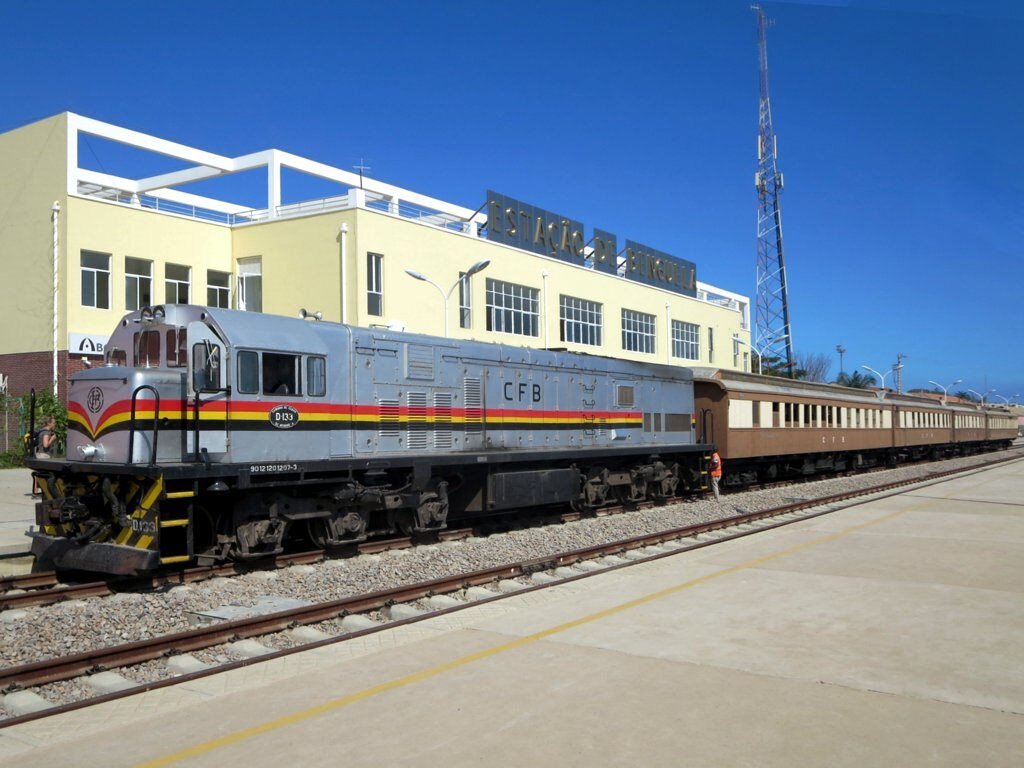
The Angolan government plans to begin construction in 2025 on a 260km branch of the Benguela Railway (CFB) network, linking Luena, the capital of the eastern provinces of Mojico and Lundasur, with Saurimo.
The 1,344km CFB line is part of the Lobito Trade Corridor, which connects the port of Lobito with Luau on the Democratic Republic of the Congo (DRC) border.
Plans for the new branch line were announced by Lunda Sur Governor Daniel Neto in early January. The governor said preliminary studies and environmental impact studies for the project have been completed.
In March 2023, President João Lorenco approved the award of a USD 1.2 billion contract for the design and construction of the Luena-Saurimo line to a team from Brazil’s local subsidiary Odebrecht Engineering and Construction International (OECI) and OECI subsidiary Bento Pedroso Constracoes (BPC).
The project is part of the government’s plan to link the Lundas region state with the port of Lobito by rail to promote the mining and agricultural sectors.
Source: Presentation, 2023
The Luena-Saurimo line is also part of Angola’s National Master Plan for the Transport and Road Infrastructure Sector (PDNSTIR) and the National Railway Network Expansion Plan, which aims to interconnect and expand the country’s three railways. These include the 479 km Luanda Railroad (CFL) line in the north, linking the port of Luanda with Malanje, the capital of Malanje province, and the 907 km Mocamedes Railroad (CFM) line, in the south, linking the port of Namibe with Menongue, the capital of Cuando Cubango province.
The Luena-Saurimo line will enable the interlinking of the CFB and CFL networks once the proposed 564km line from Marange to Saurimo is constructed.
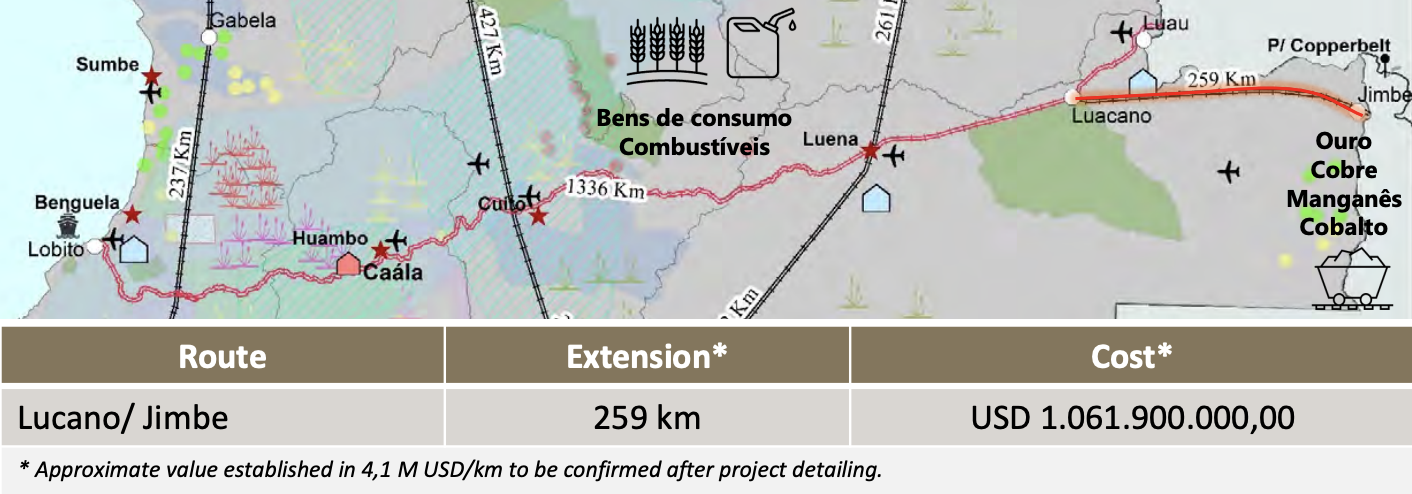
Under further expansion plans, the CFB line will be extended 259km from Luakano to Jimbe on the Zambian border under the Zambia Lobito Railway (ZLR) project.
Source: Presentation, 2023
The 780km long ZLR will connect Zambia’s Copperbelt region with Lobito Port. Construction is expected to begin in early 2026. In September 2024, the African Finance Corporation (AFC) solicited technical proposals from U.S. companies to conduct an environmental and social impact assessment (ESIA) for the plan.
Once fully developed, the ZLR is envisioned to provide a major open-access transport infrastructure linking Zambia and Angola, creating a transcontinental trade corridor from the Atlantic Ocean, through the Port of Lobito, through the Port of Dar es Salaam in Tanzania, and into the Indian Ocean.
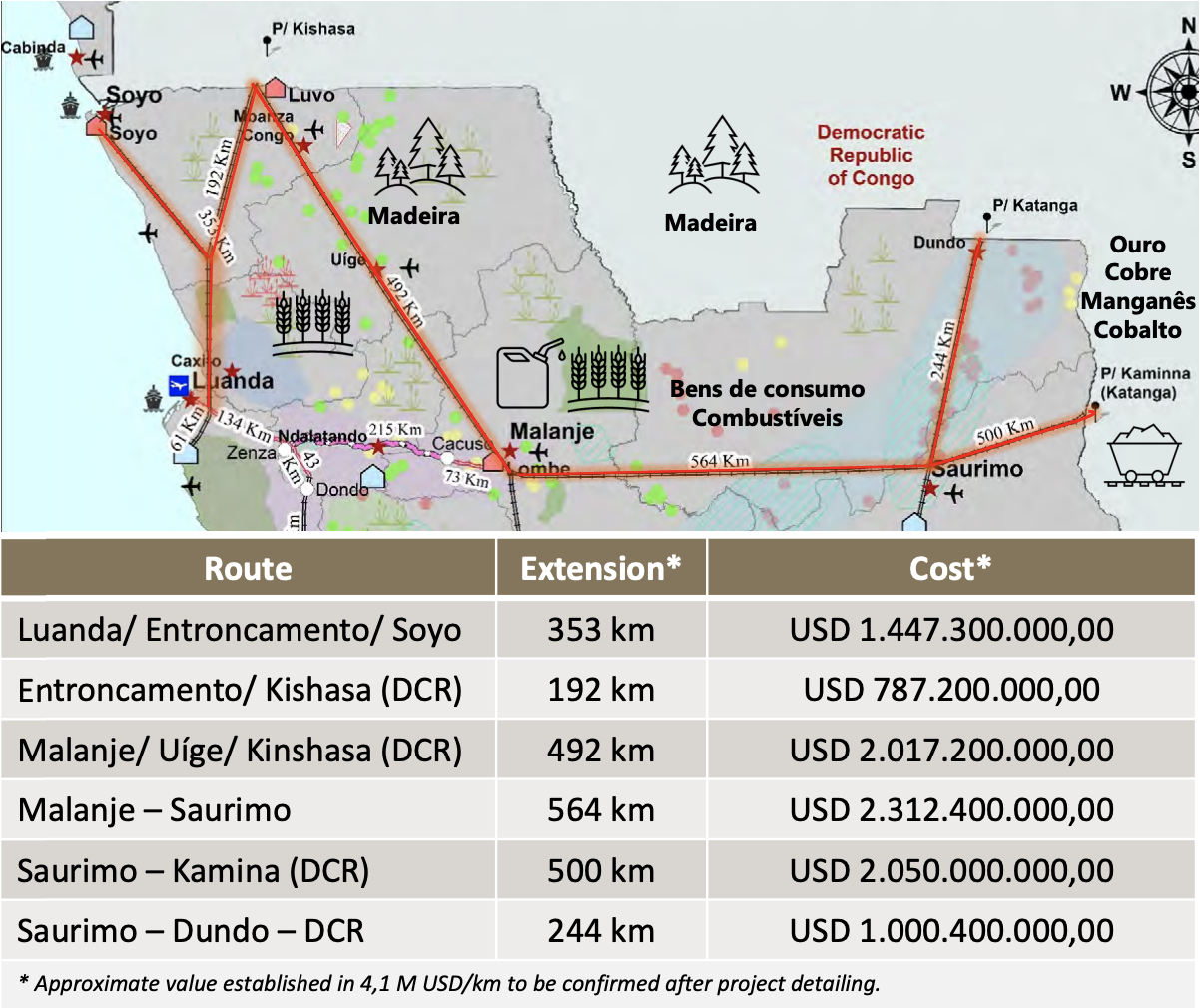
Meanwhile, the CFL network is planned to be expanded through five additional projects, totaling 2,818km to Soyo port and various points on the DRC border, including Kamina and Dando.
Source: Presentation, 2023
Interconnectivity with the DRC facilitates trade in old timber, timber, minerals and agricultural products. Additionally, the connection to the strategic rail junction Kamina will give Angola access to three DRC rail lines running through the north, west and south-east of the country, allowing it to interconnect with neighboring countries as well. The line to Katanga, part of the Central African Copperbelt region, would support mining.
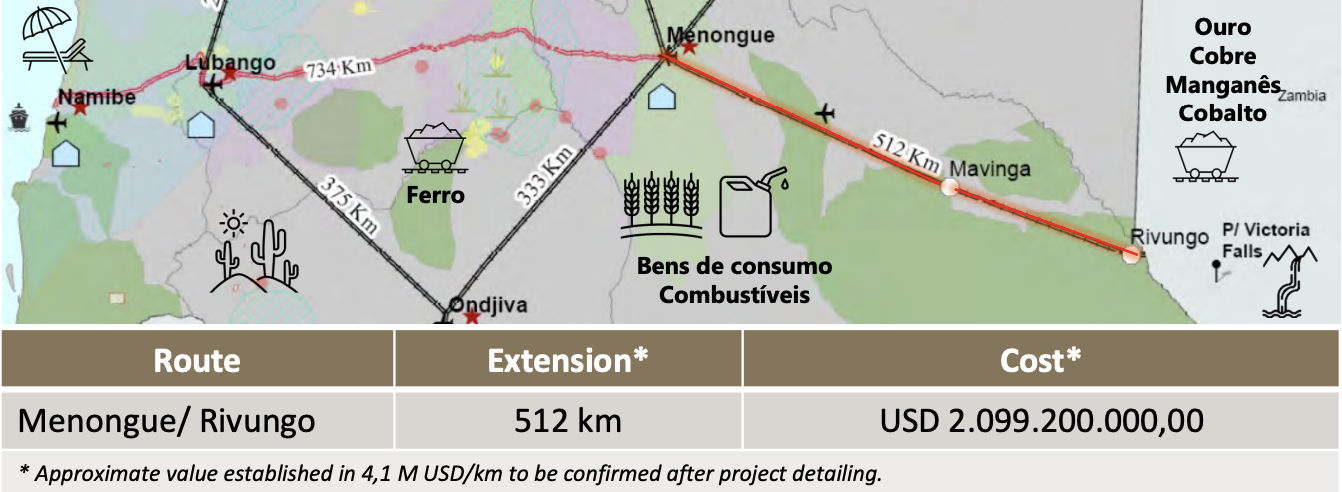
Angola’s CFM line is proposed to be extended through a 512km branch line from Menongue to Libungo in Cuando Cubango province on the border with Zambia. The aim is to enable the export of iron from Namibe and the import of minerals from Zambia. Additionally, the planned route will link Namibe with the famous Victoria Falls on the Zambia-Zimbabwe border and is considered to have great tourism potential. The line could also form part of a route to Botswana’s Okavango Delta.
The Victoria Falls connection could also give Angola access to the Zimbabwe/Zambia rail network, intermodal transport with the Trans-African road network and access to Zambia’s capital Lusaka, along with Zimbabwe, Botswana and Malawi.
Source: Presentation, 2023
Photo above: Benguela Railway (© David Stanley | Wikimedia Commons)
