


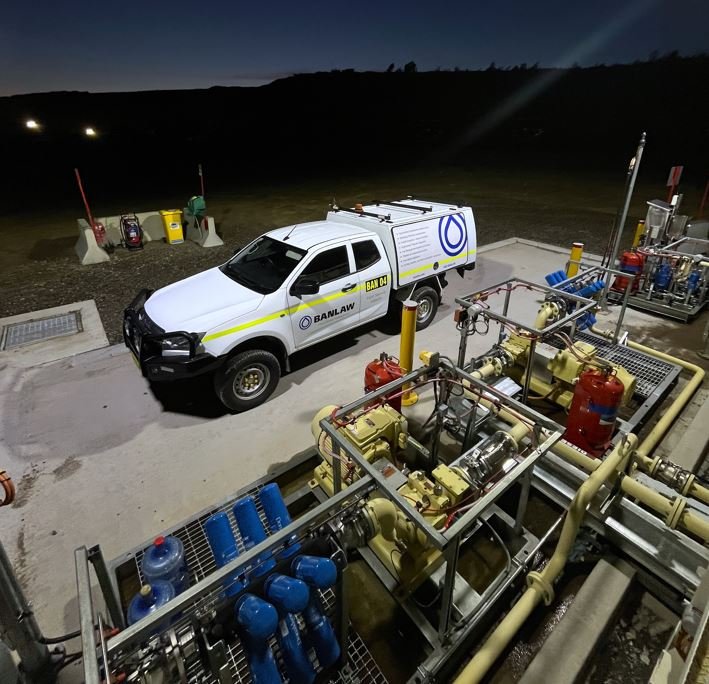
When it comes to managing high-value resources, fuel is one of the most important costs faced by industries such as mining, railways, agriculture, marine, and heavy construction. Proper fuel management goes beyond logistics and directly impacts safety, sustainability, and profitability.
To find out more, The Australian Mining Review spoke to Paul Skelton, Project Manager at Banlaw, to discuss how the company is redefining the future of fuel management systems (FMS).
Q: What makes Banlaw’s FMS better than its competitors?
Paul Skelton: “We offer the world’s only true end-to-end fuel management system, meaning hardware, software, infrastructure and support all work together seamlessly. Our system doesn’t just track usage, it integrates safety, accountability and accuracy for every liter dispensed. This helps our clients save millions of dollars while improving safety and environmental performance.”
Q: Banlaw is based in Newcastle, Australia. How do you realize your project on a global scale?
Paul Skelton: “Our head office is in the Hunter Valley, the industrial heart of New South Wales, but our reach spans the globe. We have built an international network of distributors, repairers and technical partners, enabling us to deliver and support projects in over 30 countries. Whether it’s a mine site in Africa, an island in Papua New Guinea or a rail hub in Malaysia, we can customize localized solutions that meet global standards.”
Q: What is most important to clients when implementing the Banlaw system?
Paul Skelton: “Turnkey delivery is a big factor. Many of our customers operate in high-pressure environments where downtime is costly. We provide an end-to-end solution, from designing and installing the fuel infrastructure to training staff and providing ongoing technical support. Our customers know they can rely on us for a complete solution, not just a product.”
Q: How do these systems impact real-world operations?
Paul Skelton: “Currently, Banlaw systems manage over 1 billion liters of fuel per month in 33 countries. Efficiency gains are immediate. Operators see reduced waste, improved cost control and safer handling of fuel and fluids. Our technology delivers control, confidence and tangible benefits.”
Its global capabilities have recently been demonstrated across three very different projects.
“In Madagascar, we partnered with a trusted technology partner in South Africa to ensure the delivery and use of fuel on site. At Lihir, we worked closely with the customer’s team to overcome the logistical challenges of mobilizing staff and equipment across multiple visas and entries into the island. And now, that system is available 24/7 in New South Wales. Meanwhile, Cadia pivoted from using its own personnel to hiring trusted local contractors to complete installation and commissioning.”Each project required unique requirements.”We changed our execution strategy, but the result was the same: fully operational to meet the client’s needs. It became Banlaw FMS. ”
With over 40 years of experience, Banlaw continues to lead the field of fluid intelligence. The company’s fuel management systems go beyond just moving fuel and transform the way the industry manages its most critical resources. Mr Skelton said: “It’s important that we deliver smarter, safer and more sustainable outcomes for our customers wherever in the world they operate.”
