


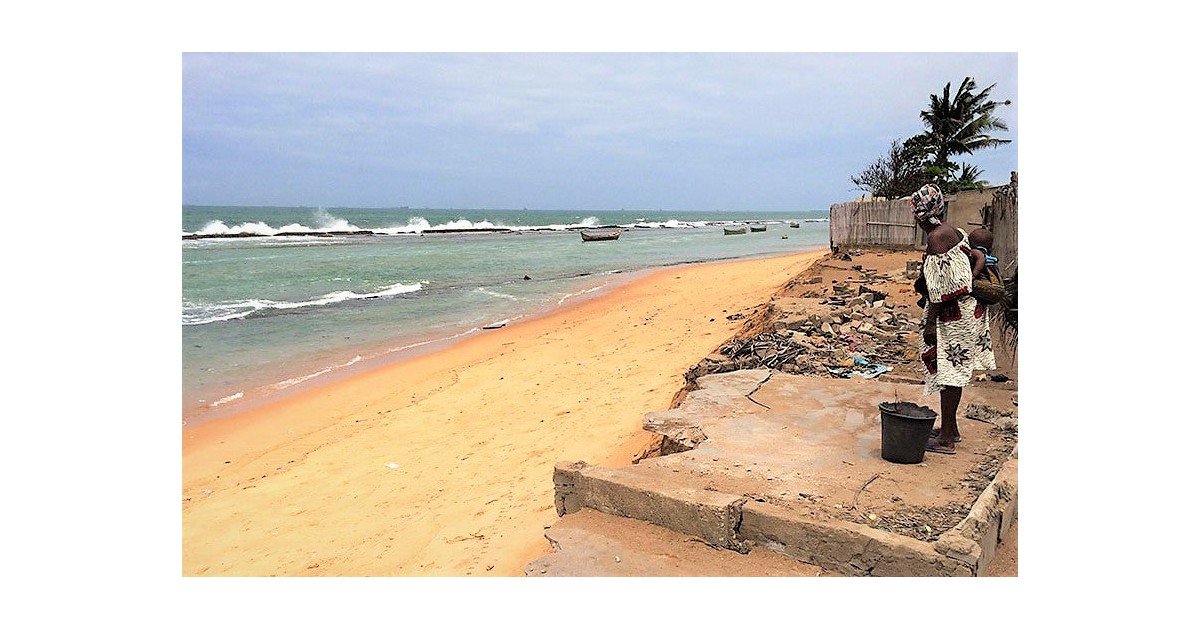

This week’s celebration of Earth Day should cause us to pause and think about the state of our planet. What weighs heavily on our minds is the degradation of West Africa’s coasts. They are literally being washed away by coastal erosion and flooding, with critical infrastructure and livelihoods being lost. Given the scale of the damage and the need for financing, contributions are needed from all key stakeholders, including the private sector.
That’s why we recently brought together the public and private sectors through the World Bank’s West Africa Coastal Area Management Program (WACA) to discuss how we can work together to combat coastal degradation, increase coastal resilience to climate change, and improve the livelihoods of coastal communities. The development of public-private partnerships (PPPs) was one of many specific examples that emerged.
West Africa’s coastal regions are home to approximately one-third of the region’s population and generate 56 percent of its GDP. Economic, demographic, and urban growth has led to significant infrastructure development along the coast. This involves land use and waste management issues, which can lead to reduced tourism opportunities, fish contamination, depletion of fish stocks, land and infrastructure loss, ocean and groundwater pollution, and possibly human deaths.
A new World Bank study estimates that environmental degradation cost the coastal areas of Benin, Ivory Coast, Senegal and Togo $3.8 billion, equivalent to 5.3% of the four countries’ GDP in 2017.
Although considered a non-traditional actor in the financing of integrated coastal zone management (ICZM), the private sector, which has built infrastructure, occupies an important geographical influence in coastal areas. As such, their activities can often have negative impacts on coastal systems. At the same time, their activities are negatively affected by natural disasters such as coastal erosion and coastal flooding, as well as by climate change.
This public-private sector dialogue was organized by WACA’s $222 million Resilience Investment Project, funded by the NDC Support Facility, the Nordic Development Fund (NDF), and the Global Resilience Reduction and Recovery Fund (GFDRR). The initiative, led by West African governments and funded by the World Bank, NDF, Global Environment Facility (GEF) and other partners, aims to protect West Africa’s coasts and build resilient coastal communities. In addition to this first regional investment project, WACA includes a platform that plans to expand its funding to $2 billion with the participation of numerous technical and financial partners.
The event, held in Côte d’Ivoire, was an opportunity for public and private stakeholders to discuss the current situation in West Africa’s coastal regions and identify key barriers to private sector involvement in the sustainable management of coastal regions.
Participants were asked to propose potential solutions to break down these barriers and enable the private sector to play a more important role in building resilience in West Africa’s coastal regions. This increased role and contribution of the private sector to ICZM activities and initiatives will not be limited to funding, but will also extend to advocacy, education, and community building.
One of the key outcomes of the dialogue was the establishment of a private sector consultative group that included CEOs and experts from companies in the tourism, ports, mining, oil and gas, fisheries, agribusiness, and transport sectors. The group will continue to discuss its role in ICZM and provide a dedicated space to explore, with WACA and other technical partners, the types of market and non-market mechanisms that can facilitate private sector financing of coastal protection infrastructure and other coastal resilience activities.
As an example, our discussions identified the need to develop PPPs and provide financial and economic incentives to companies that respect key regulations and/or wish to implement coastal protection based on rigorous technical analysis and feasibility studies, and robust environmental and social impact assessments.
WACA’s first private sector dialogue also focused on West African ports and port operators, who recognized the need to establish sub-sector working groups to assess the negative impacts of their activities on the marine and coastal environment and work together on more sustainable practices. They have already started working on a Sustainable Ports Charter.
The next challenge for public-private sector collaboration is to maintain this dialogue, involve more stakeholders, and begin to design market and non-market mechanisms to enable the flow of funds from the private sector to ICZM. There’s no time to waste. Protecting West Africa’s coastline and people’s livelihoods depends on it.
Learn more about the WACA program below and hear from the people whose coastline is being washed away before their eyes.
Related videos and blogs
West Africa: From a common coastal vision to a sustainable reality
West Africa: Tides threaten livelihoods along coastlines
Living on the edge: Dovi’s story
Senegal calls for investment in people and planet
Swallowed by the sea…where coastal infrastructure and jobs respond to climate change
In Benin, can resilient investment solutions save devastated coasts?
