


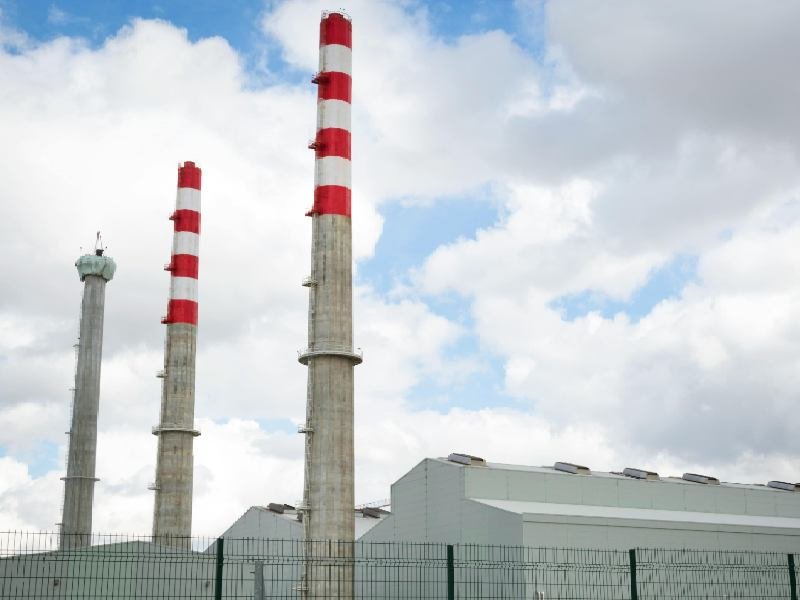
Industrial group Mark Cables has completed construction of a 200MW thermal power plant, a $213 million investment aimed at alleviating chronic power shortages in one of West Africa’s most power-constrained markets. With only 26% of the population currently connected to the electricity grid, this project directly addresses binding constraints on economic growth, while supporting the government’s 2030 electrification targets of 95% urban access and 50% rural access. The power plant not only adds power generation capacity, but also positions reliable power supply as the basis for industrial expansion, job creation and long-term development.
A step towards energy security?
The thermal power plant, which was completed in just six months, aims to alleviate the country’s electricity shortage by introducing a domestic power generation solution. In addition to this, the facility will also reduce dependence on imported electricity from Ivory Coast and Ghana through the West African Power Pool. This dependence has proven fragile, with a lack of power generation in neighboring countries leading to national power outages. Strengthening electricity sovereignty could address these supply challenges while lowering electricity prices from the current estimate of $0.23 per KWh, well above Ghana’s $0.16.
The power plant is expected to do more than just provide electricity to homes. The plant is expected to support operations by reducing costs and providing reliable supply throughout the mining industry, which is one of the country’s largest economic contributors. The facility is expected to help Burkina Faso move beyond raw material exports to a strengthened domestic market by supporting industrial growth, including the country’s first state-run gold refinery in Ouagadougou. Several projects are reinforcing this trend. Turkish group AXA Energi operates a 119MW fuel-fired power plant in Ouagadougou, and the active Komsirga project is planned to be expanded by 50MW. These developments represent a broader push to support national electrification and industrial growth.
So far, the supply of renewable energy has not quite kept up with the surge in demand due to rapid urbanization, population growth, and expanding industrial activity. But a few projects could start to shift the balance. Developed as a public-private partnership with Gutami Holding, the 150 MW Gutami solar project will include 50 MWh of storage capacity and is scheduled for commissioning in the fourth quarter of 2027. Complementing thermal power and diesel, a project of this scale could facilitate Burkina Faso’s broader electrification strategy.
Overcoming transmission and storage challenges
Although the government has made increasing power generation a priority, the transmission infrastructure remains weak and requires an investment of $778 million to modernize and secure the network. These constraints result in frequent power outages, voltage fluctuations, and technical losses, which limit the distance power can travel from production hubs to end users. Therefore, it is important to strengthen communication. Under the Northern Nuclear Interconnection Project, a 913-kilometre-long 330/225 kV transmission line connecting Benin, Burkina Faso, Niger and Nigeria is being developed. The project is expected to deliver up to 600MW of affordable, largely renewable electricity while expanding rural electrification to 1.2 million people in Niger and Burkina Faso.
Beyond power lines, lack of storage capacity has emerged as another structural weakness. Limiting grid-scale storage reduces system flexibility and weakens the grid’s ability to manage peak demand and outages. Solar PV and battery storage projects, such as the development of battery storage and reserve capacity associated with thermal power plants, are increasingly being looked at as solutions to stabilize supply and improve grid resilience.
These gaps create space for holistically integrated energy players. Companies like Mark Cables have a clear market in Burkina Faso to deploy integrated solutions that combine generation, transmission infrastructure and storage to strengthen the entire electricity value chain. All it needs now is capital, highlighting a unique opportunity for other powerhouses.
