


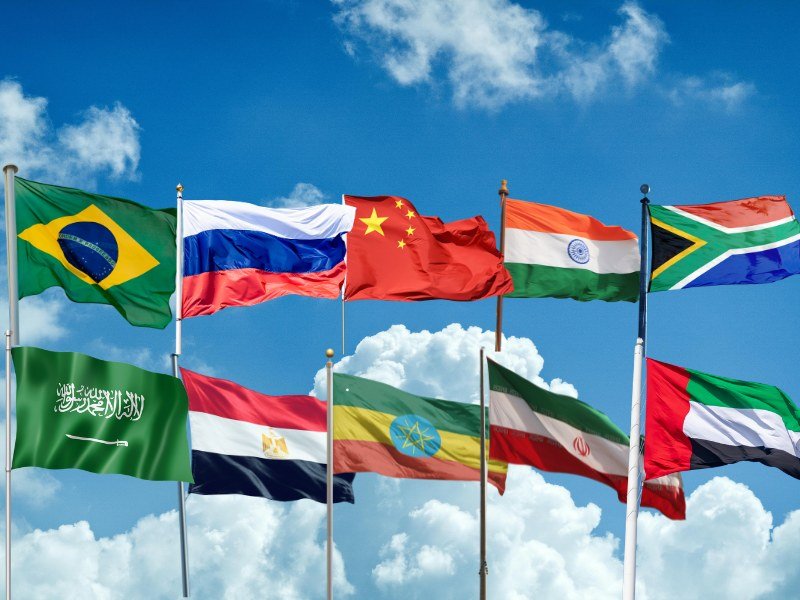
BRICS is piloting new payment methods as Africa looks to reduce its dependence on the dollar.
Local currency transactions reach 90% as BRICS advances payment methods and shelves plans for a single currency.
BRICS alternative financial channels expand as Africa seeks dollar de-risking.
As of early 2026, BRICS leaders have stated frankly: Although a single euro-style currency is not yet in circulation, momentum is building around alternative payment tools that have the potential to reshape global energy finance. BRICS Pay, a blockchain-based cross-border payment network, is in the pilot stage, and the basket-backed payment instrument “BRICS Unit” will enter limited use at the end of 2025. This experiment marks a strategic shift from talk of a single currency to a practical infrastructure that circumvents the dominance of SWIFT and the US dollar.
Oil, gas and mineral exports, project finance and sovereign debt are still predominantly priced in US dollars, with serious implications for Africa’s energy markets. As the dollar weakens in 2026 amid tariff shocks and financial instability, African producers and policymakers are asking important questions: Could a BRICS-linked payment mechanism diversify financing, reduce currency risk, and unlock new pools of capital to accelerate energy transition and supply expansion?
Illustrating BRICS alternatives
Trade data within the BRICS region shows nearly 90% of trade is now settled in local currencies, up from 65% just three years ago, driven by a major energy deal between China and Russia. This change reflects both commercial pragmatism and strategic intent. A prototype demonstration of BRICS Pay in late 2024 highlighted member states’ desire for a payment rail that bypasses dollar-centric messaging infrastructure, promising to reduce transaction costs and dependence on Western financial plumbing.
The BRICS unit (approximately 40% backed by gold and 60% by a basket of member currencies) is not a circulating currency, but rather a unit of account designed to settle cross-border trade. This represents a progressive step towards de-dollarized commerce without compromising national monetary sovereignty. The use of a diversified anchor reduces exposure to single currency fluctuations, an attractive feature for African exporters seeking stability in their export income.
But obstacles remain, as wide economic disparities among BRICS members make unified monetary policy difficult, and countries like India and South Africa publicly refuse to hand over control of their currencies to supranational authorities. This reality has refocused the bloc on working infrastructure rather than a one-size-fits-all currency. This is a strategy that may prove more sustainable and immediately beneficial to energy stakeholders.
What it means for energy finance in Africa
Energy projects in Africa face a persistent financing gap, in part because dollar-denominated debt increases risk for borrowers as the dollar strengthens. In 2026, aggressive U.S. tariff policy and market uncertainty over the direction of finance will amplify the dollar’s decline and only increase the appetite for alternative currencies. A BRICS-linked payment system could reduce currency risks and make the cost of capital for long-term energy investments more predictable.
The New Development Bank (NDB) and the upcoming African Energy Bank (AEB) exemplify the expansion of alternative capital channels. NDB is accelerating local currency financing and renewable energy projects across Africa, while AEB aims to close the energy financing gap of $30-50 billion, with a target of $10 billion. These institutions complement payments innovation by providing tailored capital for a diversified trade and financial ecosystem.
“A critical challenge in investing is the lack of access to capital,” said Rene Awenben, managing partner at advisory firm Premier Invest, at an energy event in Cape Town in 2024, the same year AEB was established. “As a continent, there are constraints in the way our financial sector is (currently) formed. We need to find solutions to this in order to close the $200 billion annual funding gap.”
Commodity exchanges and pilot platforms have also emerged that allow oil, gas and other resources to be traded directly without converting them into dollars. For Africa’s resource exporters, this could mean more competitive pricing, faster payment cycles and greater integration into global value chains, decoupled from traditional dollar constraints.
Beyond de-dollarization: Strategic autonomy and growth
For Africa’s energy markets, the real value lies in flexibility: new means of payment, diverse funding sources, and insulation from political shocks. Alternative rails, such as China’s cross-border interbank payment system and the emerging BRICS Pay network, promise resilience against sanctions and financial weaponization, making them a compelling proposition for countries seeking buffer mechanisms in a contested world order.
However, the passes increase in stages. The BRICS unit remains a means of payment and not a sovereign currency. Additionally, digital currency bridges and interoperability of central bank digital currencies are on the agenda, but full rollout will take several years. Still, an evolving architecture could put Africa in a position to negotiate better terms, diversify its funding partners, and reduce its vulnerability to sharp currency fluctuations.
As energy demand grows and capital needs rise, the question for investors and policymakers alike is not whether BRICS payment instruments can replace the dollar, but how they can be integrated into a diverse and resilient financing strategy that supports Africa’s energy ambitions in a multipolar financial era.
