


Cape Town Infrastructure Vision 2026: R120 billion industrial boom
Written by Adrian Ephraim
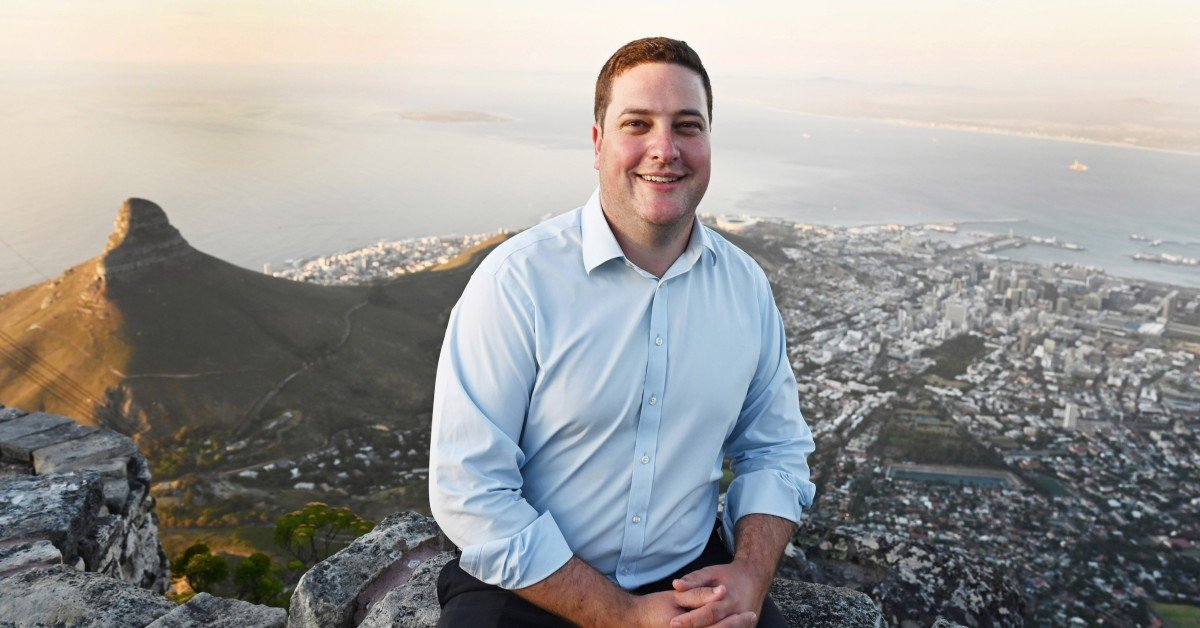
As Cape Town heads into 2026 on the back of record infrastructure spending in 2025, Mayor Jordyn Hill-Lewis is making a bold pitch. The Mother City is where Africa’s next manufacturing boom will begin.
Cape Town set a record for municipal infrastructure investment in South Africa, spending R9.5 billion in the 2024/25 financial year. For Mayor Jordyn Hill-Lewis, it’s about creating irreversible momentum that positions her home city as Africa’s leading industrial destination.
“Cape Town spent more this period than Joburg and Tshwane combined by R25 billion versus R22 billion,” Hill-Lewis told Cape Business News. “And by the end of this financial year, we are on track to outspend all three Gauteng metros combined.”
The numbers speak of intentional differentiation. South Africa faces persistent socio-economic inequalities and electricity supply constraints, but Cape Town is implementing a 10-year, R120-billion infrastructure pipeline that is more like industrial policy than municipal chores.
The backbone of industry is formed
For manufacturers looking to expand into Africa, the following three projects deserve close attention.
The R5.2-billion refurbishment of the Potsdam wastewater treatment plant is 60% complete and operational trials will begin in 2026. Beyond environmental remediation, the project will double wastewater treatment capacity from 47 million liters per day to 100 million liters per day, fundamentally changing what is possible in Killarney’s industrial corridor.
“This is a significant project that will double the city’s wastewater treatment capacity in this area and enable development and economic growth, including surrounding industrial and residential areas,” Hill-Lewis said.
The timing couldn’t have been better for the Montague Gardens food processor. Cape Town’s Water and Sanitation Department has spent 95% of its R4 billion capital budget in 2024/25.
The city’s R600-million sewerage project at Montagu Gardens is nearing completion in 2026. This infrastructure will transform manufacturing viability in one of South Africa’s key industrial nodes.
force equation
Perhaps most importantly for 24/7 manufacturing operations, approximately 70% of Cape Town’s geographical area is supplied with municipal electricity rather than Eskom. “Negotiations with central government require a legal and bureaucratic process, but we will continue to push forward so that all metros can benefit from reliable electricity service,” Hill-Lewis said.
The competitive advantage is clear. Cape Town’s electricity prices will increase by just 2%, compared to Eskom’s national price increase of 11.32%. Manufacturers can sell excess power back to the grid and participate in the city’s energy trading program. This is the first initiative in the country that will have a significant impact on business economics.
SEZ strategy
The Atlantis Special Economic Zone has attracted over R3 billion in investment, created over 800 jobs, and is fully operational with four large investors. For green technology manufacturers, the value proposition is attractive: a 15% corporate tax rate, duty-free imports of renewable energy components, and Cape Town accounting for 70% of South Africa’s renewable energy component manufacturing.
Mr Hill-Lewis highlighted the wider supporting infrastructure, saying: “Over R6.4 billion in investment and over 15 000 jobs have been directly secured in 2024 through the City’s support for 11 special purpose vehicles across sectors such as BPO, technology, clothing and textile manufacturing and marine manufacturing.”
Execution risk issues
When pressed about the delivery risk of a R40 billion capital investment over three years, Mr Hill-Lewis did not bring it up. “Of course, there are many risks to delivery, most notably the construction mafia attempting to sabotage the project or the contractor not meeting the required work standards.”
However, track record is a ballast for confidence. Cape Town achieved a capital budget expenditure performance of 92.3% in 2024/25. This execution rate is remarkable even in developed markets, not to mention South Africa’s challenging construction environment.
The mayor cited projects completed as proof of concept, namely the R4-billion refurbishment of the Zandvliet sewage treatment plant, the quadrupling of sewage pipe replacements and the expansion of the new MyCiTi route across the south-east metropolitan area.
60 second pitch
When asked to give a closing argument to the CFO of a multinational manufacturer evaluating its expansion into Africa, Mr. Hill-Lewis’ response distilled the strategy as follows:
“If you need practical investment facilitation to cut through the red tape and encourage people to move to Cape Town, if you want reliable infrastructure in a city that is investing in its future economic growth, and if you want peace of mind about good governance and a healthy city finances, Cape Town is the destination for you on the African continent.”
Infrastructure investments are producing facts on the ground. The International Finance Corporation has committed R2.8 billion to support Cape Town’s infrastructure plans over an 18-year period, demonstrating international confidence in the city’s financial management.
As Cape Town approaches the 2026 completion target for Potsdam, Montague Gardens sewers and other critical industrial infrastructure, the question for global manufacturers is shifting from whether the city can deliver, to whether it can ignore what is being built.
