


Written by Zandisile Rufafula
President Cyril Ramaphosa spoke at the 2025 Nation Building Summit held at the Birchwood Hotel in Ekurhuleni last week, and his announcement of R1 trillion for infrastructure was more than ambitious. It is a defining moment for South Africa’s economic future. But there is one critical question that needs to be addressed immediately. The question is, can our current fragmented system actually deliver on this promise? 30 years of evidence says no. The solution is not more funding or more programs. This is a fundamental system reform through the unification of infrastructure budgets.
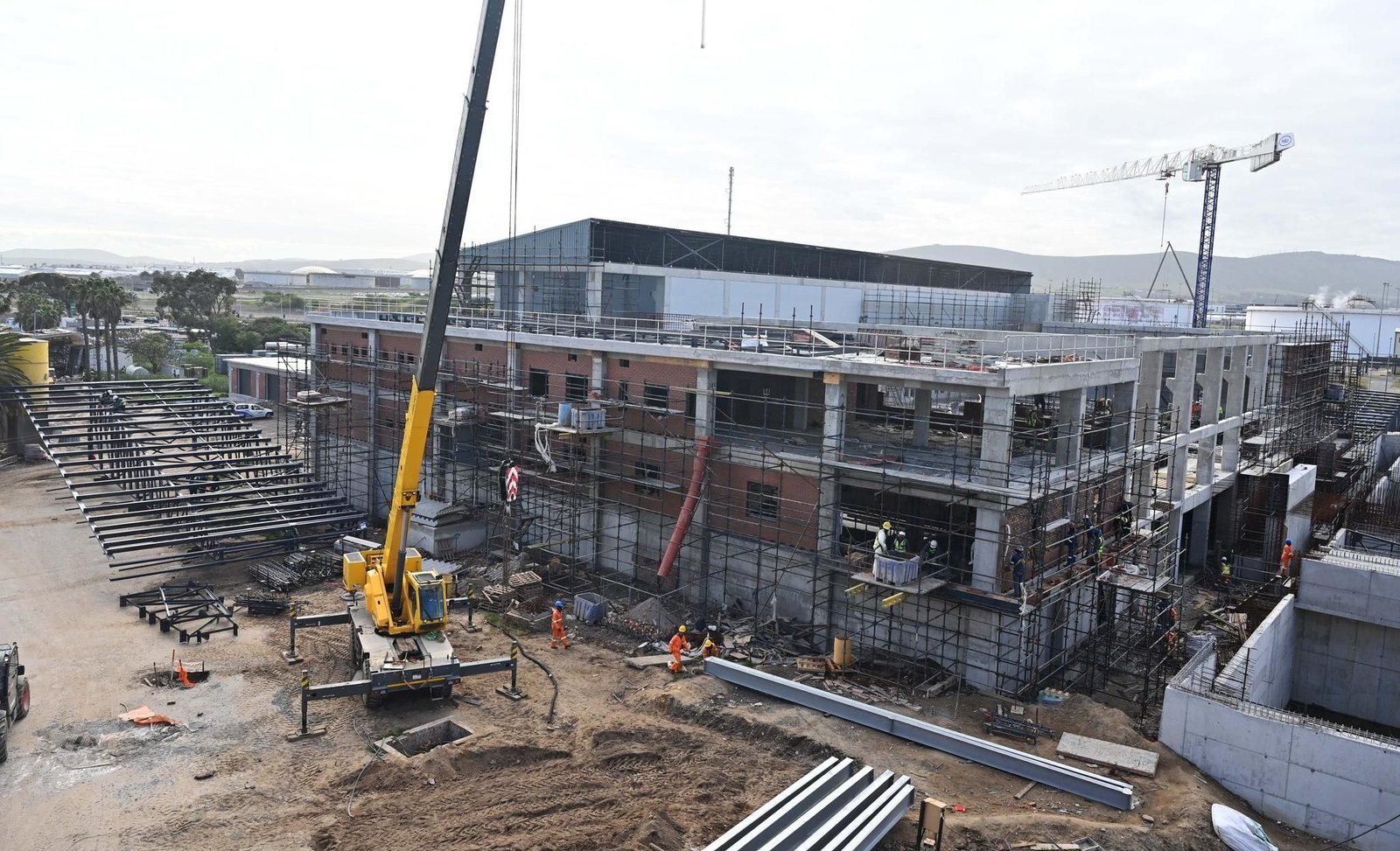
President Ramaphosa said at the summit that his administration is putting infrastructure development at the heart of its economic growth strategy. As he prepares to welcome international leaders to the G20 summit, he said Finance Minister Enoch Godongwana’s medium-term budget allocation of R1 trillion was at the heart of his government’s bold plans, and that all relevant ministers were committed to turning the country into a “massive construction site”.
Recent job growth in the construction industry and favorable budget allocation have boosted the president’s confidence. He urged international visitors to observe the projects underway across the country, believing this visibility would stimulate investment in the country’s infrastructure development programs, which are vital to the struggling economy.
“The construction industry is a vital engine for the growth we envision for our country. The industry added 130,000 jobs in the third quarter of this year, and these new jobs reflect the boom in the industry. These jobs are transforming communities and contributing to a more inclusive South Africa. That is why we have committed to spending R1 trillion over the medium term. This is the first time since the dawn of democracy that this much money has been spent on infrastructure,” he said.
Finance Minister Enoch Godongwana outlined several initiatives to shift government spending from consumption to capital investment, including plans to issue R15 billion in infrastructure bonds in the coming months. Capital payments will be the fastest growing area of spending over the next three years, with plans underway to accelerate private sector participation in infrastructure financing and infrastructure development.
The President’s confidence in the potential of the construction industry is justified, with 130,000 new jobs in the third quarter alone proving the sector’s capabilities. But job creation and real transformation are different goals. Governments account for 40% of infrastructure investment and spend billions of dollars on contractor development, yet less than 36% of contractors progress beyond their first CIDB grade. This is not a funding issue. It’s a structural thing. The same fragmented system that will cost President Ramaphosa’s R1 trillion has been systematically bankrupting start-up contractors for 30 years.
What we must face is that after 30 years of democracy, South Africa faces formidable challenges. Despite governments spending billions of dollars each year on contractor development programmes, traditionally disadvantaged groups such as women, young people and people with disabilities remain significantly under-represented in the Construction Industry Development Board (CIDB) contractor register. Less than 36% of contractors participating in development programs progress beyond their initial grade and are trapped in lower CIDB grades with limited progress, poor access to funding, and inadequate post-program support.
The solution lies not in creating more development programs, but in fundamentally reshaping how infrastructure spending is managed. As the Northern Cape is demonstrating, it is time for South Africa to focus its infrastructure budget on specialized sectors, in this case nationally the Department of Public Works and Infrastructure, and provincially in local sectors such as roads and public works. This is not just administrative reform, but the key to unlocking true economic transformation in the construction industry.
Our current system demands the impossible from both government departments and emerging contractors. We expect infrastructure-related responsibilities to be held by educators who are trained in delivering quality education, developing curriculum, and improving learner outcomes. We put the burden of hospital construction contracts on health care workers when their expertise lies in patient care. Emerging contractors, on the other hand, must navigate a maze of disparate procurement standards, payment systems, and support structures across multiple departments that apply different standards that are not aligned to a unified framework.
This fragmentation not only creates inefficiencies; It systematically penalizes the very contractors we claim to want to develop. Emerging small contractors cannot afford to simultaneously become experts in the procurement characteristics of the education, health, transport, and housing sectors. You can’t build relationships with procurement personnel who are distributed across government agencies. You can’t tolerate different payment cycles and administrative requirements for different departments.
Finance Minister Godongwana’s toolkit of a R15-billion infrastructure bond, a restructured infrastructure budgeting regime (BFI) with quarterly bidding quotas, and R379.1-billion project approvals provides an unprecedented opportunity. Presenting the MTBPS last week, the minister indicated that 28 applications with a total capital cost of more than R379.1 billion had been received in the first two quarters after the BFI reconstitution, with projects in the science, water and sanitation, and transport and logistics sectors approved, including two major rail rehabilitation projects in the Northern Corridor and the Iron Ore Corridor.
But opportunity means nothing without access. Emerging contractors are unable to effectively tackle 28 applications across science, water, sanitation, transport and logistics. These projects may be spread across different departments with different procurement personnel, payment cycles, and support systems. A centralized infrastructure department turns godongwana financial products into real contractor development opportunities.
South Africa has no intention of mapping untested waters. The UK’s Crown Commercial Services (CCS) has demonstrated the transformative power of central procurement, securing £4.9bn of commercial benefits in 2023/24 alone. In just three years, benefits for CCS construction teams have increased from £5 million to £226 million, representing significant savings for the public’s wallet.
Even more relevant for emerging economies is Singapore’s GeBIZ system, which was established in June 2000 to simplify government procurement and bidding activities. GeBIZ serves as the Singapore government’s one-stop e-procurement portal, allowing suppliers to conduct e-commerce with the government and providing a centralized platform for all public sector business opportunities. This centralized approach allows suppliers to quickly identify business opportunities, bid conveniently, and easily manage transactions, while providing public agencies with a streamlined workflow that increases productivity.
These international examples show that centralization is not just a theory, but a proven strategy to improve procurement efficiency and support business development. The Organization for Economic Co-operation and Development’s (OECD) Infrastructure Governance Principles emphasize that “good governance of infrastructure not only promotes value for money and affordability, but also helps deliver the right projects in a way that is trusted by users and the public.”
While the Birchwood summit focused on national vision, one state is already proving that centralization works. The Northern Cape is not waiting for perfect conditions. It’s about building a blueprint.
The transformation of the Northern Cape Roads and Public Works Department, built on global best practice, provides compelling real-time evidence that centralization is happening in practice. Under the leadership of Prime Minister Zamani Sall and MEC Fufe Makaton, this is not a theoretical reform. It’s happening now.
The state has completed internal consultations and is actively lobbying user departments to transfer Fair Share and Revenue Sharing Act (DORA)-funded positions, bringing in both core staff and scarce technical skills. Consultations with workers are ongoing with the support of a multi-stakeholder task team led by the Prime Minister’s Office. To support this transformation, a skills audit, climate review and technical structure review have been completed, and the state is now expediting the secondment and transfer of key staff to ensure the department is able to reach its full potential.
This complex but important reform shows exactly what centralization looks like in practice, creating a “modern, growing, successful, and more responsive infrastructure delivery model.”
The Northern Cape’s systematic approach, completion of skills audits, stakeholder engagement, and transfer of technical expertise provides a blueprint for how other provinces can implement similar reforms.
The Northern Cape model proves that centralizing this expertise within specialized infrastructure sectors is not just theoretical, but is possible, rather than expecting each sector to independently develop technical capabilities that cannot be fully mastered. This is not just a matter of efficiency. It’s about creating a special environment in which contractor development can actually succeed.
The reforms in the Northern Cape demonstrate just how centralization can ensure President Ramaphosa’s R1 trillion promise is realized. Without this institutional framework, we risk decades of sporadic spending that leaves contractors trapped in the lower grades rather than thriving businesses.
The key is to ensure that centralization creates specialization and not just large bureaucracies. Success will depend on a construction department focused entirely on infrastructure delivery and contractor development, with clear performance metrics tied to both project delivery and transformation outcomes.
When G20 leaders arrive next week to tour South Africa’s infrastructure ambitions, they will see a R1 trillion commitment. The question is whether they understand the organizational capacity to deliver it effectively.
Proposed legislative changes to the CIDB Act 2000 will help, but institutional reform is equally important. Finance Minister Godongwana’s R1 trillion medium-term infrastructure investment commitment provides the financial foundation. Centralizing infrastructure budgets provides the institutional framework to ensure these resources are channeled into true contractor development and economic transformation.
“This is the first time since the dawn of democracy that so much money has been spent on infrastructure development,” President Ramaphosa said at the summit. It is also the first time that we are building the institutional framework to ensure we produce the change we have been committed to since 1994.
You can’t keep expecting different results from the same fragmented system. Summit delegates must return to their home states and provinces with more than inspiration. They need to work on institutional reform. Centralizing the infrastructure budget provides a path to the economic transformation we have been promising our people since 1994.
The era of gradual change is over. Our emerging contractors, our economy, and our democratic promise deserve nothing less than fundamental reform.
* Zandisile Lufahla is a spokesperson for the Northern Cape Department of Roads and Public Works and “sees the challenges and opportunities of infrastructure reform first hand every day”. He recently completed his studies in Construction Management at the University of Cape Town.
…
** This opinion piece has been very lightly edited to conform to DFA’s style.
*** The opinions expressed in the article are those of the author and do not necessarily reflect the views or policies of DFA or its staff. While we strive to provide a platform for diverse points of view, contributors are solely responsible for their content. Readers are encouraged to form their own opinions based on a variety of sources.
