


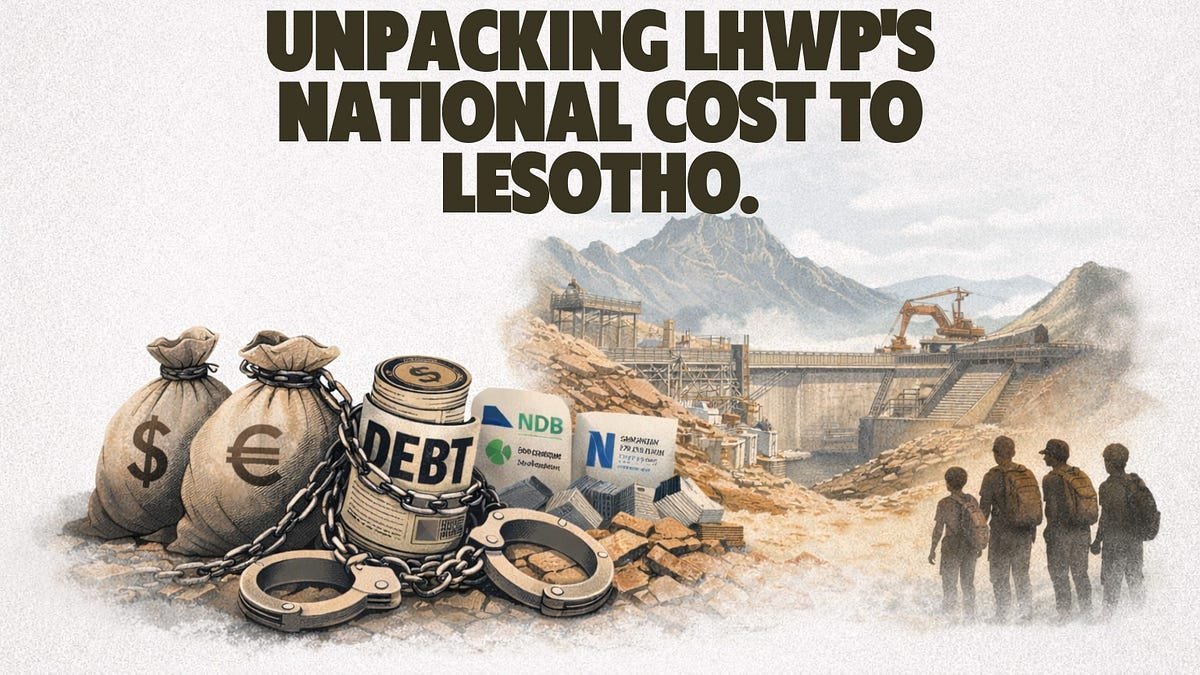
Maseru, Lesotho— Civil society groups have expressed concern about the rising costs, environmental damage and accountability gaps in the second phase of the Lesotho Highlands Water Project (LHWP), and are calling for urgent reforms to protect affected communities, they write. Winston Mwale.
The New Development Bank (CSF) Civil Society Forum, AFRODAD and Seinori Legal Center said in a joint media statement on Monday that the multi-billion rand project is exposing indigenous communities to forced displacement, inadequate compensation and environmental degradation.
The LHWP was established under a 1986 treaty between Lesotho and South Africa to export water from the Lesotho highlands to South Africa’s industrial hub, while also generating hydropower and royalties to Lesotho.
Implementing agencies include the Lesotho Highlands Development Authority and South Africa’s Trans-Caledon Tunnel Authority. Funding will be provided by development finance institutions such as the African Development Bank, the New Development Bank and the Southern African Development Bank, as well as private investors.
Phase two, which includes the construction of the 165-metre-high Polihari Dam and a 38-kilometre transfer tunnel linking the Polihari and Katse reservoirs in Mokotolong district, is scheduled to be completed in 2028 after significant delays.
Civil society groups argue that the project’s rising costs pose a serious public interest issue.
The original budget in 2008 was R8 billion ($430 million at current exchange rates), which is around R19 billion after adjusting for inflation, but costs have reportedly ballooned to around R53.3 billion ($2.8 billion).
“Development cannot be measured only by whether concrete is poured or loans are secured. It must be measured by whether communities are safer, livelihoods are strengthened and rights are protected,” said Mosa Letsie, a lawyer at Seinori Law Center.
The organizations claim that the second phase has led to unfair evictions, gender-neutral compensation delays, and an increased risk of sexual and gender-based violence related to the influx of construction workers.
They say these impacts disproportionately affect women, girls and vulnerable groups.
AFRODAD’s Riska Koopman said rising costs were raising concerns about debt sustainability and transparency.
“South Africa is deepening its debt, while Lesotho is bearing uncalculated non-economic costs, such as reduced grazing land and increased inequality,” Koopman said.
The group also questioned the effectiveness of environmental and social safeguards by financial institutions such as the African Development Bank and the New Development Bank, arguing that policy commitments were not consistently translated into meaningful protection at the project level.
They called on the governments of Lesotho and South Africa, implementing agencies and funders to ensure transparent public reporting on funding, fair and timely compensation, gender-sensitive safeguards and available grievance mechanisms throughout the project cycle.
The statement said concerns surrounding LHWP reflect broader risks associated with large infrastructure projects across the Global South, particularly where oversight and accountability mechanisms are perceived to be weak.
