


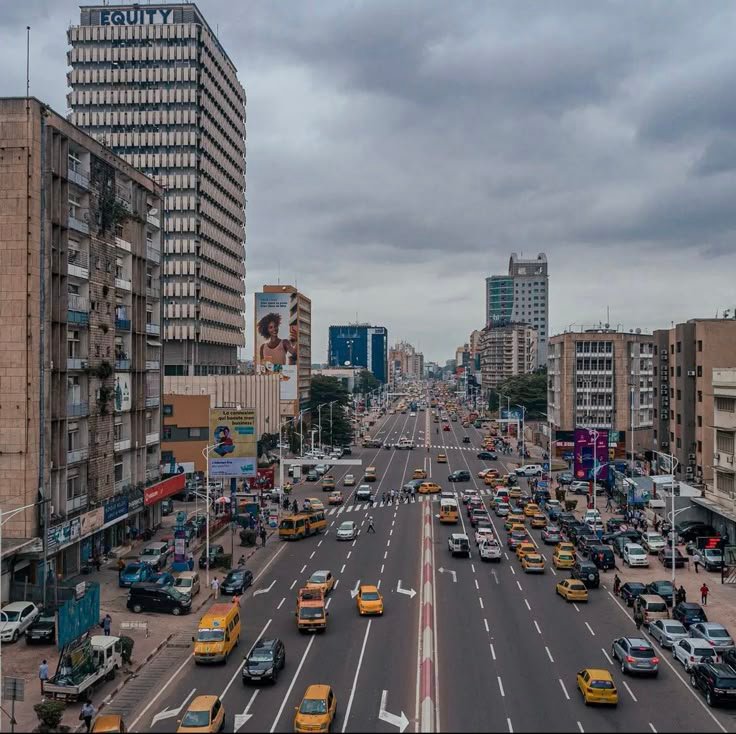
The World Bank has approved a $60 million package to finance urban resilience projects in the Republic of Congo targeting erosion and flood control, climate-resilient infrastructure, and institutional capacity in Brazzaville and Pointe-Noire.
Announced on 30 October 2025, the funding will be directed towards interventions aimed at protecting approximately 575,000 urban residents, creating more than 450,000 person-days of short-term employment, and strengthening planning and disaster risk capacity at national and municipal levels. The move is in response to intensive urban growth, severe infrastructure deficiencies and the increasing risks of climate change that are already eroding economic opportunities in Congo’s two main cities.
The decision to concentrate resources on Brazzaville and Pointe-Noire reflects a straightforward demographic reality. The Republic of the Congo is exceptionally urbanized for the region, with official statistics showing that approximately seven in ten people now live in towns and cities, with more than half of the country’s population concentrated in these two largest agglomerations.
Also read: Malawi sets aside K46 billion to support over 4 million people facing low season hunger as climate change pressures intensify
These demographic trends increase exposure to rainfall fluctuations, stormwater flooding, and slope erosion in areas where development exceeds formal planning and peri-urban settlements are located on fragile land. The World Bank framed this project as both a damage limitation and economic preservation strategy. When pipes fail, roads are washed out and markets are cut off during floods, with livelihoods and local government revenues interacting in complex ways each year.
Globally, Africa’s urban transition is rapid and uneven, and Congo’s challenges are not unique. The proportion of cities on the continent is steadily increasing, and several new megacities are expected to emerge over the next decade. This trajectory creates opportunities for productivity gains, but it also concentrates risks. Years of chronic underinvestment in drainage, slope stabilization, and resilient public services mean that a single storm event can cause far greater economic losses than the direct physical impacts would indicate.
For example, World Bank operations in Dar es Salaam have shown how heavy rainfall can lead to losses for households and businesses representing a significant portion of a city’s GDP. Similar developments are now being seen across Africa’s coastal and riverine cities, where informal settlements intersect with floodplains. The lessons of these comparisons shaped the Congo project, which focused on both hard infrastructure modifications and institutional strengthening to ensure asset maintenance and implementation of planning decisions.
In reality, $60 million will be deployed across two linked fronts. On the ground, investments will reduce erosion and control flooding through targeted earthworks, slope stabilization, drainage improvements, public facility repairs, and measures to reduce repeated disruptions to markets, schools, and health centres. Alongside these capital works, the project will fund technical assistance to strengthen urban planning, risk mapping and financial instruments that will enable Brazzaville and Pointe-Noire to mobilize and manage future investments.
The project team hopes this combined approach will not only reduce exposure to immediate hazards, but also reduce the annual “expected growth” that officials attribute to recurring disasters. The World Bank and its partners emphasize that such dual investments are essential. Only engineering without functioning institutions leaves cities vulnerable to the same failures again after the next busy season.
The project’s design also reflects the evolving architecture of climate support. Technical input was provided by the Global Disaster Reduction and Recovery Agency, the Cities Climate Finance Gap Fund, and the Global Adaptation Center, demonstrating that a blended model of finance and technical assistance is increasingly supported by donors.
These partnerships aim to fill capacity gaps in municipalities, structure investments to make them attractive to larger financiers later on, and are designed to turn individual interventions into a pipeline of bankable urban resilience projects. If the pipeline becomes a reality, Congo could avoid the common cycle in which international grants fund one-off projects that never scale up or sustain.
For African cities more broadly, the Republic of Congo’s initiative exemplifies the necessary readjustment: investments in resilience must be spatially precise and institutionally embedded. Countries like Nigeria and Tanzania are already facing the financial and human costs of failing to modernize urban drainage and integrate informal settlements. Losses from a single flood in a dense urban corridor can represent a significant portion of municipal budgets and undermine efforts to expand formal employment and services.
In contrast, when interventions combine physical work with municipal revenue reform, land-use enforcement, and comprehensive transfer strategies, they not only avoid losses but also yield gains in improved market functioning and labor productivity. The Congo project aims to capture the latter benefits by explicitly linking infrastructure development to workforce revitalization and regional development goals, an approach that positions the short-term jobs created by construction as a complement to stabilizing long-term resilience.
Also read: Angola seeks $4.5 billion to link Atlantic coast to Zambia’s copper belt
Political and economic constraints, opaque land ownership arrangements, and constrained local government revenues can slow the long-term sustainability of operations unless revenue instruments and maintenance systems are reformed. Similarly, climate projections suggest that the intensity of extreme rainfall events in Central Africa is increasing. This means that designs must consider changes in the baseline, rather than relying solely on historical patterns.
Success will therefore depend on how effectively the Republic of the Congo translates the project benefits into local government daily practice. That is, whether drainage canals are cleaned seasonally, whether slope stabilization is combined with upstream catchment management, and whether newly trained planners and engineers remain within the municipal system rather than being weeded out.
This approved loan paves the way. What happens next will determine whether Brazzaville and Pointe-Noire become models of urban adaptation or temporary islands of protection.
Connect with us on LinkedIn: Sustainability in Africa matters
