Close Menu
Xsum NewsXsum News

    Stay Updated.

    Get the latest Africa-focused business & infrastructure news and more directly to your inbox.

    What's Hot

    Africa risks losing $415 billion a year without sustainable finance

    Breaking down barriers to private sector investment to build resilience on West Africa’s coasts

    Cape Verde secures €17.7 million from African Development Bank, what digital transformation plan actually means for Africa’s future

    Facebook X (Twitter) Instagram
    Trending
    • Africa risks losing $415 billion a year without sustainable finance
    • Breaking down barriers to private sector investment to build resilience on West Africa’s coasts
    • Cape Verde secures €17.7 million from African Development Bank, what digital transformation plan actually means for Africa’s future
    • FG Gold, AFC and Afreximbank close on USD 330 million senior debt financing for Baomafun Gold Project — TradingView
    • Africa needs to build its own cybersecurity intelligence, Tisel CEO says at AfriTech 5.0 – Nigerian CommunicationWeek
    • SA construction comes roaring back: 10% jump signals sector revival
    • Comoros to win subsidy from AfDB for geothermal project
    • Gabon strengthens regional energy profile with minister’s participation in MSGBC 2025
    X (Twitter) Instagram YouTube LinkedIn TikTok
    Xsum NewsXsum News
    • African Development Bank
    • Africa Finance Corporation
    • All Africa – Construction & Infrastructure
    • Africa Intelligence
    • Construct Africa
    • More
      • Mining Review Africa
      • Energy Capital Power
      • Sustainability & Climate-Resilient Infrastructure
      • Private-Sector Infrastructure Players
      • Urban Development & Housing
    Xsum NewsXsum News
    You are at:Home»All Africa – Construction & Infrastructure»Considering the redefinition of African capital by UBA and Arauba
    All Africa – Construction & Infrastructure

    Considering the redefinition of African capital by UBA and Arauba

    Xsum NewsBy Xsum NewsNovember 22, 2025No Comments4 Mins Read2 Views
    Facebook Twitter Pinterest Telegram LinkedIn Tumblr Email Reddit
    Share
    Facebook Twitter LinkedIn Pinterest WhatsApp Email

    When history looks back on Africa’s economic awakening, November 10, 2025 may stand out as one of the quietly decisive days when ambition and architecture met and rhetoric gave way to solutions.

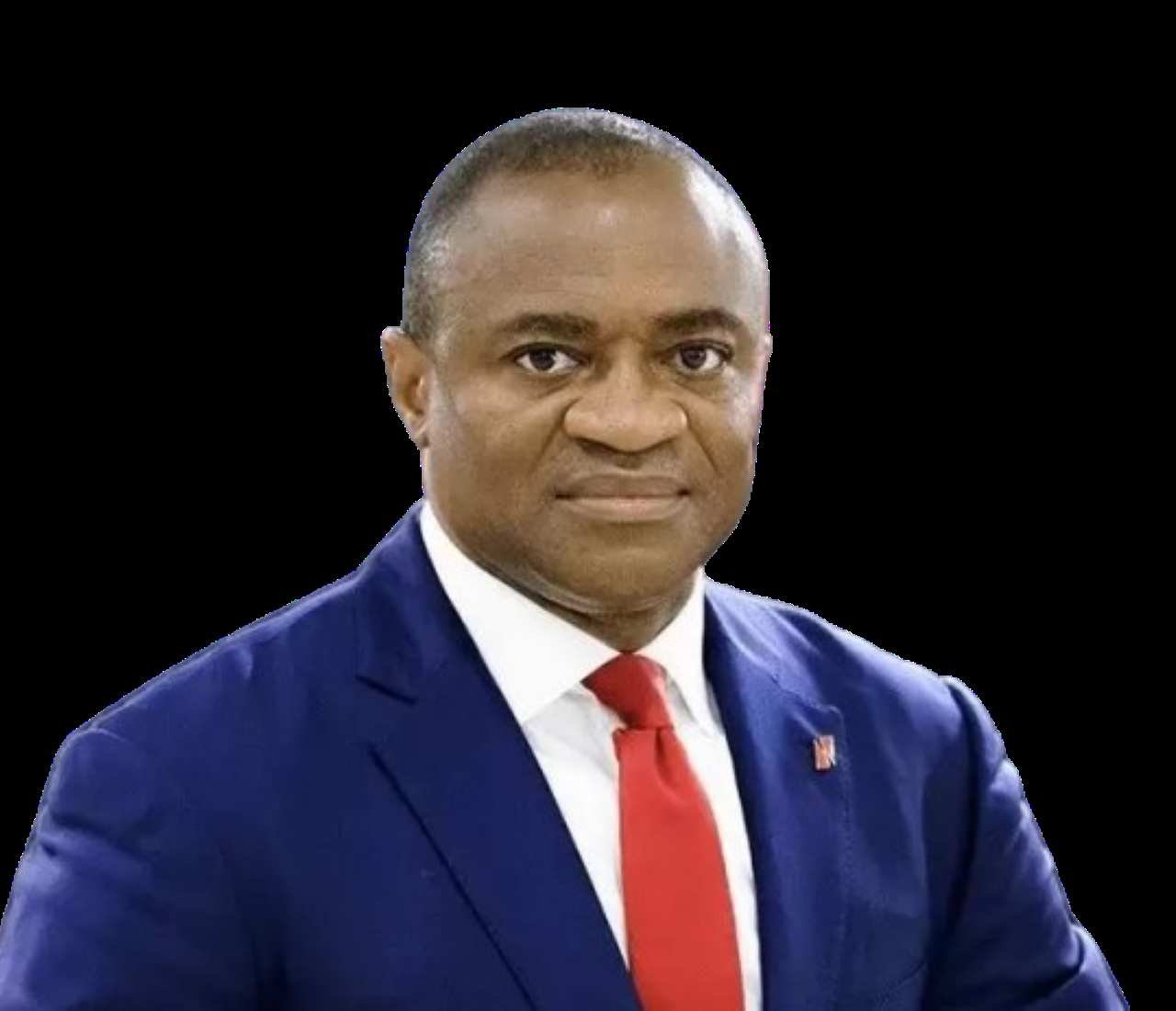
    Oliver Arauba, Group Managing Director and Chief Executive Officer of United Bank for Africa (UBA) Plc, delivered a thunderous keynote speech at the UAE-Chad Trade and Investment Forum in Abu Dhabi. Under the theme “Financing Africa’s Competitiveness: Building Bridges and Accelerating Progress,” Mr. Arauba outlined a compelling blueprint for how Africa can finance not just its dreams but its destiny.

    “The age of possibility is over; now is the age of execution,” he declared. The line drew a clear dividing line between the past and the future. This came across not as an optimistic view but as the intention of bankers who have spent decades proving that African capital can and should drive Africa’s transformation.

    At the heart of his message was Chad Connection 2030, Chad’s $30 billion development plan covering 268 projects across energy, water, infrastructure and human development. Mr. Arauba hailed it not just as an economic plan, but as a declaration of confidence and a move from the fringes of the global economy to the mainstream.

    What made his speech so valuable was his advocacy for a new financial architecture for Africa: mobilizing local capital, leveraging regional expertise, and attracting global investment through trusted structures. He proposed a three-part model built on international capital, African institutional banks and development finance institutions, and a framework to make the partnership practical and profitable.
    In Arauba’s framework, African banks like UBA are no longer intermediaries but “financial architects.” He backed this up with examples. He demonstrated that African banks are already funding major transformations, from the $400 million Julius Nyerere Hydropower Project in Tanzania to UBA’s $700 million investment in Nigeria’s power sector and $315 million investment in Ghana’s road infrastructure.

    In Chad, the commitment is personal and concrete. UBA has invested more than $102 million in country securities and has financed a $49 million domestic gas project, a $6.7 million wind farm in Amjaras, and major energy and communications infrastructure. “We are here to be the bridge between vision and reality,” Arauba said.

    Beyond large-scale projects, his emphasis on inclusion resonated. He reminded the audience that without inclusion, competitiveness is empty and that the road to Africa’s recovery must go through Beira, Nzerekole and Gulu, not just Lagos and Nairobi. By extending banking services to remote areas, UBA ensures that smallholder farmers and local entrepreneurs are as much a part of Africa’s competitiveness as corporate boardrooms.

    Perhaps the most impressive part of the speech was Mr. Arauba’s busting of the old myth that Africa lacks capital. Citing data from the African Finance Corporation, he revealed that Africa holds approximately $4 trillion in domestic financial assets, of which less than 15% is directed towards productive infrastructure.
    “The challenge is never a lack of capital, but a lack of bankable structures and reliable partnerships,” he said.
    At that moment, the story changed. Africa was no longer a continent waiting to be rescued. It was a market ready for funding.
    Prime Minister Arauba also invoked the spirit of partnership rooted in history, quoting the UAE’s founding father, Sheikh Zayed bin Sultan Al Nahyan, and said: “Our ancestors lived and survived in difficult environments because they recognized the need to work together.” This echo was a deliberate call to Africans and their international partners to pool their resources and resilience to build something lasting.

    Seen from this perspective, the UAE-Chad partnership represents a new kind of South-South cooperation that is investment-driven and rooted in shared prosperity. For Chad, it’s a leap forward for change. For Africa, it offers a glimpse of what is possible when vision and viable funding meet.
    Mr Arauba’s speech was a manifesto of Africa’s new confidence, based on capacity, cooperation and capital. It was a reminder that Africa’s growth story will be written in balance sheets and infrastructure blueprints, not aid memos.
    If Chad Connection 2030 is the blueprint and leaders like Arauba are the bridge, it is safe to say that Africa’s future is already under construction.
    • Communications expert Johnson writes from Lagos

    African Arauba capital redefinition UBA
    Share. Facebook Twitter Pinterest LinkedIn Reddit WhatsApp Telegram Email
    Previous ArticleSafety remains a key issue in Kenya’s construction industry
    Next Article eHealth Africa seeks synergies to improve health equity
    Xsum News
    • Website

    Related Posts

    Cape Verde secures €17.7 million from African Development Bank, what digital transformation plan actually means for Africa’s future

    December 6, 2025

    SA construction comes roaring back: 10% jump signals sector revival

    December 6, 2025

    AfDB and NSIA mobilize $500 million in infrastructure financing over eight years to boost African development

    December 5, 2025
    Leave A Reply Cancel Reply

    Top Posts

    A United Continent on the Move: Ambassador Kouyateh’s Call for an African Logistics Renaissance

    November 20, 202527 Views

    2 Core infrastructure for African submarine cable completed China Mobile advances digital intelligence development in Africa

    November 20, 202512 Views

    LIBERIA’S DEVELOPMENT AGENDA GAINS GLOBAL ATTENTION

    November 18, 202511 Views

    Africa’s clean cooking drive depends on carbon credit reform and transport upgrades

    November 25, 202510 Views
    Don't Miss
    Sustainability & Climate-Resilient Infrastructure December 6, 2025

    Africa risks losing $415 billion a year without sustainable finance

    Unless sustainable financing sources are secured to improve infrastructure, particularly in the energy sector, Africa…

    Breaking down barriers to private sector investment to build resilience on West Africa’s coasts

    Cape Verde secures €17.7 million from African Development Bank, what digital transformation plan actually means for Africa’s future

    FG Gold, AFC and Afreximbank close on USD 330 million senior debt financing for Baomafun Gold Project — TradingView

    Stay In Touch
    • Twitter
    • Instagram
    • YouTube
    • LinkedIn
    • TikTok

    Stay Updated.

    Get the latest Africa-focused business & infrastructure news and more directly to your inbox.

    About Us
    About Us

    Xsum News is Africa’s digital window into the future of business. We tell stories of innovation, enterprise, and investment that are shaping the continent’s economic rise. African Business, Added Up.

    X (Twitter) Instagram YouTube LinkedIn TikTok
    Our Picks

    Africa risks losing $415 billion a year without sustainable finance

    Breaking down barriers to private sector investment to build resilience on West Africa’s coasts

    Cape Verde secures €17.7 million from African Development Bank, what digital transformation plan actually means for Africa’s future

    Most Popular

    African Development Bank praises Algeria’s development model, aims to replicate its success across the continent

    Considering the redefinition of African capital by UBA and Arauba

    G20 Energy Investment Forum brings together Africa’s top finance, insurance and technology leaders

    © 2025 Xsum News. All Rights Reserved.
    • 🌍 About Xsum News
    • 📬 Contact us
    • Privacy Policy
    • Terms & Conditions
    • Disclaimer

    Type above and press Enter to search. Press Esc to cancel.