


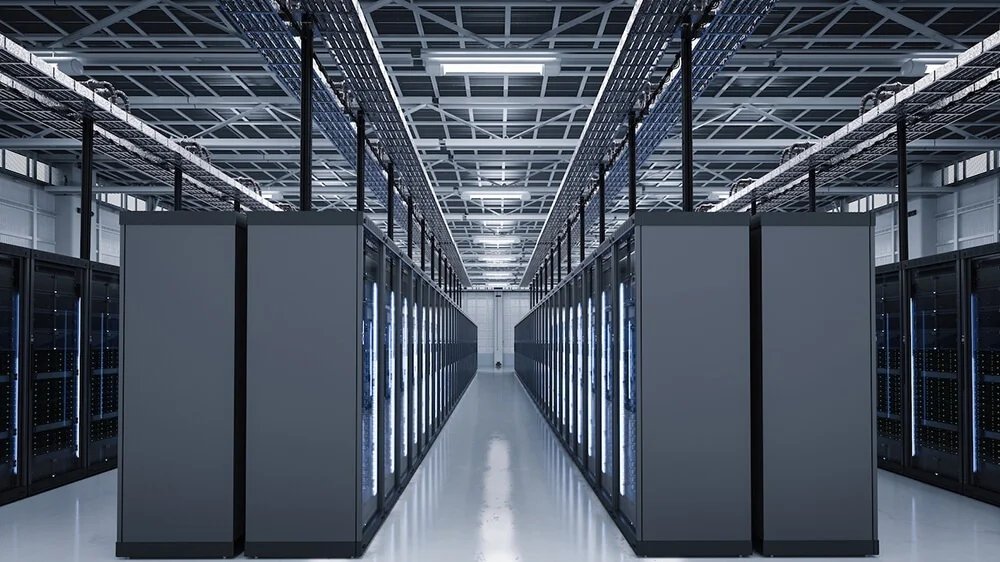
Building and provisioning local data centers is a powerful step toward solving some of the most pressing problems in any country, including improving infrastructure, growing the economy, and strengthening national security. NJ Ayuk, Executive Chairman of the African Energy Chamber writes:
A quarter of the way into the 21st century, digital technology has become incredibly pervasive in the daily lives of billions of people around the world, but it’s still not ubiquitous.
As digital penetration rates rapidly approach 100% in many parts of the world, the fastest growing markets are in developing countries where even simple electricity is not guaranteed. Perhaps the greatest potential lies in the African market, where penetration is still shallow and demand is rapidly increasing. Simply put, you have no choice but to move up.
So far, the uptake of electrification across the continent has been stubbornly slow, but internet usage is expanding at an extraordinary rate. The Global System Operators and Manufacturers Association (GSMA) 2023 Mobile Economy Report predicts that smartphone penetration in sub-Saharan Africa will rise from 51% in 2022 to 87% in 2030, driven by a growing youth population and more competitive mobile phone rates. The report predicts that by 2028, data usage per mobile device will nearly quadruple from 4.6 GB to 18 GB per user per month.
These days, every cell phone loading search engines, shopping sites, and business apps adds to the computing load, but that’s just the mobile space. Advances in financial technology are creating new opportunities for African businesses to grow, and artificial intelligence is rapidly encroaching on every aspect of the internet. Generative AI and machine learning applications consume up to 10 times more energy than traditional search, making their growth costs orders of magnitude higher.
So far, European data centers have largely been able to meet Africa’s needs. However, as African businesses and consumers increasingly demand higher speeds and lower latency, the need for more localized computing infrastructure is rapidly increasing. As of mid-2025, Africa has 223 data centers in 38 countries, less than 0.02% of the world’s total of more than 11,800. South Africa has the most locations at 56, followed by Kenya at 19 and Nigeria at 17, with 41% of Africa’s data center infrastructure currently concentrated in these three countries.
The African Energy Chamber (AEC) argues in its “Africa’s Energy State: 2026 Outlook Report” that the development of cloud infrastructure in these key markets could be at the core of accelerating growth across the continent. Increasing concerns about data sovereignty have led some countries to mandate that certain sensitive data be stored domestically, further increasing the demand for local data centers. The African data center market was valued at USD 3.49 billion in 2024 and is projected to reach USD 6.81 billion by 2030, rising at a compound annual growth rate (CAGR) of 11.79%.
Data centers generally require a large and reliable power supply, but this is not well known in Africa as many countries face frequent power outages. Nigeria is a prime example. Nigeria’s 17 data centers (third most in Africa) will require a total of approximately 137MW of power capacity in 2025. Nigeria’s electricity grid is notorious for only providing power for about four hours a day, forcing data center operators to make up the difference with diesel generators, which increases costs and pollution levels. Even around the capital, Lagos, where internet connectivity is highest and 14 data centers are concentrated, the grid is a constant source of uncertainty.
Electrification in Africa is a multifaceted issue, and while there are many obstacles on the road to modernization, there is no doubt that there are demands that need to be met.
Overall, the AEC report states that data center power demand capacity in Africa is projected to reach 2GW by 2030, achieving a CAGR of 9% between 2024 and 2030. In contrast, total global data center capacity is expected to reach 249 GW by the end of 2030, registering an 11% CAGR between 2024 and 2030. Adding the power required for things like cooling, the total global installed capacity, including auxiliary loads, is estimated at 374 GW by 2030.
However, the constant demand for data centers acts as a good stabilizer to attract socially responsible capital investment in power infrastructure. With demand expected to increase, investors are confident that funds spent on expanding the grid and developing new power generation centers will improve lives and economically benefit. The growth of data centers often also drives innovative power solutions, such as the integration of renewable energy sources and advanced grid management techniques. Grid upgrades improve sustainability, strengthen resiliency, expand residential and commercial customer bases, and spread fixed costs, thereby reducing electricity prices for end users over the long term.
In northern Africa, growing hubs such as Egypt and Morocco benefit from strategic locations that connect Europe, Africa and the Middle East to major internet backbone lines. Due to Egypt’s affordable land and electricity prices, Morocco is rapidly modernizing its infrastructure and creating a favorable legal environment for data center growth.
Sub-Saharan Africa faces additional challenges, but here too many countries are stepping up efforts to meet insatiable demand. In South Africa, the company’s largest market, there is particularly high demand for facilities around Johannesburg and Cape Town. Johannesburg benefits from a diverse mix of wholesale and retail demand and international and local providers. South Africa leads the continent in integrating solar power, with public-private projects such as a 12 MW solar power plant being developed by Africa Data Centers and Distributed Power Africa.
Kenya’s electricity grid is already over 60% renewable, including geothermal, solar, wind and hydropower. A 100MW green data center is planned for the Naivasha geothermal field, which provides almost half of the country’s electricity, backed by a $1 billion investment by Microsoft and G42. Such clean, intermittent power solutions will enable Kenya to support data centers with both reduced emissions and increased stability. The Kenyan government also offers tax incentives for investments in special economic zones, including corporate tax exemptions of 10% for the first 10 years and 15% or more after 10 years.
Smaller countries are also getting into the game. Ivory Coast (currently home to six data centers) launched the country’s largest solar power plant in Boundiary in June 2023, delivering 37.5 MWp of capacity towards the national goal of sourcing 45% of electricity from renewables by 2030. West Africa’s largest wind project is Senegal’s Taiba Ndiaye wind farm (seven data centers), while Gabon (one data center) is actively developing hydropower and power plants. We are attracting investment in solar hybrid systems.
Not all countries are equally equipped to meet growing digital demands. Data centers are notorious for consuming large amounts of water due to the huge numbers of computers that need to be cooled in close quarters. Countries with vast deserts and savannahs cannot afford to let data centers compete with agriculture for water and may have to rely on neighboring countries to tap regional power pools, as the AEC report suggests.
Other countries with fewer renewable energy prospects are likely to focus on developing more conventional energy sources, such as oil and gas, which many countries have in abundance. Even countries with strong renewable energy sectors would be wise to develop conventional energy to achieve the reliability that other parts of the world take for granted. AEC has long advocated for the flexibility of natural gas to serve as a bridge fuel that can quickly ramp up and down to alleviate shortages when renewable energy supplies fluctuate.
Although Africa’s electrification is a multifaceted problem and there are many obstacles on the road to modernization, there is no doubt that there is demand to be met. Building and provisioning local data centers is a powerful step toward solving some of the most pressing problems in any country, including improving infrastructure, growing the economy, and strengthening national security.
