


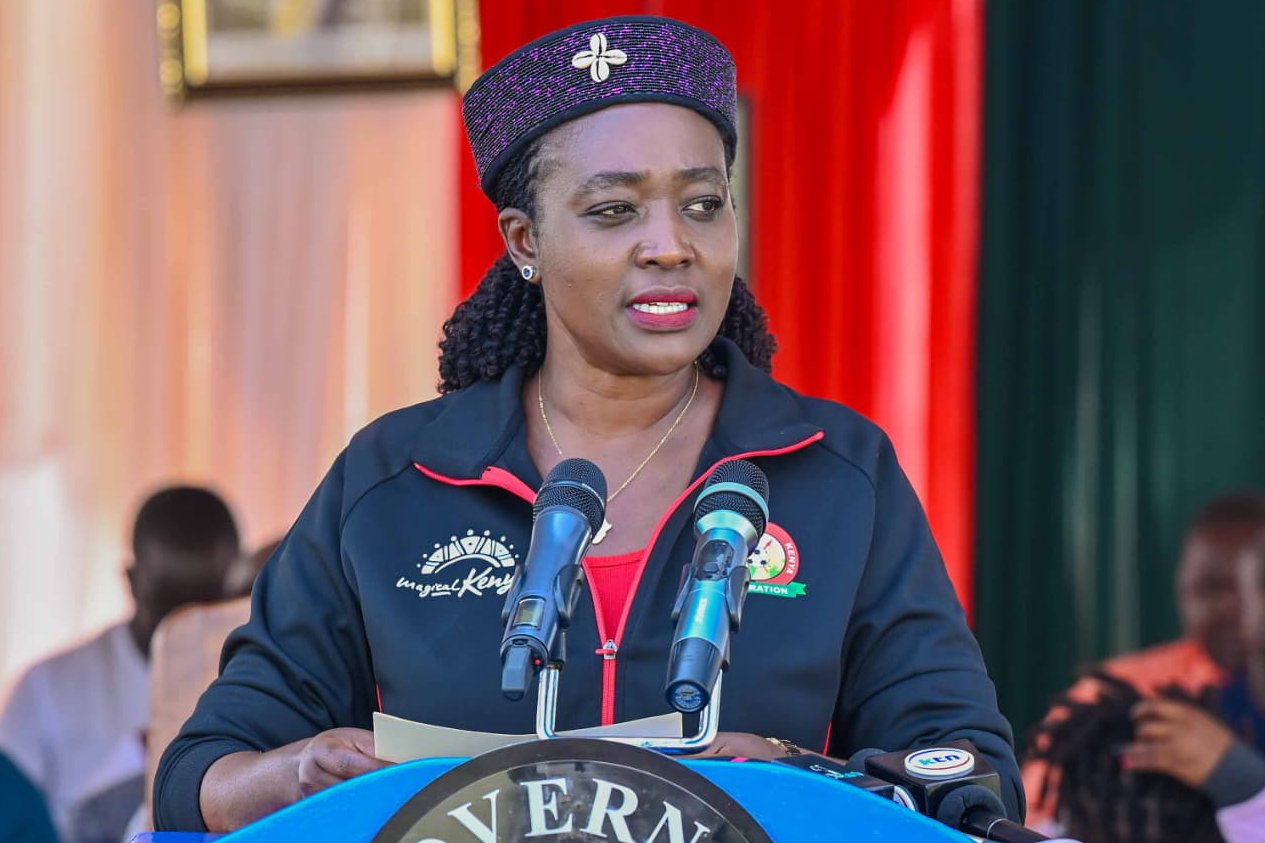
While the official agenda centered on sports development, youth empowerment and economic growth, Tuya’s remarks left little doubt that the project was also aimed at strengthening President William Ruto’s political footprint in a region long seen as resistant to his leadership. Mr Tuya, alongside Kisumu Governor Professor Anyang Nyong’o, directly linked the stadium and other planned infrastructure projects to the president’s achievements during his term in office. “I humbly ask you to remember the president in 2027. He has delivered on what he promised and he is still doing more,” Tuya told residents.Her appeal reflected the broader Kenyan Kwanzaa narrative that development, rather than historic political allegiances, should guide voters’ choices.By embodying this message in a high-profile state-funded project in Kisumu, the government appeared to be attempting to demonstrate inclusivity and challenge perceptions of regional marginalization.Tuya positioned the Moi Stadium project as part of the national agenda to modernize sports infrastructure as a catalyst for youth empowerment, social cohesion and economic expansion. She said the stadium will be built in accordance with FIFA and Confederation of African Football (CAF) standards and will feature a modern football pitch, an eight-lane athletics track, a covered pavilion, an amphitheater and ample parking facilities. “This groundbreaking ceremony underlines the government’s unwavering commitment to developing talent, promoting sporting excellence and investing in facilities that empower young people,” she said.Beyond sports, Tuya highlighted the economic potential of the project, pointing to job creation during construction and increased commercial activity once the facility is operational. This framework is consistent with the administration’s strategy to present infrastructure investment as both a development tool and a political equalizer across regions.The Kisumu stop also allowed Mr Tuya to outline a broader catalog of infrastructure projects planned for Nyanza, reinforcing the message that the region is firmly integrated into national development plans. The tacit political calculations were clear. Concrete projects could lead to goodwill and ultimately a vote in 2027.While welcoming the central government’s involvement, Governor Nyong’o placed the stadium within Kisumu’s historical and social fabric. He described Moi Stadium as the birthplace of football legends and an economic lifeline for families who have made their living from the sport for decades.He cited former Gor Mahia and Harambee Stars striker Peter Dawo, now the stadium manager, as an example of the transformative power of sports infrastructure. Dawo famously scored the winning goal in the 1987 African Cup Winners’ Cup final, a moment that cemented Kisumu’s place in continental football history.Looking ahead, Mr Nyong’o said the stadium redevelopment marks the beginning of a broader urban and economic vision for the county. He unveiled plans to integrate commercial space, a cultural center, an amphitheater, a sports museum and modern housing around the stadium complex, signaling a fusion of county and national development interests.The political significance of the ceremony was further amplified by the presence of international leaders of the Union of Urban and Local Governments of Africa (UCLG-A), including Ambassador Jean-Pierre Heron Mbasi and former Ekiti State Governor, Dr. John Kayode Fayemi. Their presence gave the project continental significance while reinforcing Kisumu’s position as the region’s sporting and economic hub.But it was Tuya’s direct appeal to voters that defined the day. Her remarks underscored Kenya’s Kwanzaa regime’s evolving political strategy of deploying high-impact development projects as a means of political engagement in areas outside of its traditional support base.As the countdown to 2027 gradually begins, the Kisumu Moi Stadium project shows how infrastructure development is intertwined with electoral ambitions. In Kisumu, the stadium launch was not just about bricks, grass and tracks. It was about building political bridges to the regions the government hoped to persuade.
Trending
- Absa’s Nalitha Balgobind talks about what is reshaping Africa’s capital markets
- Building Africa’s Hardware Future: Embedded Systems and Artificial Intelligence Laboratory for Universities
- Why the South African construction chain is on the radar of US investors
- African Development Bank approves $58 million solar mini-grid project to expand clean energy access in Eritrea
- The renminbi is winning over Africa, but can it rival the dollar?
- Is it wise to judge people by their “intelligence”?
- Things to look out for at construction sites this year
- South Africa develops R2 billion bond to restore critical catchment area
