


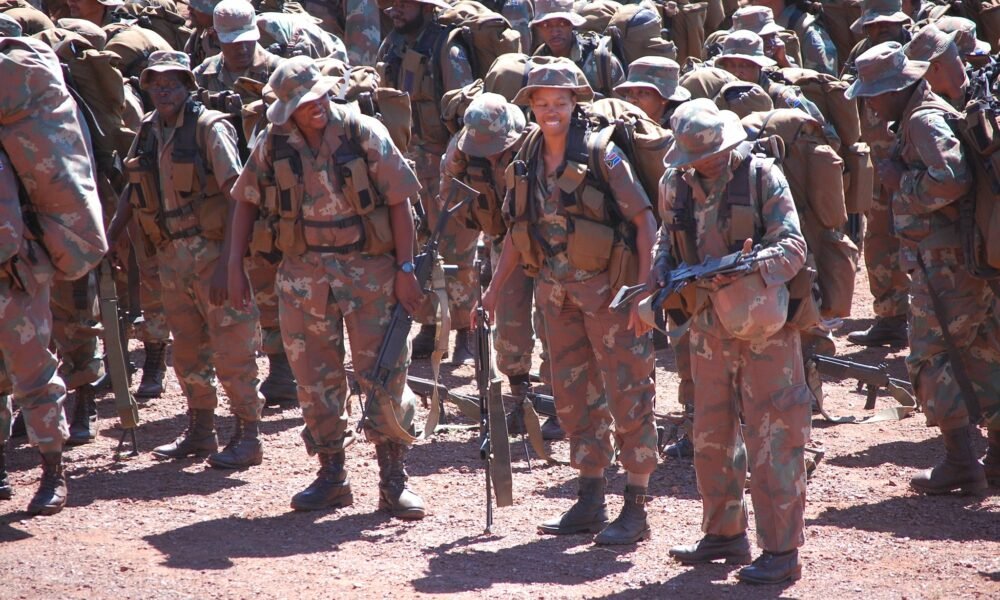
South Africans woke up this week to the kind of headlines that democrats don’t want to see: the military once again stepping in where the police can’t. The deployment of the South African National Defense Force (SANDF) across Gauteng, Western Cape and Eastern Cape has raised serious questions about the state of the country’s police and intelligence systems. And some security experts say the situation is even worse behind the scenes.
Signs that the criminal intelligence agency has collapsed
When President Cyril Ramaphosa first announced the deployment in his 2026 State of the Union address, the message was clear. SANDF will support SAPS in combating organized crime, gang violence and illegal mining. Within days, Acting Minister of Police Firoz Kacharia confirmed that the operation would be extended to the Eastern Cape.
But experts say the move signals something more troubling. Security analyst Willem Els believes the deployment is a frank admission that the SAPS crime intelligence unit is no longer functioning effectively.
Els said the country cannot act preemptively against gangs and syndicates without intelligence, so police operations are largely reactive. He said South Africa was witnessing the long-term effects of a criminal intelligence system hollowed out by corruption, political interference and the infiltration of criminal networks.
struggle with history
This is not the first time South Africa has attempted to use the military to stabilize crime-ridden areas. In 2017, SANDF was deployed to gang-infested areas such as Elsies River after a spike in violence on the Cape Flats. Although this intervention brought temporary peace, it did not reduce violent crime after the soldiers left.
Els warns that repeating the same strategy without modifying criminal information guarantees the same results. He noted that the murder rate had increased after the 2017 withdrawal and reminded that military presence only provides short-term relief.
Experts warn that criminal gangs are infiltrating systems
Concerns about the collapse of police intelligence are not new. Congressional hearings in 2025 exposed allegations of internal leaks, leadership turmoil, and incidents in which classified information was allegedly sold to criminals. Testimony before the Madranga Commission and the Select Committee revealed how drug cartels and organized syndicates were infiltrating the SAPS, sometimes with the help of senior officials.
Els believes that criminal organizations have effectively taken over parts of the criminal justice system, eroding the state’s ability to prevent crime rather than just respond to it.
SAPS announces it is stepping up plans
Police Minister spokesperson Kamo Mogosi said the department was meeting with stakeholders to improve its anti-gang strategy in the Western Cape. She said the revised stabilization plan would place greater emphasis on specialized forces and intelligence-led policing.
But experts say this is still not enough. Criminal intelligence remains extremely unstable, and years of mismanagement have left SAPS unable to obtain the actionable intelligence it needs to dismantle syndicates and prevent targeted assassinations.
We need long-term solutions, not military crisis management
The Institute for Security Studies has long warned against using the military as a stopgap solution to police failures. Senior Researcher Anin Kriegler and Director of Justice and Violence Prevention Lisette Lancaster say true community safety depends on routine policing, strong investigative efforts and evidence-based strategies.
Another security analyst, Andy Mashaire, agrees. He insists that the deployment of the SANDF is merely a response to police breakdown, not a cure.
A country looking for answers
South Africans have become accustomed to living with crisis after crisis, but crime remains one of the country’s most destabilizing threats. The latest SANDF deployment may bring temporary relief to targeted areas, but experts warn that without rebuilding the SAPS Criminal Intelligence Service from scratch, the country will continue to fight crime with one hand tied behind its back.
What is unfolding now is more than a security operation. This shows how deeply criminal networks have penetrated national structures. And until information systems are repaired, soldiers on the ground are limited in what they can do.
{Source:IOL}
Follow Joburg ETC on Facebook, Twitter, TikTok and Instagram
For more Johannesburg news, visit joburgetc.com.
