


In 2024, East and Southern Africa saw a historic surge in foreign investment. FDI inflows to the 21 countries of the Common Market for Eastern and Southern Africa (COMESA) surged 154% to $65 billion, while global inflows fell by 11% over the same period, according to the United Nations Conference on Trade and Development’s (UNCTAD) latest report, COMESA Investment Report 2025: Investment Trends and Policy Insights.
This significant increase was primarily driven by Egypt’s Ras El Hekma urban development project, and remains significant even if this megaproject is excluded. FDI remained up 16%, reflecting growing investor confidence across the region. COMESA now accounts for 4% of global FDI, up from 2% in 2023, and 7% of FDI flows to developing countries, more than double the previous year.
Infrastructure and public services drive growth
Investment in infrastructure and public services also reached record levels. International project finance (IPF) in the region increased by 93% to a total of $79 billion, accounting for 80% of Africa’s total IPF. The most attractive sectors include renewable energy, construction and network expansion, with major investments in Egypt, Tunisia, Rwanda and Malawi.
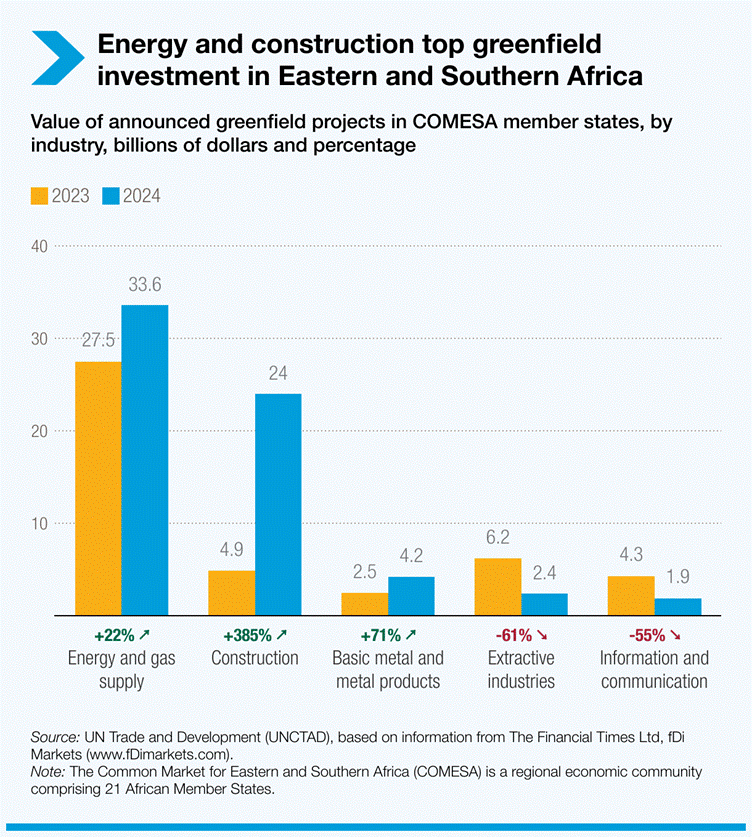
Greenfield investment remained strong, reflecting the direct establishment of new foreign companies in the region. The value of announced projects reached $77 billion, accounting for two-thirds of all greenfield investments in Africa. “These figures demonstrate that COMESA is emerging as a preferred destination for long-term investments, particularly in capital-intensive infrastructure and energy transition-related projects,” the UNCTAD report said.
Regional and sectoral disparities
Despite these successes, concerns about FDI concentration remain. In 2024, just five countries absorbed 90% of the total flow: Egypt, Ethiopia, Uganda, Democratic Republic of the Congo, and Kenya. This raises questions about the inclusiveness and sustainability of growth. Economic integration within COMESA remains low. Only 3% by volume and 6% by value of greenfield projects have been initiated in the bloc, highlighting the urgent need to strengthen regional cooperation.
Sectoral performance also shows striking contrasts. The construction sector saw an impressive 385% increase, led by Egypt, while basic metals increased by 71%. Investments in energy and gas continued to dominate, increasing by 22%. In contrast, extractive industries and information and communication technology (ICT) recorded declines of 61% and 55%, respectively, after several years of strong growth.
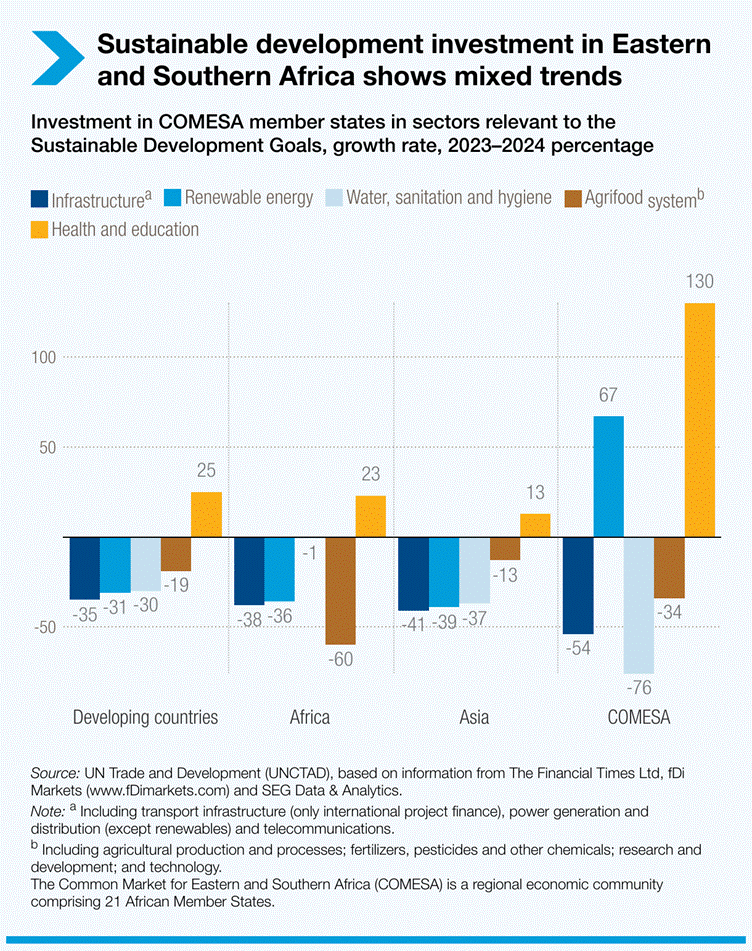
Regarding the Sustainable Development Goals (SDGs), FDI increased by 67% in renewable energy and 130% in human capital-related sectors such as health and education. However, investment in agriculture and food systems fell by 34%, and investment in water and sanitation fell by 76%, highlighting continued challenges in financing critical infrastructure.
Towards more inclusive and sustainable growth
To maintain this momentum, the UNCTAD report emphasizes the importance of expanding the investment base beyond the five major economies and accelerating industrialization by developing high-value-added industries and local suppliers. It also emphasizes strengthening digital infrastructure to address the growing investment gap in ICT, with a focus on human capital through innovative and blended financing for education, health and sustainable development. Finally, the report recommends improving data reporting to support evidence-based economic policy.
COMESA Secretary-General Chilishe Kapwepwe points out: “While the region has demonstrated its ability to attract large-scale investments, it is essential that these flows benefit all member states and contribute to sustainable and equitable development.”
Read the full report: COMESA Investment Report 2025: Investment trends and policy insights
