


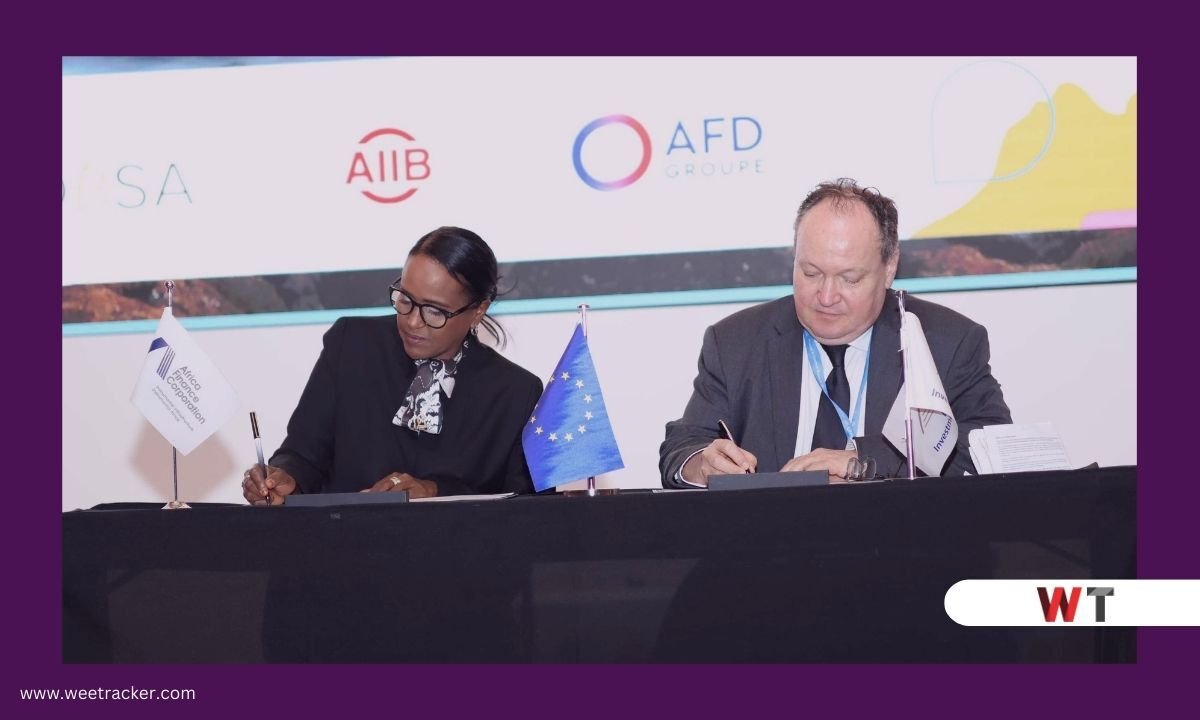
Major efforts to strengthen Africa’s infrastructure against climate change took center stage at the Finance in Common Summit in Cape Town, South Africa, where the European Investment Bank (EIB) announced a US$750 million contribution to the Infrastructure Climate Resilience Fund (ICRF).
Led by African Finance Corporation (AFC) and managed by its asset management arm, AFC Capital Partners (ACP), the fund aims to build climate resilience into Africa’s critical infrastructure, while mobilizing large-scale investments to address capital shortages in Africa’s greenfield infrastructure projects.
The Fund leverages the strong partnership between three key institutions: the European Investment Bank (EIB), the African Finance Corporation (AFC) and the Green Climate Fund (GCF), bringing together their respective expertise, capital and climate resilience efforts. While AFC provides infrastructure expertise, EIB brings financial strength and GCF provides primary loss protection, ensuring reduced investment risk and broad private sector participation.
As part of this commitment, the EIB has committed US$52.48 million to this fund. This investment complements a record US$253 million from the Green Climate Fund (GCF), which is GCF’s largest equity investment in Africa to date. The initiative, which received additional support from the Nigerian Government Investment Authority (NSIA) and Africa’s two major pension funds, demonstrates growing confidence in Africa’s ability to lead climate adaptation efforts.
EIB Vice-President Ambroise Fayol spoke at the signing ceremony and emphasized the importance of investment. “The EIB is committed to supporting private sector investment in climate-resilient infrastructure, especially in the regions most vulnerable to climate change.”
Closing the infrastructure gap on a continent vulnerable to climate change
Africa, the world’s most climate-vulnerable continent, faces an urgent need for infrastructure that can withstand extreme weather events, rising temperatures and changing environmental conditions. ICRF aims to embed resilience into every phase of infrastructure development, from design to construction to operation, to help critical projects withstand the escalating impacts of climate change.
To achieve this, the Fund will use blended financing mechanisms to de-risk private investments and make climate-resilient projects more attractive to investors. We are also introducing innovative tools such as climate risk parametric insurance, which provides immediate financial relief in the event of a climate-related disaster.
In addition to financing, the Fund will provide technical assistance to help African countries assess climate risks and develop robust adaptation strategies.
ACP’s funds aim to demonstrate that Africa can pursue a climate-resilient and sustainable development path by addressing market failures, reducing environmental risks, strengthening logistics, trade and industrialization, and accelerating the continent’s digital and energy transition.
“This fund is critical to filling the financing gap for climate adaptation in Africa,” said AFC Chairman and CEO Samaira Zubair. “By focusing on climate-resilient infrastructure, we are not only securing Africa’s economic future, but also creating opportunities for sustainable growth and job creation across the continent. We are proud to partner with EIB and other investors who share our vision of increasing the impact of climate finance.”
A path to unlocking US$3.7 billion for Africa’s future
The launch of the US$750 million ICRF is just the beginning. The fund is expected to mobilize up to US$3.7 billion for infrastructure projects across Africa, targeting critical sectors such as transport, clean energy, digital connectivity and industrial development, through strategic partnerships and co-financing mechanisms.
Each investment undergoes a rigorous climate risk assessment to ensure infrastructure projects are climate resilient and aligned with long-term sustainability goals.
Overall, ICRF is expected to support 10 to 12 large-scale projects across Africa once they are operational, each selected for its ability to drive sustainable growth while closing the continent’s infrastructure gap.
This is expected to create thousands of jobs during construction and long-term jobs once the project is operational. It is also aligned with global sustainability goals such as the EU’s Global Gateway Strategy, the African Union’s Agenda 2063, and the United Nations’ Sustainable Development Goals. The EIB’s investments directly support its climate goals, with 50% of its funds going towards climate action and, in particular, 15% towards adaptation by 2025.
As climate risks increase, the Infrastructure Climate Resilience Fund serves as a model for how strategic investments can foster both economic growth and climate resilience.
With strong support from African and international partners and billions of dollars in funding, the initiative will strengthen Africa’s infrastructure environment and ensure that the continent’s economic growth is not only sustainable but also resilient to the challenges of climate change.
