


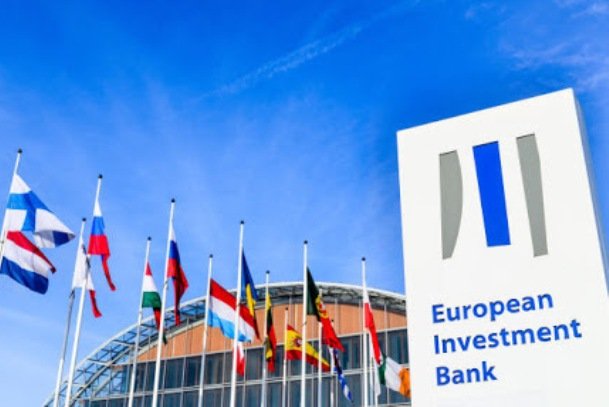
The European Investment Bank (EIB) today announced that it has committed to finance the $750 million Infrastructure Climate Resilience Fund (ICRF) in partnership with the African Finance Corporation (AFC). ICRF aims to accelerate climate adaptation and sustainable infrastructure across Africa.
As part of this initiative, the EIB announced that it will invest $52.48 million in the fund, which will be managed by AFC Capital Partners (ACP), the asset management arm of AFC.
ACP has already secured a $253 million investment from the Green Climate Fund (GCF), making it GCF’s largest equity investment in Africa to date. Also participating in the fund are the Nigerian Government Investment Authority, which manages Nigeria’s sovereign wealth fund, and two African private pension funds.
According to a statement sent by the EIB to Financial Nigeria, the ICRF aims to accelerate Africa’s climate adaptation by embedding resilience measures at every stage of infrastructure development, from design to construction and operation. The fund uses blended finance to de-risk private investments and also integrates innovative tools such as climate risk parametric insurance, which increases protection against climate-related risks and losses. The EIB revealed that the fund will also provide technical assistance to strengthen the capacity of countries seeking to assess and adapt to climate risks, in line with the European Union’s Global Gateway Initiative and the United Nations Sustainable Development Goals.
The EIB formally signed the agreement today at the Finance in Common Summit (FICS) in Cape Town, South Africa.
“The EIB is committed to supporting private sector investment in climate-resilient infrastructure, particularly in the regions most vulnerable to climate change,” EIB Vice-President Ambroise Fayol said at today’s ceremony. “This partnership with African Finance Corporation and the launch of ACP’s Infrastructure Climate Resilience Fund are important steps towards accelerating Africa’s green digital transition and ensuring a sustainable future for all. EIB’s investment is not just about initial capital injection, but also about synergies by attracting more investors, mitigating risks, showcasing successful projects and promoting best practices in climate finance.”
AFC Chairman and CEO Samaira Zubair said the fund is critical to filling the financing gap for climate adaptation in Africa. “By focusing on climate-resilient infrastructure, we are not only securing the future of our economies, but also creating opportunities for sustainable growth and supporting job creation across the continent,” Zubair said.
The EIB provided further information about the ICRF, saying the fund is focused on Africa, the world’s most climate-vulnerable continent, by investing in infrastructure that can withstand the effects of climate change while reducing carbon emissions. The ICRF will prioritize resilient, low-carbon solutions across transport and logistics, clean energy, digital infrastructure and industrial development to ensure sustainable growth, it added.
Once operational, the fund aims to invest in a diversified portfolio of 10 to 12 projects across Africa. We also support countries and organizations in capacity building and deployment of climate risk assessment and adaptation solutions.
Major projects in the ICRF pipeline include the Lobito Corridor, of which AFC is the lead developer. The project is expected to provide an important trade and logistics route connecting Angola, the Democratic Republic of Congo (DRC) and Zambia.
The EIB said its investments in the fund are consistent with the EU’s strategy, the African Union’s Agenda 2063 and the UN’s Sustainable Development Goals, and are aimed at supporting the implementation of Nationally Determined Contributions, which are based on countries’ voluntary commitments to reduce carbon emissions under the 2015 Paris Climate Agreement.
AFC was established in 2007 to foster investment in infrastructure and industry across Africa. The company invests in infrastructure assets in the power, natural resources, heavy industry, transportation and communications sectors. With 44 member countries, the AFC has invested more than $15 billion in 36 African countries since its founding.
