


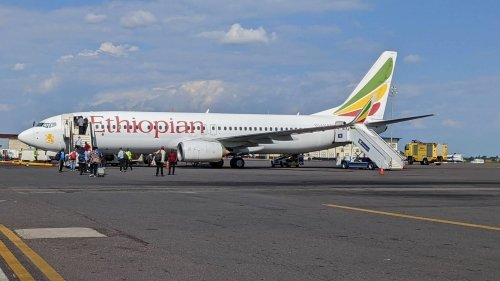
Photo by Amit Jain
Ethiopian Airlines has signed a contract with a consortium led by Middle East-based architectural and engineering consultancy Dahl to develop what will be Africa’s largest airport. The four-runway facility, located near Bishoftu, about 40 km from the capital Addis Ababa, will eventually accommodate 110 million passengers a year and park 270 aircraft.
Construction will proceed in stages, with the first phase designed to accommodate 60 million passengers, estimated to cost at least US$6 billion, and expected to be operational in 2029. The project will be financed through loans, and several companies have already expressed interest.
The consortium’s responsibilities include technical advisory, engineering, project management and construction supervision for the development, which includes 600,000 square meters of passenger facilities, 126,190 square meters of airline support area and 28,050 square meters dedicated to cargo infrastructure.
Addis Ababa Bole International Airport, the current home of state-owned Ethiopian Airlines, is approaching its annual passenger capacity of 25 million. Ethiopian Airlines, Africa’s largest passenger airline, will carry 17.1 million travelers in the 2023/2024 financial year, with this figure expected to rise to 20 million this year. The new airport will be connected to Bole via high-speed rail and a new road network.
The new airport’s location also offers operational advantages due to its lower altitude compared to Bole International Airport (2,334 meters above sea level), one of the world’s highest major aviation hubs. This lower altitude improves the aircraft’s take-off performance, allowing Ethiopian Airlines’ aircraft to carry more passengers and cargo with less fuel. As altitude increases, air density decreases, which reduces lift and engine thrust, potentially requiring the aircraft to carry less fuel, passengers, or cargo to ensure a safe takeoff.
Addis Ababa has emerged as the continent’s air logistics hub. Bole International connects major Asian cities such as Shanghai, Mumbai and Singapore with African capitals. Construction of the new airport is expected to divert some traffic and logistics traffic away from aviation hubs such as Dubai. Air traffic in Africa is expected to nearly double by 2035, with 260 million passengers flying to and from the continent. Additionally, the successful implementation of the African Continental Free Trade Area is expected to increase air cargo demand by 28%.
References
“Maritime Transport Review in 2023”, United Nations Conference on Trade and Development, 2023.
“Factors Affecting Aircraft Payload,” Aviation Planning, June 13, 2024
“Ethiopian Airlines signs contract to design “Africa’s largest airport”, Reuters, August 9, 2024
“Dar wins $6 billion contract for Ethiopian Airlines’ innovative airport project”, Addis Insight, August 9, 2024
“Ethiopian Airlines signs US$6 billion deal for mega airport”, South China Morning Post, August 10, 2024
“Ethiopian Airlines signs $6 billion mega airport deal”, News 24, August 11, 2024
“Ethiopian Airlines signs consulting agreement for Ethiopia’s new international airport with Dar-led consortium”, Dar, August 12, 2024
“Ethiopian Airlines signs $6 billion airport construction contract”, CGTN Africa, August 12, 2024
“Ethiopian Airlines signs contract with Dar Al Handassah for mega airport city development”, Ethiopian Airlines Group, August 12, 2024
“Focus Africa Media Briefing”, International Air Transport Association, accessed August 15, 2024.
