


Addis Ababa, February 14, 2026 (ENA) – Ethio Telecom is expanding across Africa, bridging the digital divide and connecting the continent’s future through strategic partnerships, Prime Minister Abiy Ahmed said today.
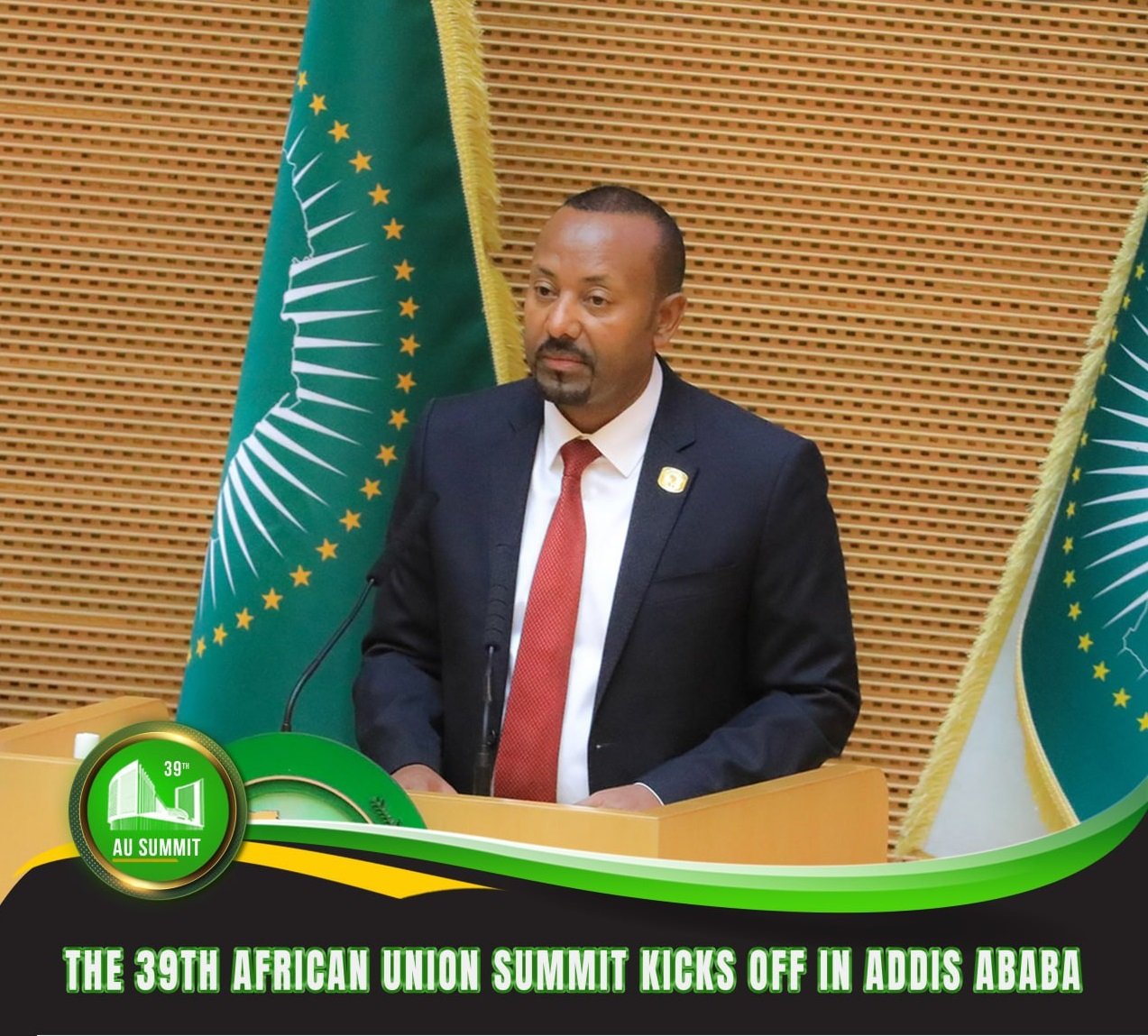
Addressing the 39th African Union General Assembly, the Prime Minister highlighted Ethiopia’s efforts to drive digital transformation as part of a broader continental vision.
“Beyond aviation, Ethio Telecom is expanding across Africa, bridging the digital divide and connecting the continent’s future through strategic partnerships,” he said.
Recall that Ethio telecom launched “NEXT HORIZON: Digital & Beyond 2028 Strategy”. This is a strategy that goes beyond continuity and re-envisions its role in shaping Ethiopia’s digital future and expanding inclusive growth across Africa.
The strategy aims to transform Ethio Telecommunications into a globally competitive, regionally diversified and digitally enabled company.
This is a call to go beyond connecting to platforms, ecosystems and solutions that advance national development plans, while developing new opportunities in the regional and global digital economy and positioning the company among technology and innovation leaders in Africa and beyond.
In his speech at the summit, Prime Minister Abiy positioned digital transformation as part of Africa’s defining moment, noting that the continent’s strategic assets lie in innovation and governance.
“Today, Africa stands at a defining moment, and we recognize that the continent’s most strategic assets are not just what we extract, but also what we design, build and govern. Progress is achieved when visions are translated into systems and ideas are translated into lasting institutions.”
Ethio Telecom, Djibouti Telecom and Sudatel Group therefore signed a landmark trilateral strategic agreement under the Horizon Fiber Initiative on February 4, 2026, marking a major milestone in regional digital integration through the deployment of high-capacity cross-border multi-terabit fiber optic infrastructure.
The agreement establishes a resilient terrestrial fiber corridor that connects an international submarine cable landing station in Djibouti and extends across Ethiopia to a landing station in Sudan. This new route will create a scalable, secure and diverse regional connectivity pathway that connects East Africa to global digital connections.
Under the Digital Ethiopia 2030 strategy, Ethiopia is also working to build a digital public infrastructure that puts citizens at the center of service delivery.
“Under Digital Ethiopia 2030, we are building a digital public infrastructure that puts citizens at the center of service delivery by linking the national digital identity, FAIDA, with payment systems and large-scale data exchange. We will enable secure access to services, seamless transactions, and responsible data sharing to advance engagement and move the economy forward,” Prime Minister Abiy said.
He further pointed out that Ethiopia’s technological transformation is guided by integration and innovation.
“In 2020, Ethiopia built on this foundation by establishing Africa’s first Artificial Intelligence Center. Through purposeful collaboration, we are preparing to establish an AI University rooted in Ethiopia’s Medemer philosophy. This institution will integrate human values and machine intelligence, local context and global relevance, and scientific rigor and applied impact. Technology will certainly drive growth and position Africa as a global contributor in the age of intelligence.”
In addition to digital connectivity, Prime Minister Abiy outlined major infrastructure investments aimed at anchoring Africa in global value chains.
“Through Ethiopian Airlines, we connect people, connect markets and move goods. To maintain this momentum, we are building Africa’s largest airport – the next generation gateway that will anchor the continent in global value chains.”
The Prime Minister concluded by reaffirming Africa’s shared responsibility in shaping Africa’s future.
