


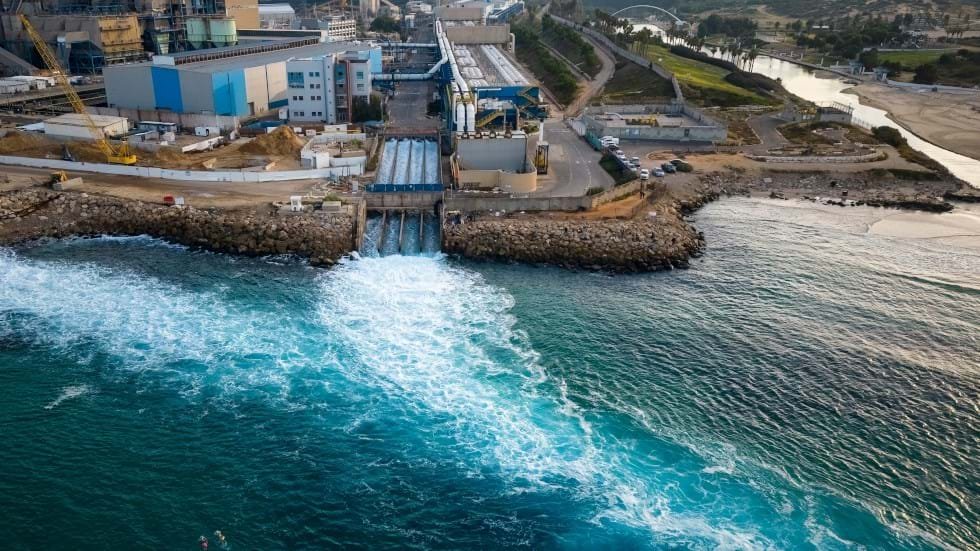
Construction of Africa’s largest desalination plant is taking shape as Morocco faces its worst drought in 40 years. French water specialist Veolia has agreed in principle to build a desalination plant near the capital, Rabat. This project will be implemented under a public-private partnership and is expected to ensure its realization. In addition, the plant is expected to be able to produce 822 million liters of drinking water every day.
This feat makes it the largest in Africa and the second largest in the world. The power plant will also ensure water supply for approximately 9 million residents in the Rabat, Kenitra and Fez regions. Veolia, the contracting company, is tasked with financing, designing and constructing the factory. It also plans to operate the plant for 35 years before handing it over to the Moroccan government. Veolia looks forward to ensuring the rapid realization of this monumental project.
Current status of Africa’s largest seawater desalination plant
The installation of Africa’s largest desalination plant is a promising undertaking that Veolia hopes to complete soon. The company said it will “bring the best of our cutting-edge expertise in desalination to the reference plant in terms of efficiency, innovation and environmental protection.” Desalination plants are expected to be facilities that can primarily utilize electricity obtained from renewable energy sources. Once completed, it is expected that the government will be relieved of the stress of securing water. The country is currently in the worst position, suffering a seven-year drought as rainfall continues to decline significantly.
In addition, man-made water sources and reservoirs are at record lows, making it difficult to secure water. The pressures governments are facing are forcing them to find new ways to deal with the crisis. According to the World Resources Institute, Morocco ranks 22nd country in the world facing water stress. Several factors contribute to this, including insufficient rainfall, climate change, and urbanization. In addition, population growth also plays an important role in this predicament.
Also read:
Construction of Southern Africa’s largest desalination plant
The importance of Morocco’s water stress relief program
The Moroccan government aims to build Africa’s largest desalination plant in a bid to reduce water stress. But this is only part of the nation’s planned ambitions to secure water supplies. Four years ago, the country announced an eight-year, $12 billion program to address the problem. The scope of this program included building dams, irrigation, and improving water supplies to rural areas. The plan also included the construction of water treatment facilities to enable reuse. This plan became the basis for the country’s 2020-2050 National Water Plan, which was approved by the government.
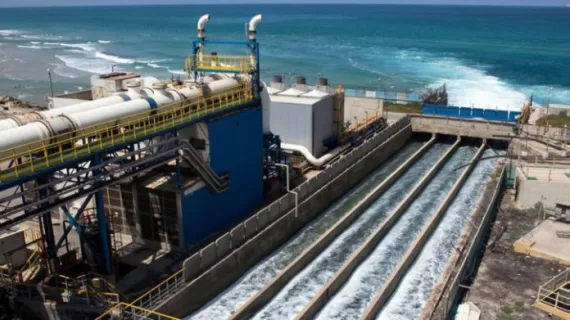
Over this period, the country spent approximately $40 billion on various water projects across the country. This includes the interconnection of water supplies in key rural areas throughout Morocco. The US aid agency USAID notes that many rural areas rely on a single source of water. Furthermore, it highlights that the lack of a functioning sanitation network and wastewater treatment system is increasing the shortage.
Also read:
Senegal cancels $800 million desalination plant contract with Saudi Arabia’s ACWA Power
A mega $8 billion desalination project in Egypt is taking shape as the Egyptian government finalizes the location of the land.
