


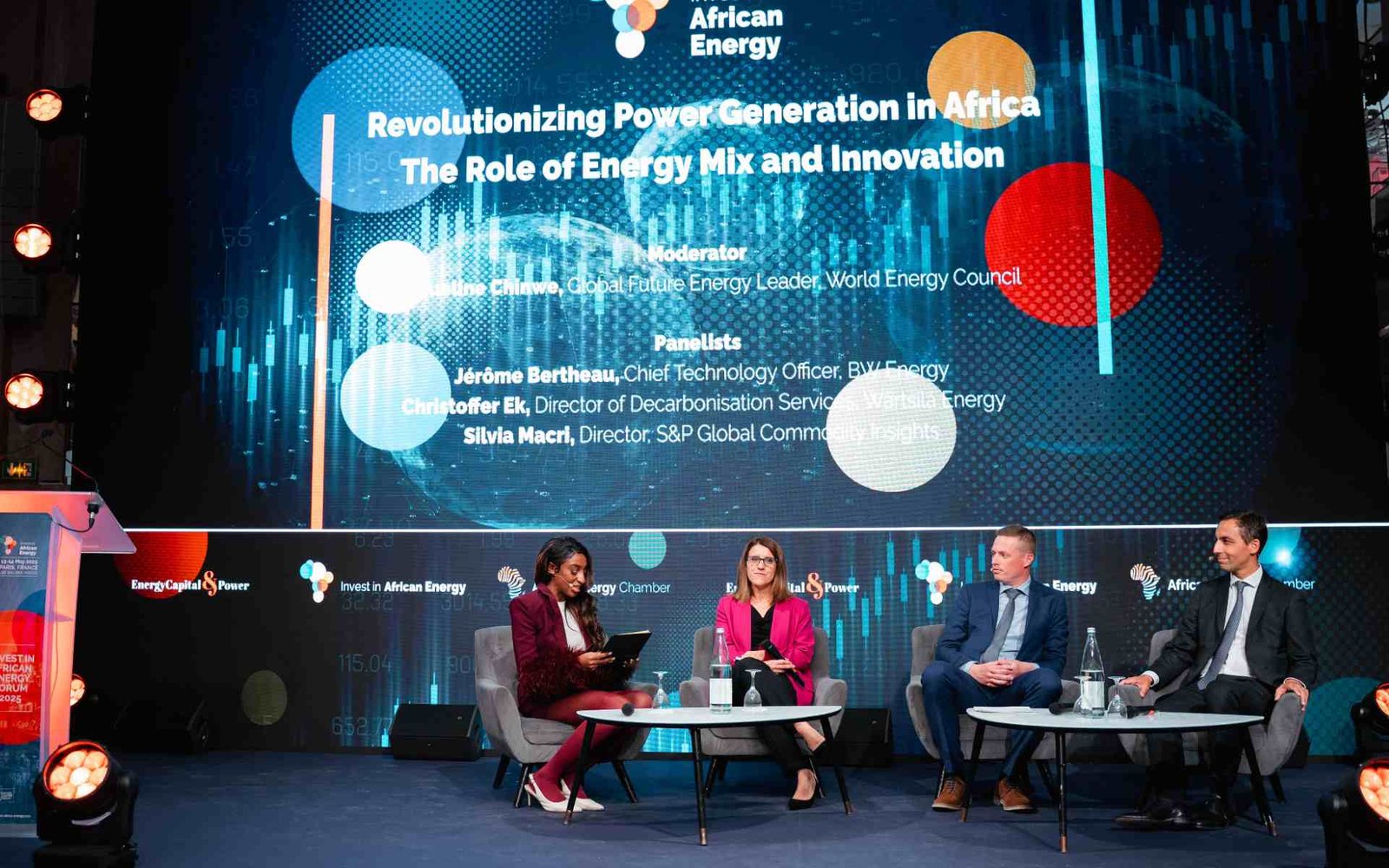
At the Africa Energy Investment Forum in Paris, industry leaders emphasized the urgent need for Africa to adopt a diverse and flexible energy mix combining renewables, fossil fuels and off-grid technologies to meet Africa’s growing electricity needs and avoid a worsening power crisis.
In a panel discussion entitled ‘Revolution in power generation in Africa: the role of energy mix and innovation’, panellists said Africa’s path to universal electrification depends on adopting a hybridized and context-sensitive approach that can deliver both stability and sustainability.
“Energy in Africa needs to think long-term. Renewable energy is cheap, but intermittent and uncontrollable. Using fossil fuels as a base load (to offset) the intermittency of renewable energy is compatible,” said Jérôme Bertaud, chief technology officer at BW Energy.
Bertaud cited the company’s gas-to-power project in Namibia as a model for scalable, market-tailored development. “We are developing a project in Namibia to produce and transport gas from the Kudu gas field. This project is being done in stages, so we are developing it in line with Namibia’s growth. The first step is a viable baseload of 200MW, which can be increased as the market grows,” he said.
He added that the project is progressing rapidly towards FID: “We have submitted a site development plan, completed conceptual studies and are in the process of further evaluating the reservoir. We believe there is potentially more gas and oil. We are drilling the first well this year and the second well next year.”
Discussions centered on how to bridge the gap between ambition and actual implementation, particularly in unelectrified regions where national grids are weak and investor confidence depends on returns and reliability. Panelists stressed that successful models already exist and that Africa’s energy transition needs to be guided by both technological and commercial innovation.
“The first step on the ladder is hybridization. We need to deploy more renewable energy, which is how we offset costs and become more sustainable,” said Christopher Ek, Director of Decarbonization Services at Wärtsilä Energy, stressing that “hybridization is key for African communities when it comes to affordable, reliable and sustainable energy.”
Sylvia Macri, associate director at S&P Global Commodity Insights, said the continent’s per capita electricity consumption hovers around 500 kWh per year, a fraction of the global average, and the risks are high. Over-reliance on a single energy source is a major cause of Africa’s frequent power outages and unreliable supplies.
“Many electricity mixes are overly dependent on fossil fuels or rely on a single power source, which poses a significant risk factor. Many markets continue to experience outages and crises,” he said, adding that “power disparities cannot be resolved simply by adding capacity.”
Mr. Macri cited Kenya as a regional success story where strategic investments in geothermal energy have led to significant increases in electricity access. “Kenya has doubled its access to electricity in less than 10 years,” Macri said, stressing that with the right mix, Africa has a unique advantage as it has broad access to both renewable and fossil resources.
