


The United Nations Peacebuilding Commission is currently considering where and how it can contribute to better management of natural resource development as part of its newly strengthened mandate to seek to prevent conflict worldwide. “We have supported the kinds of discussions that are needed between people and governments, and between governments and businesses,” Oscar Fernández Taranco, UN Assistant Secretary-General for Peacebuilding Assistance, told me.
In Liberia, for example, the United Nations Peacebuilding Fund is trying to help improve resource contract management and community grievance mechanisms to reduce tensions that could lead to conflict. For the past two years, Liberia has suffered from the effects of the Ebola outbreak and low global commodity prices. Accordingly, resource extraction sites have become sites of hostage taking, riots, and other disturbances. The Liberian government sought assistance from the United Nations to improve public involvement in natural resource investment transactions, business operations, and income, among other things. UN agencies believe they are best placed to act in helping to manage the space between communities, governments and businesses.
The African Union also aims to increase community involvement in the extractive sector to take greater responsibility for ensuring peace and security on the continent. The AU adopted the African Mining Vision in 2009, followed by the corresponding action plan in 2011 and the National Mining Vision Guidebook in 2014. African regional economic communities have also developed additional governance frameworks. In particular, the Economic Community of West African States’ 2008 Conflict Prevention Framework includes efforts to strengthen community engagement and empowerment regarding natural resources. These various plans all link natural resources to conflict prevention and emphasize the importance of community negotiation.
The UN and AU are coordinating efforts to target illicit financial flows from Africa. This is in line with the findings of the February 2015 Mbeki report, which emphasized the need to keep resource revenues within countries of origin. The report also highlights unequal contracts that facilitate bribery, tax avoidance through unfair transfer pricing, and the complicity of international financial institutions in these practices.
By restructuring natural resource contracts and restricting illicit financial flows, African countries could gain greater capacity to increase spending on development and peacebuilding projects. However, this is not always a benefit, as remote communities, especially in areas where government institutions are highly centralized, are often negatively impacted by mining projects.
Building resilience through community engagement
According to the African Development Bank’s 2014 annual report, the extractive sector accounts for more than half of Africa’s exports, up to 90% in some countries. This level of dependence creates significant risks during commodity market downturns, such as the one we are currently experiencing.
Increased interaction between local communities and the extractive industry will diversify the types of mining activities that take place, allowing them to better respond to companies’ sourcing and workforce needs. Isabel Ramdoux, Senior Advisor at the African Minerals Development Center, outlined the value of dedicated local content policies in mining operations as a means of achieving this.
Increased community participation also increases societal resilience. Strengthening dialogue and coordination between communities, businesses, and governments can help prevent social tensions. An October 2015 assessment of mining in Mali’s Kays region noted the potential for conflict between communities over the distribution of employment opportunities and other benefits such as health centers and schools. In Kays, the company and community consultation process failed to adequately consider the negative impacts of the mine on villages outside the immediate area. This has heightened tensions over the perceived unequal distribution of benefits. Furthermore, selective consultation and recognition of land ownership discrepancies by companies led to conflicts between communities.
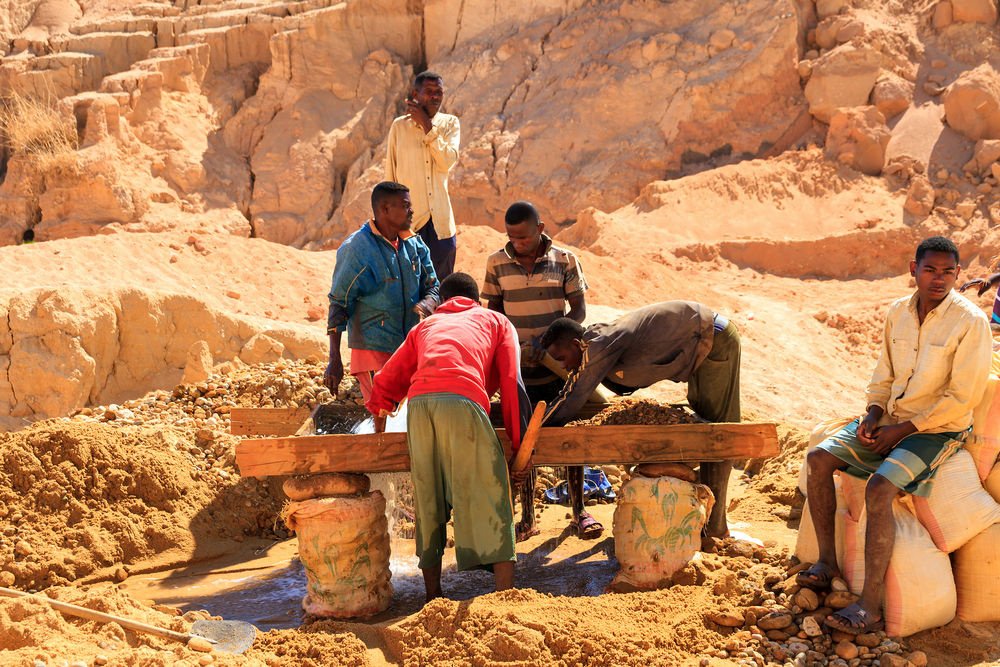
Efforts to increase land ownership and formalize the extractive sector could reduce potential violence over natural resources, especially among vulnerable and marginalized groups. For example, a 2016 panel noted how legal frameworks can provide “artisanal” women miners with access to land rights and dispute resolution mechanisms. Furthermore, formalization of this nature may provide an avenue to benefit from the inclusion of women in peacebuilding processes. Improving and formalizing community interactions with businesses and governments over natural resources can reduce vulnerability by preventing the development of informal economies that can easily be used to finance criminal organizations and armed groups. Nevertheless, positive and mutually beneficial relationships between communities and businesses have so far proven elusive.
From a business perspective, investing in responsible, community-focused operations not only secures a social license to operate, but also ensures compliance with international standards contained in the United Nations Guiding Principles on Business and Human Rights and the United Nations Global Compact. Proactive investment in community relations and conflict prevention can also reduce operating risk, thereby increasing productivity and profit margins. As outlined in the 2005 International Alert Guide for Extractive Industries, conflicts impose costs such as destruction of materials, temporary delays in operations due to strikes, shutdowns due to safety concerns, and supply chain disruptions. A 2014 Harvard Kennedy School report examined 50 ongoing corporate-community conflicts around the world and found that the most frequently cited, but often overlooked, economic cost of community-level conflict is lost productivity due to delays.
Although many resource companies pursue strong community relationships in the context of corporate social responsibility, a 2013 study by the Center for Mining Social Responsibility found that community relationships and development remain missing from the mining industry’s core business model. This means that investments in these areas may suffer from cost reductions when commodity prices fall.
A Pan-African investment law being developed by several governments on the continent will provide an improved legal framework for companies operating in Africa. But more political commitment is needed to stop seeing Africa simply as a lucrative business opportunity. Monica Juma, Kenya’s chief secretary at the Ministry of Foreign Affairs and International Trade, said at an International Peace Research Institute event in May this year: “Africa cannot be a place where you go just to do business for high returns in high-risk situations.” “This issue needs to be brought up for discussion in terms of stabilizing risk factors in Africa.”
Meanwhile, the mining sector and affected communities face new challenges such as climate change, making social and economic stability even more important for conflict prevention. Indeed, the African Development Bank’s High-Level Panel on Fragile States has identified issues around extractive industries, climate change, and resource conflicts as key drivers of Africa’s fragility. Peacebuilding strategies must therefore foster conflict- and climate-smart contracts between all parties.
African ownership for sustainable peace
Majid Abdelaziz, UN Under-Secretary-General and Special Adviser for Africa, said building the necessary linkages between resource extraction and resilience on the continent must start with the AU. “The United Nations would not be able to launch this kind of global approach to extractive industries because it would face opposition from countries that have large multinational corporations profiting from them,” he said.
Further progress will be linked to continued consideration by the United Nations and the AU on how best to pursue the concept of “maintaining peace.” The United Nations Security Council and the General Assembly adopted similar resolutions in April this year, recommending: this A new vision for peacebuildingThis is a move away from a reactive approach that emphasizes peacekeeping. More prevention strategies. INatural resource governance in Africa could be improved primarily through increased community involvement and could prevent conflict by: Promoting inclusion and promote resilient economic development. The UN and AU therefore need to pursue improved dialogue with local stakeholders and fairer contracts for resource development, while continuing to emphasize the business rationale for doing so. This is a valuable opportunity to create African ownership of peacebuilding in Africa.
Jonathan Rosen is an independent researcher on peacebuilding and violent extremism.
This article was originally published on IPI Global Observatory.
