


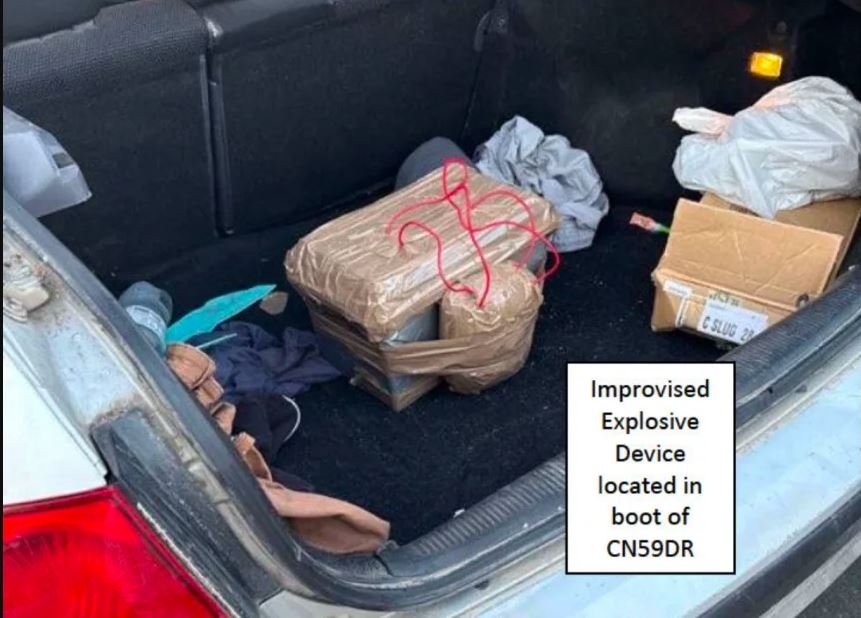
On December 14, 2025, two gunmen killed 15 people, including children, during a Hanukkah festival attended by approximately 1,000 people at Bondi Beach in Sydney, Australia. Police and Australian intelligence agencies said the incident was an Islamic State-related terrorist attack with anti-Semitic motives.
For decades, terrorism has been viewed in South Africa as a distant phenomenon associated with foreign conflicts, ideological extremism elsewhere, or regions already destabilized by insurgency. This perception has fostered the quiet assumption that while violent crime is endemic, terrorism is impossible.
Recent attacks in countries such as Australia call that premise into question. They demonstrate that modern terrorism no longer requires structured networks, overseas training, and long planning cycles. Increasingly, it manifests as solitary or small-cell violence, carried out rapidly, locally, and below conventional standards of intelligence.
The question for South Africa is not whether it shares Australia’s threat profile, but whether it has adapted its security posture to increasingly decentralized and rapidly evolving violence.
Defining an “Australian” attack
Australian-style terrorist attacks are defined by operational simplicity rather than ideology.
These incidents typically include:
Single attacker or very small cells Minimal logistical preparation Little or no external coordination Use of readily available weapons such as firearms, vehicles, and knives Targeting of soft civilian environments such as shopping centers, transportation hubs, religious sites, and public events Short execution schedules that limit intelligence alerts
Such attacks exploit detection gaps rather than force, making them difficult to prevent and difficult to contain once initiated.
South Africa’s risk profile: different, not exempt
South Africa does not face continued terrorist activity. However, some domestic situations are consistent with environments in which lone-actor attacks have occurred elsewhere.
South Africa’s illegal firearms market is well established and complemented by legal ownership and documented leaks from state and private sources. Access to weapons is not a meaningful barrier to violence.
Urban density and soft targets
Metropolitan areas have predictable concentrations of civilians with limited physical protection, shopping malls, transportation nodes, religious sites, universities, and large public events.
normalization of violence
A high baseline of violent crime may delay the recognition of terrorist-style incidents, especially in the early stages.
social and economic pressures
Although not deterministic, grievance narratives, marginalization, and social fragmentation create conditions in which individual radicalization can occur unnoticed.
Individually, these factors do not guarantee terrorism. Collectively, they lower that threshold.
Intelligence and early warning: structural constraints
Solitary attacks challenge traditional intelligence models. They are independent of communication networks and organizational structures. Instead, they emerge from the trajectory of individual actions and are often largely invisible until they are carried out online.
South Africa’s intelligence environment remains largely crime-centric, creating several vulnerabilities.
Limited ability to assess behavioral threats Fragmented ownership of intelligence across government agencies Poor integration of online indicators with physical world risks Reactive rather than predictive threat analysis
Internationally, many isolated attacks are only well understood after the fact, highlighting their inherent difficulty in preventing them without a proactive, threat-focused intelligence framework.
Tactical readiness: non-immediate capabilities
South Africa has skilled tactical response forces within the SAPS and SANDF. The challenge is not capacity, but availability and response time.
In solo attacks, the outcome is often determined within the first 5 to 10 minutes, before specialized forces arrive. Initial containment is typically performed by patrol personnel or private security personnel.
Without extensive training for active threats at the first responder level, responses will be delayed and fragmented. In such scenarios, speed, clarity, and decisiveness are more important than special firepower.
Command and Control: Silent Vulnerabilities
Incidents involving multiple agencies often fail at the command level rather than tactically.
Some of the open questions include:
Who takes command in the first few minutes? How is authority transferred once senior forces arrive? How are civilian security responders integrated or controlled? How is the medical response synchronized with tactical operations?
Without clear principles, decisions become reactive, precisely when consistency is most important.
Private security: an unintegrated layer of defense
South Africa has the world’s largest private security sector, often arriving on the scene before official forces. However, its role in counterterrorism remains undefined.
Challenges include:
No standardized counter-terrorism training Limited legal clarity regarding intervention powers No formal command integration with SAPS No structured intelligence feedback loops
This represents a strategic contradiction. The country’s largest armed security force remains structurally separated from the national counterterrorism plan.
Medical care and trauma response: the overlooked front line
The survival of the injured person depends not only on incapacitating the attacker, but also on prompt trauma treatment.
Jurisdictions that reduce deaths will integrate:
Tactical emergency medical support Immediate hemorrhage control training Civilian first aid awareness Securing casualty evacuation routes
Although South Africa’s emergency medical services are skilled, they are not consistently integrated into hostile environment response plans.
Civilian preparedness: final variable
Perhaps the most decisive factor in reducing casualties is civilian action.
Countries that invest in public threat education, clear travel guidance, and national warning systems consistently have lower fatality rates. South Africa lacks a unified national framework for civilian response to terrorist-style incidents, leaving its citizens relying on instinct rather than preparation.
Comparative reality check: Australia vs South Africa
Data-driven comparisons reveal key differences in readiness.
Category Australia South Africa Key implications Firearms availability Approximately 14-15 civilian firearms per 100 people. Strict Licensing and Restricted Illegal Distribution Approximately 9 to 13 legal firearms per 100 people. A large and persistent illegal firearms market Illegal access in South Africa lowers the threshold for lone-actor violence Police presence Approximately 1 police officer for every 400-450 people. Distribution in urban areas is generally even: approximately 1 police officer for every 350 to 380 citizens. Uneven distribution and high saturation of violent crime Staffing ratios mask actual operational burden Training and readiness Widespread implementation of active threat and first response training Training is uneven. We continue to increase our response capacity based on the volume of crime Readiness varies more than the numbers indicate Response times First responders typically arrive within 4 to 6 minutes in major metropolitan areas Response times vary widely. Tactical forces often arrive after first casualties Speed of first contact is decisive Tactical deployment Early containment by general duty officers Increased reliance on specialized tactical forces Too much specialization delays intervention Public alert systems Emergency alert systems covering regions across the country No unified national emergency alert system Civilian behavior during incidents remains uncontrolled
Strategic impact beyond casualties
A single terrorist-style incident causes more than just immediate harm.
Shock to investor confidence Political pressure for reactive legislation Strains in social cohesion Decline in public trust in security institutions
These secondary and tertiary effects often outweigh the tactical damage itself.
Bottom line: Preparation is a choice
Although the likelihood of an Australian-style terrorist attack occurring in South Africa remains low, the potential for serious consequences is high. It would be a strategic mistake to ignore it because it does not match past threat patterns.
Preparedness does not require fear-based policies or the militarization of public spaces. It requires:
Honest threat assessment Integrated intelligence structures Distributed response training Clear command principles Civil security integration Public awareness and resilience
The most dangerous assumption is not that such an attack will occur, but that South Africa will be given time to adapt after it occurs.
As global threat patterns become more dispersed, the question is no longer whether South Africa resembles countries once considered low risk, but whether it has learned from them.
About the author
Armand Badenhorst is a former member of the South African Police Force, with experience in hostage negotiation and high-risk security. He has completed his national police certification and currently oversees residential security operations. Armando is pursuing postgraduate studies in Business Administration with a focus on strategic risk and private security governance. His work focuses on operational readiness, organizational resiliency, and managing complex security environments.
