


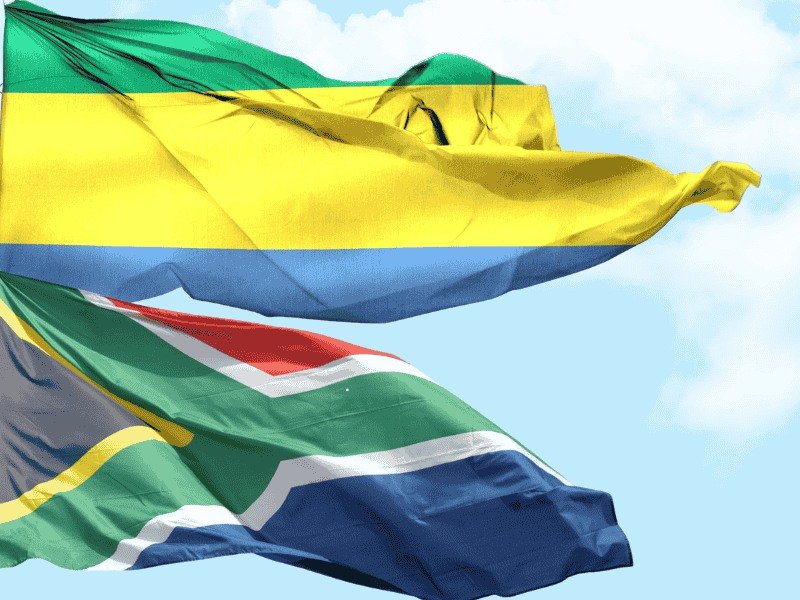
Gabon has signed a Geoscience Cooperation Agreement with the South African Geosciences Council to modernize geological data and develop new mineral potential across the Central African market. The partnership will support detailed geological surveys, data analysis and state-of-the-art resource mapping across Gabon’s unexplored terrain. This also includes training and technology exchanges to build domestic expertise and attract private capital. This dual approach reflects Gabon’s broader strategy to diversify its economy as oil production declines and global demand for strategic minerals increases, but why is South Africa a strategic partner to accelerate the next phase of mineral development?
Mining: Gabon’s strategic economic transformation
Gabon’s economy has historically been heavily dependent on oil, accounting for 67% of exports and approximately 33% of GDP, but this dependence has become an issue. Gabon’s crude oil production has declined from a peak of 370,000 barrels per day (bpd) in the late 1990s to about 215,000 barrels per day (bpd) in 2025, reflecting a long-term decline due to aging of mature oil fields and delays in new discoveries.
To reduce this dependence and expand economic resilience, the government is repositioning the mining sector as a key pillar of diversification. The mining sector currently contributes around 6% to GDP, but authorities aim to raise that share to 25% by 2030 as part of a broader diversification plan. Mining has become a strategic commodity for Gabon, as demand for critical minerals is accelerating due to their important role in steel production, electric vehicles, batteries and renewable energy technologies. The country holds 25% of the world’s manganese reserves, second only to South Africa, at 250 million tonnes, and 1.7 billion tonnes of iron ore spread across nine different locations. Additionally, the Mabunye site also contains rare earth mineral deposits. However, most of the country’s mineral deposits remain unexplored. The agreement with South Africa aims to address this issue by leveraging geological expertise to identify new resources.
“This is a timely initiative in line with President Brice Clotaire Nguema’s directive to increase the contribution of mining to the economy. Ultimately, we need to work with advanced mining economies like South Africa to achieve this,” Gabon’s Mines Minister Sostene Nguema said at the signing ceremony of the agreement in Cape Town last week.
South African expertise could strengthen Gabon’s mines
With advanced geological expertise and decades of operational experience in mining, South Africa is an obvious partner for Gabon as it seeks to accelerate the development of both operational and future projects. Gabon’s Moanda mine produces high-grade manganese ore, but requires advanced geometallurgical insight to optimize extraction. Experience in managing South Africa’s Kalahari manganese deposits, home to the Ntschwanin and Gloria mines, enables precise chemical mapping of ore formations, allowing Gabon to adapt pre-mining industrial processing, reduce waste and maximize production. This supports Gabon’s broader industrialization strategy, as the country prepares to ban the export of manganese raw materials from 2029 and accelerate the development of domestic processing capacity.
Meanwhile, Gabon’s Beringa iron project is an example of complex exploration. Dense rainforest masks high-grade areas that produce up to 1 billion tons of ore. South Africa’s airborne magnetometry and gravimetry expertise allows us to provide 3D subsurface models. This will allow Gabon to efficiently identify high-quality ore and accelerate its development while minimizing environmental impact.
Rare earths present another strategic frontier. Gabon’s carbonatite-based deposits with niobium potential could benefit from South African laboratories and separation technology. Local expertise avoids sending samples overseas, secures certification of reserves and strengthens Gabon’s bargaining position with foreign investors.
Through this partnership, Gabon will have the opportunity to not only unlock mineral resources but also strengthen domestic production capacity. South Africa’s technical guidance will ensure exploration and early development aligns with environmental, industrial and investment priorities, positioning Gabon to attract strategic capital from 2026 onwards.
