


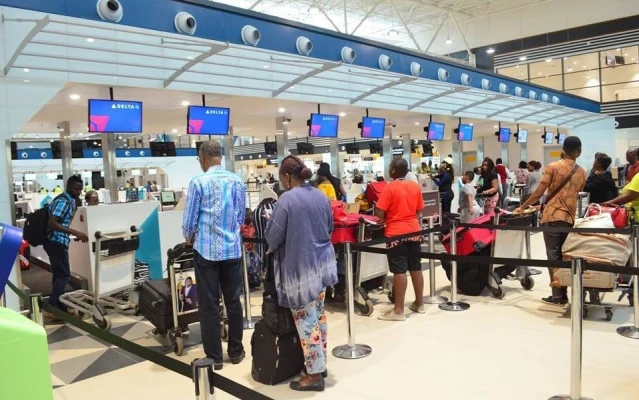
The Ghana Airports Company (GACL) has announced the outline of a comprehensive infrastructure modernization plan aimed at transforming Kotoka International Airport into West Africa’s premier aviation gateway, supporting the government’s 24-hour economy initiative launched in July 2025.
The national airport operator, which began operations in January 2007, manages Kotoka International Airport and five regional airports, including Kumasi’s Prempeh International Airport 1, Tamale International Airport, and facilities in Sunyani, Wa and Ho.
Under the leadership of Managing Director Yvonne Nana Afriy Opare, GACL has prioritized diversifying its revenue streams beyond traditional airfare to build financial resilience and support continued airport operations.
The company derives its income from two main sources. One is aviation revenue, such as airport passenger service charges, landing fees, parking fees, and navigation fees, which remain highly regulated and have limited flexibility to increase fees. Non-aeronautical revenues from parking operations, business royalties, rental income and land sub-lease provide greater scalability and growth potential.
GACL’s strategic shift to non-aeronautical revenue gained urgency during the COVID 19 pandemic, which halted flight operations but required continued maintenance of airport facilities. The company found that its commercial activities and land-related income kept its business afloat during the crisis, highlighting their critical importance to business continuity.
Flagship infrastructure initiatives include the construction of a multi-level parking complex at Terminal 3, increasing parking capacity from 513 bays to 2,000 spaces. The facility will incorporate retail space, commercial outlets and hotel facilities, creating 24-hour employment opportunities across construction, operations and hospitality sectors.
GACL issued a pre-qualification notice in September 2025 for the design, construction and commissioning of the multi-storey car park, with the project tailored to support extended opening hours under the 24-hour economic framework. This expansion is one of the most significant capacity increases in the airport’s history and mirrors the practice of major airports around the world, where parking generates significant non-aviation revenue.
Terminal 2 is undergoing a comprehensive redevelopment to serve both international and domestic passengers, reducing congestion in Terminal 3 during peak hours. The first phase has been completed and the second phase is expected to be completed by the end of the year. Enhancements include modernization of the meter and gritter areas, which will be transformed into a two-story facility alongside new retail and restaurants.
The connecting concourse between Terminals 2 and 3 is another major aviation-specific project currently in the planning stages. The facility will eliminate the need for passengers to navigate outdoor walkways or ride shuttle vehicles when traveling between terminals, a limitation that has affected KIA’s competitiveness against regional aviation hubs.
The international standard concourse will house commercial spaces, lounges, restaurants, boarding bridges, and automated passenger conveniences such as elevators, escalators, and travelators. These retail and food outlets are designed to be open 24 hours a day, seven days a week, creating additional employment opportunities while generating ongoing revenue for the sustainability of the airport.
Runway renovation work has begun to extend the operational life of the main runway while improving safety compliance. The project includes increasing the width from 45 meters to 60 meters and installing a modern LED aviation ground lighting system to increase operational efficiency during extended operating hours. This overlay project will enable KIA to accommodate growing aircraft movements while ensuring global aviation standards are met.
Mrs. Opare, who was appointed Managing Director with effect from December 24, 2023, has implemented strong land management reforms to strengthen accountability and secure returns from real estate transactions. Under the 2024 reforms, all individuals or entities conducting land transactions with GACL will be required to make a 100 percent down payment before obtaining documents for registration.
Regarding the payment plan structure, GACL will now issue sublease agreements until full payment is made in lieu of previous arrangements that resulted in payment defaults and accumulated debt. The new policy will allow the company to receive the full value of its land assets while maintaining transparent governance.
Land prices remain subject to negotiation based on payment terms. A one-time payment of 100 percent, which has the highest time value, may receive a larger discount, while a graduated payment plan provides a smaller discount. The lessee must also pay ongoing ground rent for continued use and a royalty of 5 to 15 percent of gross monthly revenue from businesses operating within the airport enclave.
The Managing Director has been actively pursuing the recovery of land related to long-standing debts. In July 2025, GACL successfully reached an agreement with a business partner that had outstanding debts for more than five years and brought 2.6 acres of land back into the company’s asset portfolio.
GACL achieved a major legal victory in May 2025 when the Accra High Court ruled in favor of the airport operator’s claim against McDan Shipping Company and Airport Logistics Limited, subsidiaries of the McDan Group. The May 6 ruling granted GACL full ownership of more than 16 acres of strategically located land near the airport that had been under McDan’s management since 2012.
The court found persistent violations of the lease agreement and accumulation of unpaid rent totaling $26,296. The success of this case is a credit to GACL’s legal department, working under Mrs. Opare’s leadership, protecting millions of dollars’ worth of state assets and strengthening the company’s commitment to accountability.
GACL’s strategic approach is consistent with global best practices demonstrated by major airports such as Singapore Changi Airport Group, Dubai Airports and Heathrow Airport Holdings, as well as the standards set by the Airports Council International. The best-performing airports around the world derive 40 to 60 percent of their total revenue from non-aeronautical sources such as retail concessions, parking, advertising, real estate, and logistics hubs.
The company’s diversification strategy, comprehensive land use policy and revenue guarantee mechanism mirror the practices of Changi Airport and Incheon Airport, which operate air cities and aerotropolises that integrate commercial, hotel and industrial space to promote local economies. GACL’s structured approach to land management, prepayment policies and renewable sublease ensures transparent, sustainable and economically productive use of airport assets.
Modern airports around the world have demonstrated that while aviation revenue remains essential, the greatest growth potential lies in non-aeronautical activities such as real estate, retail, logistics and commercial development within the airport zone. GACL is strategically focused, ensuring that its land and asset base is efficiently utilized, revenue guarantee mechanisms are strengthened, and investor partnerships are built on transparency, compliance, and mutual growth.
Through a combination of infrastructure initiatives, revenue reforms and governance improvements, GACL is well positioned to support Ghana’s economic transformation goals. KIA currently serves 24 international airlines, and passenger traffic and aircraft movements are steadily increasing, creating pressure for capacity expansion.
The transformation timeline is two to five years, with some components operational by the end of 2025. Once complete, passengers will experience streamlined connections between terminals, reduced layover times, and expanded commercial services that will generate sustainable revenue for ongoing airport operations.
Ghana’s aviation sector contributes significantly to the national economy through job creation, promotion of tourism and trade links. Enhanced airport capacity supports broader economic objectives, including attracting foreign investment, boosting exports and positioning Ghana as a regional business hub in West Africa’s competitive aviation industry.
All of GACL’s transactions, leases and business agreements continue to require board approval and are guided by internal governance processes that ensure transparency, accountability and investor confidence. The company operates as a private limited liability company, is 100% owned by the government, and is established for commercial purposes.
Through strategic alignment with international airport management standards, GACL has positioned itself not only as a national infrastructure leader but also as a globally competitive airport operator. The company’s commitment to innovation, transparency, sustainability and prudent financial management ensures that Ghana’s airports continue to serve as important gateways to economic growth, tourism development and international trade.
