


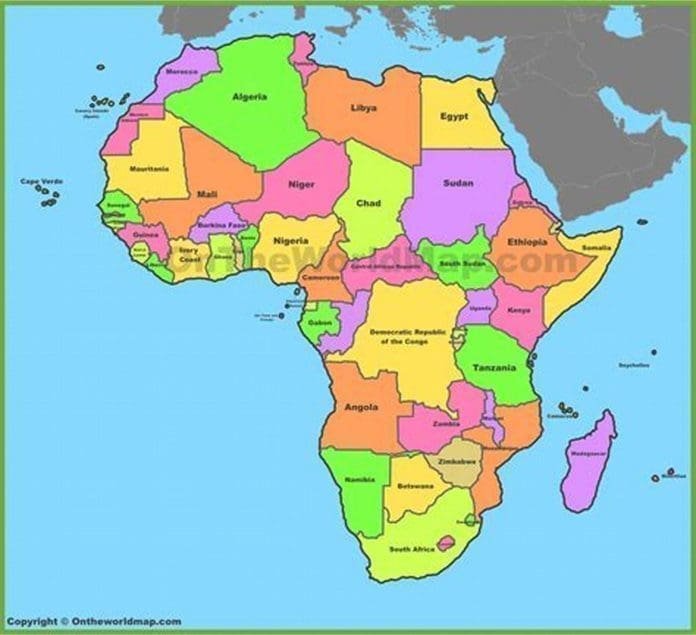
Ghanaian economists have told African governments that African countries are in the strongest negotiating position in decades and should stop squandering it on symbolic agreements that offer nothing to ordinary people.
Mr. Theophilus Achiampong, Technical Adviser to the Ghanaian Ministry of Finance, gave a message at the 32nd African Mining Investment Indaba held in Cape Town, South Africa from February 9th to 12th, 2026. The event attracted a record number of attendees, including 58 government ministers and two heads of state, as the global race for lithium, cobalt, manganese, copper and rare earths from Africa intensifies. mineral.
A flagship study by the African Finance Corporation (AFC) presented at the conference valued Africa’s total mineral resources at US$29.5 trillion, representing approximately 20% of the world’s mineral resources, of which an estimated US$8.6 trillion remains untapped, largely due to investor uncertainty regarding policy stability and data gaps.
Achiampong argued that the European Union (EU), United States (US), Gulf states and China are all actively competing for access to Africa’s mineral resources, and that this competition is a rare lever that African governments must translate into tangible economic benefits rather than photo opportunities.
His prescription was direct. It used access to minerals as bargaining power to extract infrastructure co-financing, technology transfer agreements, and gradual localization targets from competing suitors. “Africa must take advantage of competing courtships from the EU, the US, the Gulf states, China and others to secure funding for infrastructure co-financing and technology and skills transfer. This goes beyond just signing memorandums of understanding,” he said.
But he cautioned that African governments cannot rely on external partners to deliver development outcomes that they themselves have not clearly defined. “If history has taught us anything, it’s the fact that in many cases you can’t rely on other external partners to develop your country. You have to build institutions at home and you have to be clear about what you want to achieve,” he said.
Achiampong also highlighted the growing momentum towards regional cooperation, noting that some African countries and blocs are already considering joint ventures, shared infrastructure corridors and integrated value chains to industrialize resources collectively rather than individually, a model he explained is more strategically resilient than bilateral and country-by-country negotiations that weaken Africa’s collective influence.
The wide-ranging conference reflected this change in mood. Leaders, including Zambian President Hakainde Hichilema, have argued that if Africa processed its minerals locally, converting lithium into batteries or iron into steel, the value of its endowment would increase eight to 10 times, making beneficiation an increasingly important price for world powers to pay for access to African soil.
Analysts at the conference expressed cautious optimism that African governments are finally beginning to align their minerals strategies with broader industrial policies, but stressed that the gap between ambitious commitments at the annual conference and concrete results on the ground remains the continent’s deepest challenge.
