


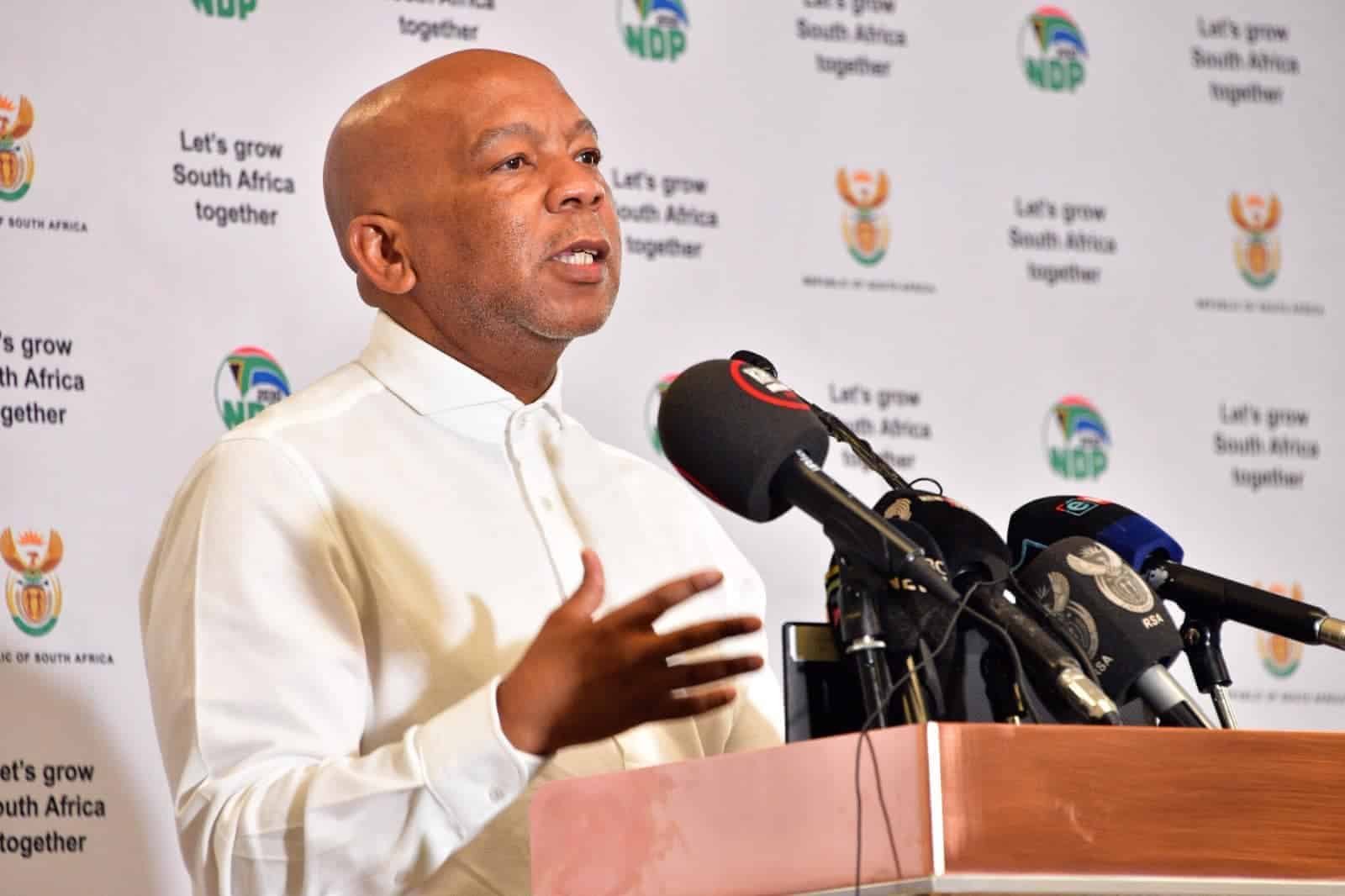
Kgosiensho Ramokgopa, Minister of Electricity; (GCIS)
Power and Energy Minister Kgosiensho Ramogopa on Tuesday outlined plans for the private sector to invest in the construction of 1164 kilometers of transmission lines as part of the government’s broader strategy to address inadequate power infrastructure and expand South Africa’s energy grid.
The Independent Transmission Provider Program, implemented through the National Transmission Company of South Africa (NTCSA), a wholly-owned subsidiary of power utility Eskom, aims to add 400 kilovolt (kv) transmission lines with associated transformer infrastructure to the national grid.
“Today marks an important milestone, ensuring that we achieve energy security, ensure that we deliver on the transformational elements of the energy sector, and ensure that we achieve the ability to mobilize significant resources from the private sector,” Ramokgopa said.
“We want to create a system that accepts investment by private companies on the transmission side. We have accepted that transmission is a natural monopoly and remains in the hands of the state, the NTCSA… But what we know is that as a result of constraints on the transmission side, our renewable energy assets are underutilized.”
By 2029, the Independent Transmission Provider Program is expected to add 3,222 megawatts of power to the grid.
On Friday, the Department of Electricity and Energy announced decisions on plans to procure transmission infrastructure from private developers, including an update on seven transmission corridors planned for the Northern Cape, North West and Gauteng provinces, designed to enhance grid access to renewable energy sources.
A market survey conducted by the ministry in December found strong private sector interest in build-operate-transfer or build-operate-own transfer agreements.
“When we went to the market, we asked the question: How is the best way to set up a call for proposals? And they were insisting that we either do a build-operate transfer or we (must) do a build-operate ourselves and transfer,” Ramokgopa said on Tuesday.
“This is the most common outcome of this exercise and the way we do it when we go to market. Build, operate and move, or build, operate and move ourselves, is the basis of how we go to market.”
Mr Ramogopa acknowledged that “structural constraints in power and logistics” remained a major barrier to economic growth.
“The economy is not growing at the right scale and part of the problem is constraints on the electricity side. Our view is that we need to ensure that we can accelerate and support transmission infrastructure development,” he said.
“We need to modernize our transmissions and extend them by about 14,000km and it will cost us about R440 billion to make this happen. Eskom’s balance sheet (and) our sovereign balance sheet is not enough to make the investments we need in this area… So today we are introducing an independent transmission program.”
He said new transmission lines were needed to free up capacity, particularly in the Northern Cape, Eastern Cape and Western Cape, where “we have the most efficient and reliable renewable energy assets in solar and wind, but we have exhausted the grid to evacuate electrons so that the economy can benefit from these assets.”
Ramokgopa said the authorities conducted a “request for information” between November and February this year to understand “what the market demand is.”
“We’re going to apply for membership now and we’re going to open applications in July for people who we think have the right qualifications to participate, and there are many people around the world who have expressed their interest in participating,” he said.
“They will come on board and complete the request for proposals in November by the end of the year and then go into evaluation and award the contract and turn South Africa into a major construction site.”
“The last thing we want is to put together a program that doesn’t succeed because we think the program is designed in a way that doesn’t encourage the market to participate, and the market doesn’t have the appetite to participate,” Ramokopa added.
The ministry will on Thursday publish the procurement and regulatory framework that will guide the pilot project. From there, Mr Ramogopa will present the key findings of the market share study at Friday’s South African Infrastructure Investment Forum, where he will discuss lessons learned from the power generation sector.
