


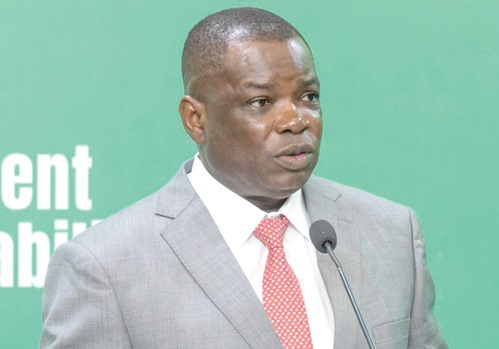
The Agboza government’s Minister of Roads and Highways, Kwame Kwame, has announced that road construction activities across Ghana will ramp up significantly in 2026, with most of this year’s road projects already awarded to contractors. Speaking on Citi FM’s Breakfast Show on Monday, the minister revealed that the government is now focused on supervising contractors and ensuring quality standards after the contract is awarded.
Mr. Agboza explained that President John Dramani Mahama has consistently emphasized the importance of modernizing Ghana’s road network by committing resources and concrete budgetary allocations. The Minister said the President is committed to improving roads across the country to Ghanaians and regularly discusses network improvements at stakeholder meetings. The Department of Roads and Highways has made the department responsible for ensuring that it receives the necessary resources to implement these projects and that the planned work is carried out effectively.
The Minister stressed that with core projects awarded, attention has shifted to contractors and consultants to ensure good work delivers value for money in view of investment in road construction. Agboza said monitoring would be strengthened to ensure the provision of durable roads. He disclosed that the selected contractors have undergone thorough orientation to meet the quality standards of the project and that many of the contractors are Ghanaian, promoting local expertise and resources.
President Mahama urged all participating contractors to give their best work, saying that no one is forced to join the initiative but those who do must excel. The President’s commitment is aimed at ensuring that roads built under this initiative are of the highest quality, ultimately benefiting Ghana’s infrastructure and people. The government plans to build 5,000 kilometers of roads across 160 districts as part of this ambitious infrastructure plan.
Mr Agboza acknowledged that almost all stalled road projects under the Domestic Debt Exchange Program (DDEP) have been restarted, signaling a major turnaround for contractors across Ghana and relief for road users. He announced that with Ghana’s debt exchange exercise almost complete, projects previously affected by debt restructuring are now being restarted. The government has completed almost 100% of the debt restructuring and almost all roads that were suspended due to the debt restructuring have now been reopened.
The minister cited the Pokuase to Amasaman road and other major roads across the country as examples where construction would resume. He explained that the delay was not due to a lack of contractor capacity, but rather to funding constraints imposed by the DDEP, which restructured how the government’s obligations to bondholders and contractors were managed. A debt exchange program implemented in 2022 under the Akufo-Addo administration saw Ghana restructure its domestic debt to deal with a deepening debt crisis.
In October 2025, the Ministry confirmed after an audit and verification process that GH₵5 billion was disbursed as payments to contractors. Mr. Agboza explained that the Ministry deliberately took the time to thoroughly review and verify all certificates submitted by contractors during the transition period to ensure transparency and accountability. The Minister of Finance has initiated payments of GH₵5 billion owed to contractors, out of a total debt of more than GH₵21 billion.
The Minister stressed that proper construction alone is not enough to guarantee the durability of roads, and responsible use by transport operators and drivers is equally important. He warned that if Ghana spends this much money on building and repairing roads and allows them to be overloaded, it will not have any roads. Mr. Agboza announced plans to launch a stakeholder-led campaign to curb overloading of the road network, stressing that while specifying the right materials is the responsibility of government, maintaining quality requires collective efforts.
During the April 2025 inspection, Mr. Agboza expressed disappointment at the alarming deterioration of some sections of the newly rebuilt Tarkwa to Agona Nkwanta section. The 66-kilometre (66-kilometre) section, built at a cost of 95 million euros, started showing signs of damage less than two years ago. This confirms the Minister’s concerns about road durability and proper maintenance, and highlights why anti-overloading campaigns are important to protect infrastructure investment.
The Minister revealed that within the next two weeks he should be able to say exactly when the digital road toll procurement will be completed and when the operator will be selected. The government has launched a competitive bidding process to select an operator for a nationwide digital road tolling system, signaling progress towards reintroducing toll plazas without physical booths. The procurement process has been in two stages, with the authority currently completing a traffic volume and data validation exercise across the public road network.
Agboza said the data work has been ongoing for about a month and is scheduled to conclude this month. The ministry expects clarity on next steps in procurement by the end of January. At a parliamentary review on January 20, 2025, Mr Agboza announced plans to reintroduce road tolls, but stressed that physical toll plazas would not return. The system will be implemented on a digital platform, so drivers will no longer need to stop and pay at a physical booth.
The minister criticized the Akufo-Addo government for abolishing road tolls in November 2021 following the passage of the electronic transaction tax, calling the decision illegal and a setback to Ghana’s infrastructure funding. He noted that road contractors currently have debts of up to GH₵5 billion, illustrating the financial challenges facing the sector. The new toll system will focus only on fixed roads, i.e. fixed roads, rather than rough or unmaintained surfaces.
According to a statement made during a courtesy visit by the Turkish Ambassador to Ghana in March 2025, the government aims to establish the best road toll system in Africa. The electronic platform will eliminate the traditional toll plaza system that previously caused traffic congestion on major highways. The digital system is expected to provide transparent financial management, with toll revenue potentially being reinvested in road maintenance and the completion of ongoing projects.
Citing concerns about fiscal sustainability and the need for collaboration between government and industry stakeholders, Agboza called for an overhaul of how road projects are awarded during a parliamentary review in Ghana. He stressed that while solutions are being sought to address funding issues, the government remains highly indebted and must find ways to meet its obligations. The minister said the way Ghana contracts and drafts road agreements needs to be reviewed.
He proposed a collaborative approach to addressing this issue, proposing dialogue with contractors, industry stakeholders, and awarding bodies to create a system that balances government affordability and contractor interests. Fostering stronger synergies between stakeholders will help create a more sustainable framework for the financing and implementation of road projects and alleviate the current challenges facing the sector. Agboza believes Ghana needs a solution that does not worsen the situation for contractors while ensuring that the government pays for its promised costs.
Specific ongoing projects include the Kasoa to Winneba section of the coastal highway, which Mr Agboza said will be completed by June 2026. The contractor assured that this section would be completed by the middle of next year. The contract for the section from Winneba to Mankesim is for two years, but the minister expressed confidence that it will be completed by 2027. Once all ongoing projects are completed, the entire route from Kasoa to Takoradi will be fully doubled, improving travel between Greater Accra and the Western Region.
The extensive work from Kasoa to Winneba to Mankesim is being carried out by three different contractors, while the section from Cape Coast to Takoradi is being constructed by another company. Mr Agboza pointed out that the Cape Coast to Takoradi road is a bigger undertaking as it connects two major regions. Within the central region, the Kasoa to Winneba and Winneba to Mankesim sections are progressing well, with completely new roads being built alongside the old roads to accommodate two vehicles.
According to the minister, the two-lane road from Tema to Dawenya is expected to be completed within two years. He also indicated that the government is close to finalizing the financing model for the Accra to Kumasi expressway, demonstrating the government’s commitment to major expressway infrastructure connecting Ghana’s major cities. Despite concerns over lack of funding, Parliament approved an allocation of GH₵5.3 billion to the Ministry of Highways, providing resources to implement the planned projects.
The minister stressed that while sticking to specifications and suitable materials remains the government’s responsibility, achieving the best running quality requires a collective effort. The emphasis on quality control, contractor oversight and overloading measures demonstrates the Mahama administration’s determination to not only build roads, but to ensure their longevity and the value of taxpayers’ investments. 2026 looks set to be a key year for Ghana’s road infrastructure development as debt restructuring nears completion and contract signing accelerates.
