


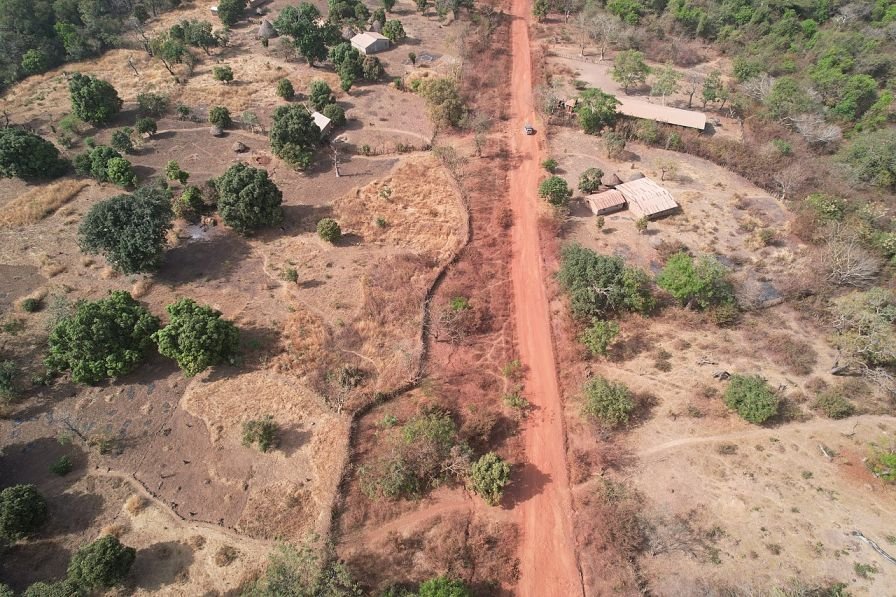
The Guinean government will receive a US$153.5 million loan from the Islamic Development Bank (IsDB) for the construction of the second phase of a 284km cross-border route to southern Senegal.
In mid-December, the bank approved financing for the construction of the 71km Marie-Gadarug road, which will be divided into two sections. Lot 4 covers the 38 km Mali-Lebekele stretch and Lot 5 covers the 33 km Lebekele-Gadarug road. The plan’s resettlement action plan was announced in late July.
Currently, this route is said to be difficult to pass and almost inaccessible during the rainy season.
The project is expected to facilitate transport between the Mali-Gaya-Lebekele axis and the Senegalese border, as well as contribute to the development of Guinea’s interior and support for the agriculture, mining, industry and tourism sectors.
Source: Project EIES Report, August 2023
Work began in late July on the first phase of the border crossing project, which covers 107km of the Labeh-Mari road and is divided into three sections.
China Road and Bridge Corporation (CRBC) is constructing Lot 1, which covers the 38km Rab-Sarekari section, China Civil Engineering Construction Corporation (CCECC) is constructing Lot 2, which covers 31km between Salekari and Yemberling, and Henan China is constructing Lot 3, which includes the 38km Yemberling-Mari section.
IsDB approved a €159.6 million (US$171.9 million) loan for the Labbé-Mali section in December 2021.
The Labe Mari project is part of the interconnection of the Conakry-Dakar Corridor, which connects the capitals of Guinea and Senegal, and the Bamako-Dakar Corridor, which connects with the capital of Mali. Both passageways provide easy access to the port of Conakry in Guinea.
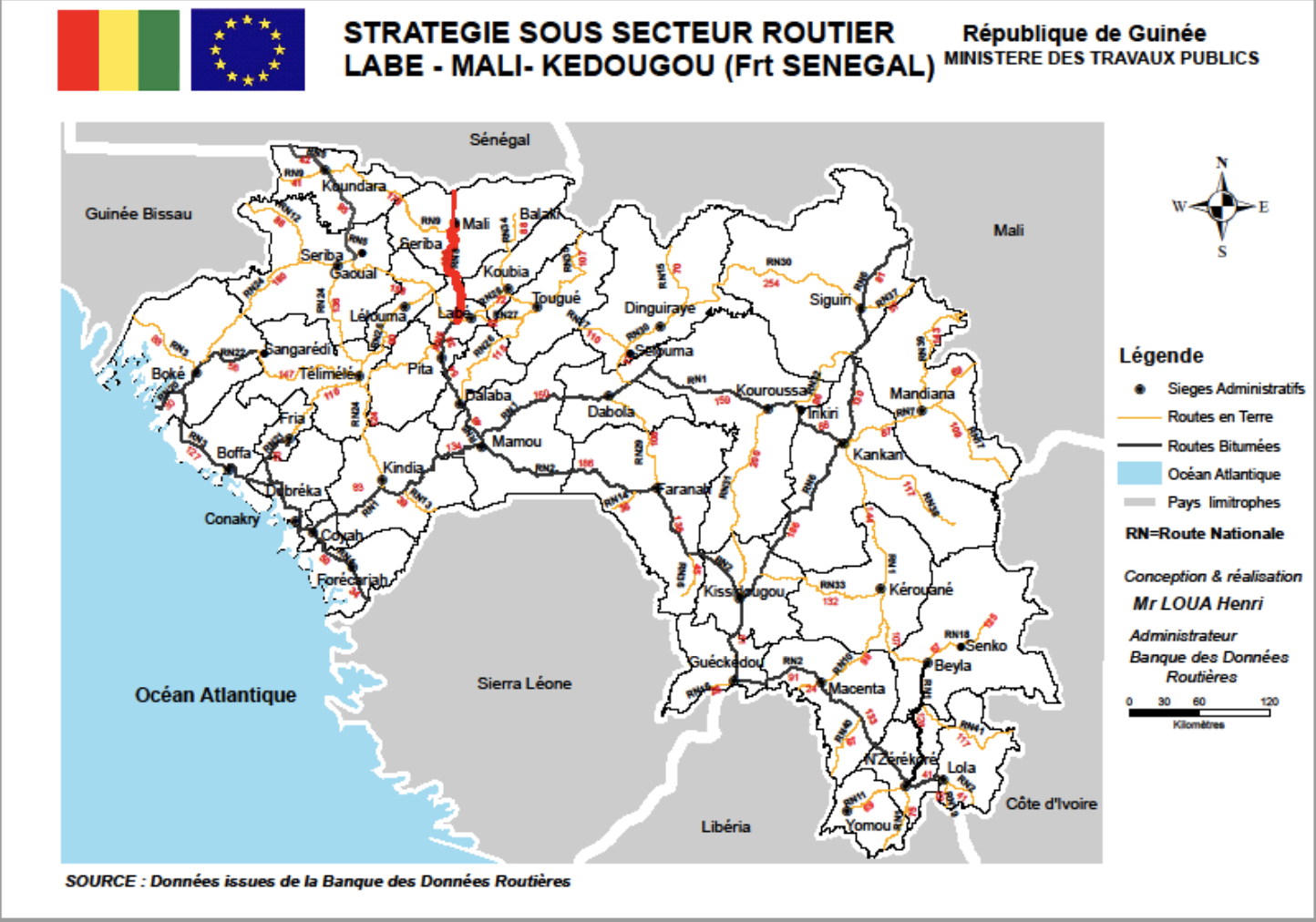
Source: Government of Guinea
In late November, the African Development Bank (AfDB) approved US$80.9 million in financing for road projects in both Guinea and Senegal. The Bank of West African Development (BOAD) is also supporting the plan.
The portion of the cross-border road project that Senegal is responsible for consists of a total of 106 km, including 28 km between Kedougou and Fontgolembi, 43 km between Tenkoto and Bandafassy, 24 km between Scilly and Segou and Dindefero, and 11 km between Segou and the Guinea border road.
In July, consultants were invited to submit an Expression of Interest (EoI) to carry out a detailed technical study and initial environmental analysis and prepare tender documents for the construction and asphalt paving of the Kedougou-Phongolembi road. The submission deadline was August 20th. The consulting work was scheduled to begin in December for five months.
An EoI was also requested by August 20 for a consultant to manage and monitor the construction and asphalt paving works of the Kedugu-Fongolembi section.
The service is scheduled to start in January 2025, and the contract period is 24 months.
The Resettlement Action Plan for the Siri-Ségou and Ségou-Guinea border roads was announced in July.
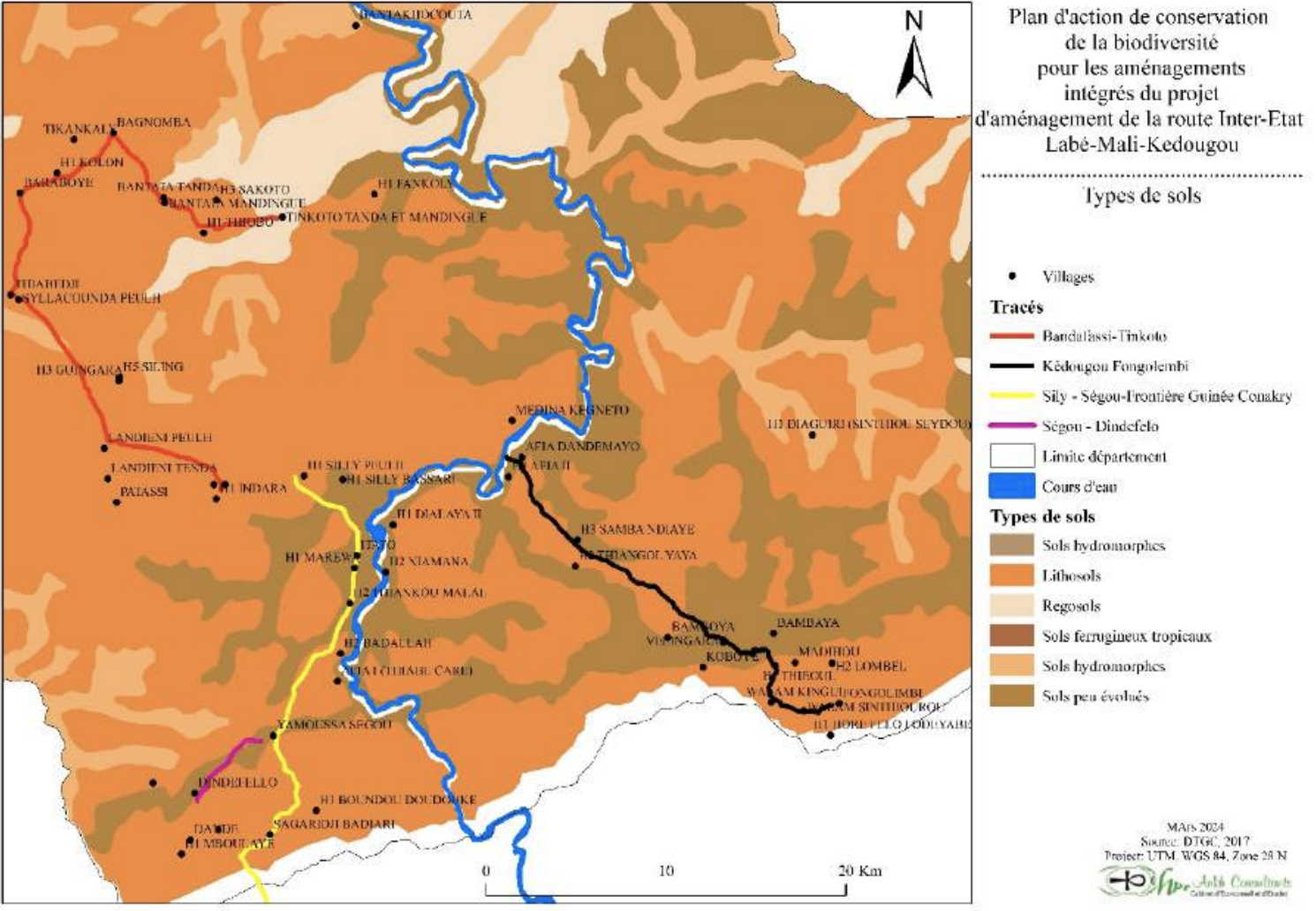
Source: Biodiversity Action Plant Report, April 2024
In mid-December, IsDB also approved a USD 80 million loan to build a 40MW hybrid solar power plant in Cancan, Guinea’s second largest city. The project is planned to facilitate the extension of the electricity grid from the Fomi substation to the town of Coeursa and 16 other nearby areas, improving the stability of electricity supply.
Guinean authorities aim to achieve universal access to electricity by 2030, which is currently less than 50%.
Top photo: Labe road (Source: Government of Guinea)
