


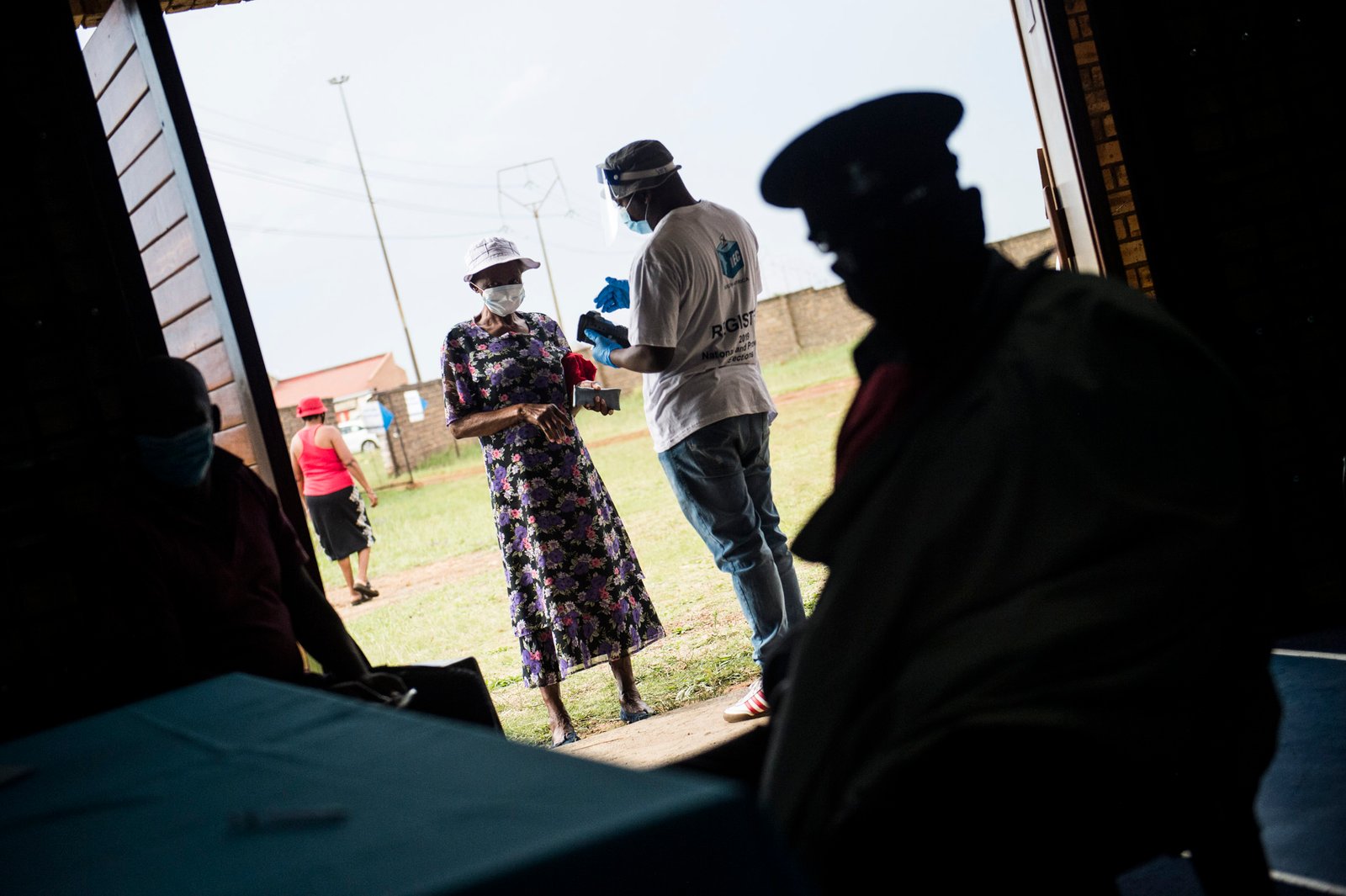
Local elections do not inspire songs of liberation or grandiose manifestos. However, they shape the terrain that determines the outcome of national power. (Delwyn Verasamy/M&G)
No ballot boxes or soldiers will be stolen in South Africa’s next local government elections. If it is disrupted, it is done silently through narratives, money flows, algorithms, and timing. That’s how power works today. Ignoring local elections as politically minor may be the most dangerous mistake South Africans have made in the last decade.
Democracies rarely collapse on national spectacles. They erode in contests that seem too small to guard hard. Voter turnout in local elections is low, attention is fragmented, and there is great uncertainty about the formation of a coalition government. This is where foreign influence can most easily penetrate. In South Africa’s current geopolitical situation, that vulnerability is real.
The deterioration of relations between the United States and South Africa has turned what could have been a routine election cycle into something far more consequential. Since Donald Trump returned to the White House, diplomatic tensions have escalated into a strategic confrontation. Pretoria’s insistence on non-alignment, defense of BRICS military cooperation, and refusal to dilute transformative policies places South Africa outside the world order preferred by the US government.
The United States has never limited its foreign policy to diplomacy. The documented history of election interference shows a pattern. When governments are seen as ideologically hostile, economically inconvenient, or geopolitically disobedient, electoral processes become instruments of influence. This often occurs through agenda-setting, narrative-shaping, and selective destabilization rather than overt coercion. From 1946 to 2000, the United States interfered in dozens of foreign elections, primarily through “information operations” and financial influence.
The point is not that the US is interfering in elections. It’s not controversial or new. The most pressing question is what kind of interference looks like in a democratic society where institutions are weak, local politics are divided, and digitalization is saturated. Modern influences do not need to falsify results. It shapes the environment.
Despite the electoral decline, the ANC remains committed to policies that Washington actively opposes: radical economic relief, strategic autonomy from Western security structures, and a foreign policy that resists American moral exceptionalism. Arguably, the ANC’s leadership succession points to continuity rather than moderation. If future presidents are associated with rebelliousness rather than conformity, this attitude will remain entrenched into the next decade. Such a future is unwelcome to the US administration, which is already showing impatience with South Africa’s path.
Most dangerously, South Africa’s intelligence and security services are in decline. Years of politicization, executive deployment, and operational paralysis have left intelligence agencies fragmented and unresponsive. Congressional oversight exists, but its capacity is weak. Strategic forecasting is weak. Cyber and information warfare capabilities lag behind those of world powers that specialize in operating undetected. In such an environment, it is sufficient for a high degree of foreign interference to outweigh the state.
Local government elections are ideal laboratories for exerting influence. They shape coalition calculus, gradually weaken dominant parties, and generate media narratives of inevitability and decline. Hung councils are more than just a governance challenge. They are political pressure points. They normalize instability, impoverish voters, and undermine confidence in the effectiveness of democracy. Replicated across the country, its effects are transformative.
At the local government level, interference may take certain forms. ANC-led coalition strengthens opposition narratives of incompetence with targeted funding of technocratic “good governance” initiatives in unstable metropolitan areas. Protests against service delivery are digitally and systematically amplified, selectively elevating real-world grievances and creating a sense of disintegration. Unbalanced international media attention to particular parliaments creates a storyline of national decline. There is no need to fabricate complaints about any of these. Attract attention.
Civil society debates must be treated with care. Civil society performs essential work, often filling the void left by the state. The concern is not that grievances are fabricated, but that they are selectively amplified and shaped to make it seem like whose voices are heard, whose failures are internationalized, and whose demands are urgent. In an environment with limited media and funding, amplification becomes a political force.
In South Africa, this strategy is seen elsewhere and is often morally clear. The danger now is proximity.
Raising these concerns is not a conspiracy. Venezuela, for example, did not suddenly become geopolitically contested. The campaign unfolded gradually through a formally intact but politically unstable election. Sovereignty is rarely stolen outright. It is reinterpreted until negotiation becomes possible.
South Africans must resist the idea that democratic institutions are self-sustaining. Integrity is preserved through competence, attentiveness, and political will. An under-resourced IEC operating in a digitally hostile environment with weakened intelligence services and an exhausted electorate is not invincible, no matter how proud its democratic tradition may be.
Foreign intervention is most easily successful when domestic legitimacy is under strain. Chronic service delivery failures, dysfunctional coalitions and political fragmentation create openings for external actors to exploit. The solution is not just defensive. This is an internal renewal.
Protecting local elections is not anti-American or nationalist paranoia. It’s democracy promotion. Democracies that fail to adhere to quiet elections soon find themselves contested, noisy elections, results in doubt, and sovereignty negotiated far from the ballot box.
Local elections do not inspire songs of liberation or grandiose manifestos. However, they shape the terrain that determines the outcome of national power. Treating them as trivial misunderstands how modern influence works. In a world where power is gained through data, debt and discourse, South Africa’s greatest vulnerability is not hostility. That’s self-satisfaction. History shows that complacency is the friend of intervention.
Lindani Zungu graduated from New York University in political science and is currently pursuing a master’s degree in political science as a Mandela Rhodes Scholar. He is the editor-in-chief of the youth publication Voices of Mzansi.
