


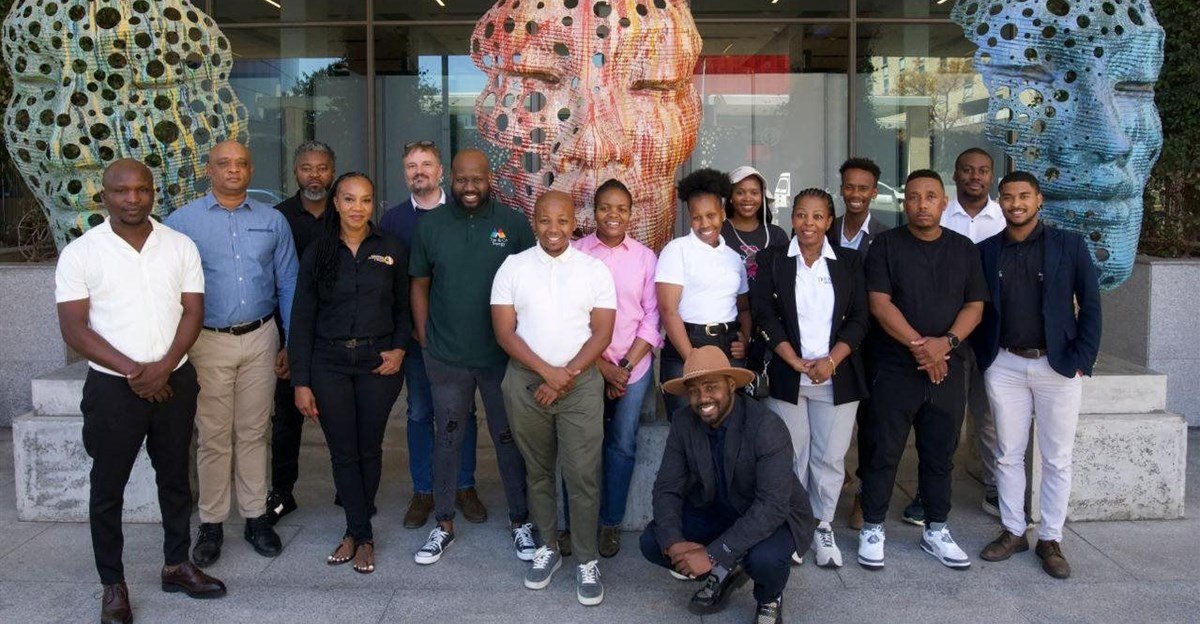
At the recent 2025 Green Building Conference, 15 black-owned small businesses showcased sustainable solutions in construction, clean energy and environmental management. The Green Building Council South Africa (GBCSA) hosted the competition from 11 to 13 November 2025 at the Century City Conference Center in Cape Town.
With support from Property Point, 15 black-owned small and medium-sized businesses presented climate-resilient and socially inclusive solutions at the 2025 Green Building Convention in Cape Town. Image provided.
These companies are supported through Property Point and their participation reflects an encouraging shift in the built environment sector, where the value of diverse, locally-led innovation is increasingly recognized.
The 15 small and medium-sized enterprises are as follows.
Dumaliwe: Energy Management Services.
Greener pastures: recycling and waste management.
GreenX Engineering: Energy efficiency services.
House of Harvest: Sustainable Smart Agriculture.
LEEP Solution: A smart air quality solution.
Leratse Engineering: Sustainable Engineering Project Management.
LSO Built Environment Project: Green Building Services.
Mageza Technical Services: Energy performance management services.
Okantswe Construction and Projects: Infrastructure and Renewable Energy Solutions.
Samcon: Green building maintenance services.
Sbenz Construction: Sustainable construction and maintenance services.
Tim & Co Energy: Solar energy and electrical services.
Treasure Productions: Residential, commercial, and industrial renewable energy installations.
VoltGas Energy Solutions: Solar, gas and hybrid energy solutions.
Watt Worx: Solar panel cleaning and maintenance services.
“They’re not future leaders; they’re leaders now,” said Property Point founder Sean Theunissen.
“Their research shows that inclusive sustainability is not a theory; it is already happening.
“The challenge going forward is to scale it up.”
Future green infrastructure
From renewable energy services to energy and air quality management solutions, these companies are proving that Black-owned small businesses can play a central role in shaping the nation’s future green infrastructure.
The conference brings together key stakeholders from across the real estate and construction ecosystem, creating an opportunity to connect policy and practice, vision and action.
But while the presence of small and medium-sized enterprises shows growing momentum, Theunissen points out that many entrepreneurs still face hurdles in accessing financing, procurement opportunities and regulatory support.
“We’re seeing real progress, but we can’t imagine that path being open to everyone,” he said.
“What these companies have achieved is remarkable, and with the right ecosystem, many more can follow.”

Theunissen said the partnership is an opportunity to deepen cooperation between developers, policy makers and corporate development partners.
“We know what works when agencies come together with a common vision,” he said.
“Now is the time to expand these partnerships, embed inclusivity in our policies, and make change a living part of how we build.”
Although the field is not without challenges, Teunissen believes the direction is clear.
Property Point’s work with more than 500 small businesses shows that Black-owned businesses can thrive in complex, high-value industries when access is supported with the right tools.
“The energy and ideas we see from these businesses is unparalleled.
“What they need is an opportunity to compete, contribute and lead, not handouts.
“In doing so, we can build a truly resilient economy,” Teunissen concluded.
