Close Menu
Xsum NewsXsum News

    Stay Updated.

    Get the latest Africa-focused business & infrastructure news and more directly to your inbox.

    What's Hot

    African Development Bank Group (AfDB) launches pan-African aviation finance platform to turn growth into sustainable profits

    Ecobank holds 3rd +234 Art Fair to promote creative enterprises and start-ups

    Digital trust is the new currency for small and medium-sized businesses in Africa | Wall Street in Kenya

    Facebook X (Twitter) Instagram
    Trending
    • African Development Bank Group (AfDB) launches pan-African aviation finance platform to turn growth into sustainable profits
    • Ecobank holds 3rd +234 Art Fair to promote creative enterprises and start-ups
    • Digital trust is the new currency for small and medium-sized businesses in Africa | Wall Street in Kenya
    • A hidden African real estate strategy for US investors?
    • Rio Tinto gives green light to RBM’s R8.5bn Zulti South project
    • Investment pipeline of over USD 1.5 billion at Africa Green Economy Summit
    • AfDB’s aviation finance platform targets Africa’s $25 trillion air travel opportunity
    • AXA Energy Powers Up: Global Giant Reaches TL 13.5 Billion EBITDA Milestone
    X (Twitter) Instagram YouTube LinkedIn TikTok
    Xsum NewsXsum News
    • African Development Bank
    • Africa Finance Corporation
    • All Africa – Construction & Infrastructure
    • Africa Intelligence
    • Construct Africa
    • More
      • Mining Review Africa
      • Energy Capital Power
      • Sustainability & Climate-Resilient Infrastructure
      • Private-Sector Infrastructure Players
      • Urban Development & Housing
    Xsum NewsXsum News
    You are at:Home»Construct Africa»How art helped build Africana nationalism in apartheid South Africa
    Construct Africa

    How art helped build Africana nationalism in apartheid South Africa

    Xsum NewsBy Xsum NewsFebruary 16, 2026No Comments5 Mins Read0 Views
    Facebook Twitter Pinterest Telegram LinkedIn Tumblr Email Reddit
    Share
    Facebook Twitter LinkedIn Pinterest WhatsApp Email

    In this revised excerpt from the preface to Troubling Images: Visual Culture and the Politics of Afrikaner Nationalism, the book’s editors assess how art and design helped shape Afrikaner nationalism.

    British scholar Michael Billig writes in Banal Nationalism: “If the future remains uncertain, we know the past history of nationalism, and that should be enough to encourage a habit of careful skepticism.”

    Perhaps this warning has never been more true or more relevant than during the second decade of the new millennium. It is characterized by a marked shift towards right-wing populism and nationalism.

    The historical background and circumstances underlying the rise of Afrikaner nationalism belong to a different era of international politics. But it is fundamentally rooted in the experiences of people who are denied social and economic power. They were people whose political and cultural activities were marginalized by imperialist policies.

    Indeed, with hindsight we can see that both the imperialist regime and the international community were slow to grasp the depth of the humiliation of the Afrikaners after the South African War.

    As a result, they were unprepared for the rapid rise of Afrikaner nationalism in the first three decades of the 20th century.

    Against the backdrop of a resurgence of nationalist sentiment around the world, there seems to be an opportunity to reassess the mechanisms by which nationalism has been established and maintained. This is important, if only because it reminds us of the need to be attentive to the risks posed to liberal democracies.
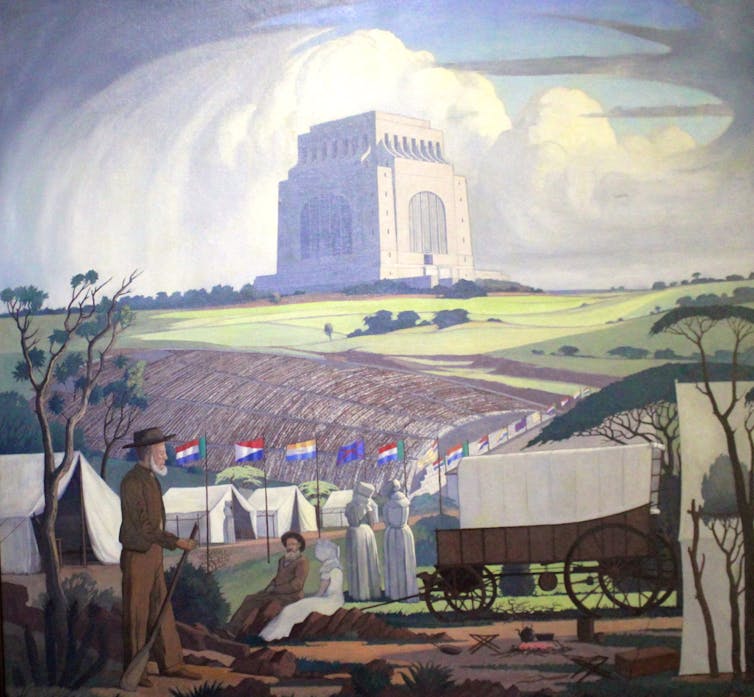
    Painting by Jacobus Hendrik Pianiv. He was often commissioned by the apartheid state to create works for government buildings.
    Kandukul Nagarjun/Flickr

    Theorists in the humanities have conducted extensive research to understand the drivers and effects of Africana nationalism and identity. However, no book we have come across thus far is dedicated solely to critical engagement with the wide range of visual representations and responses to Afrikaner nationalism.

    visual culture and politics

    Troubling Images focuses on expressions of Africana nationalism in paintings, sculptures, monuments, cartoons, photographs, illustrations, and exhibitions. In doing so, it provides a much-needed critical account of the relationship between the visual culture of Afrikaner nationalism and Afrikaner political and cultural domination in South Africa.

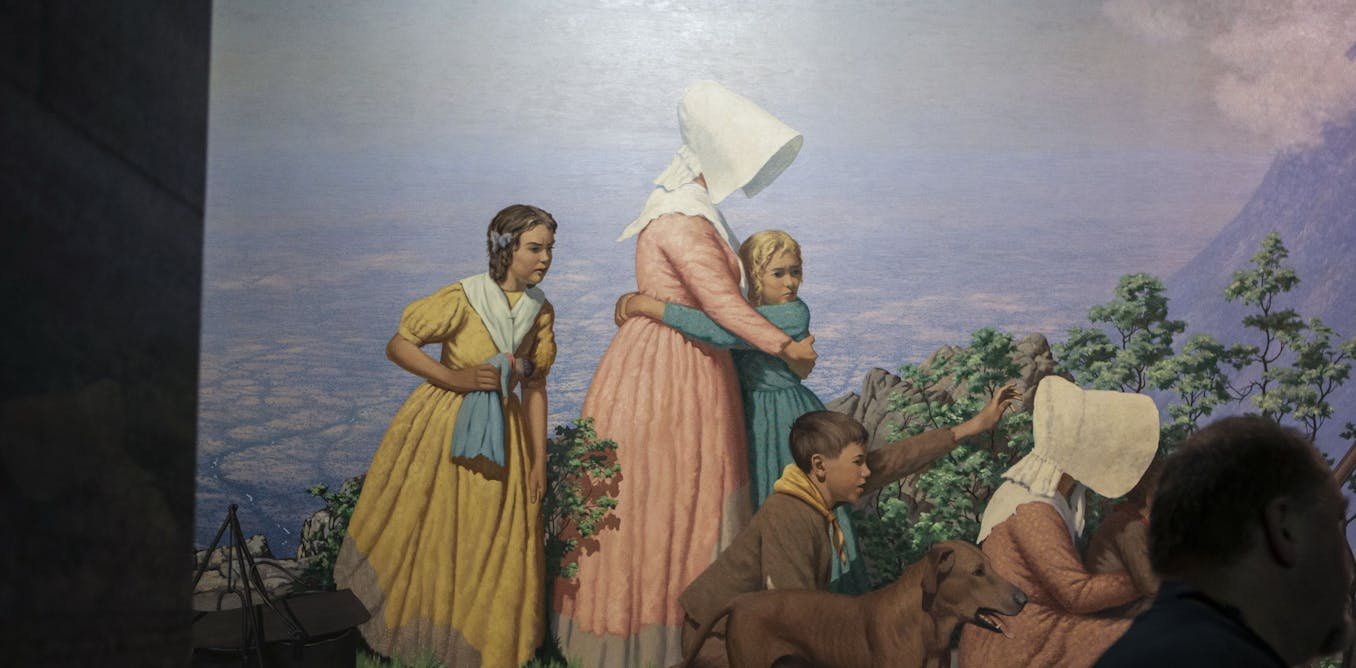
    Visual culture was one of the key mechanisms for rationalizing and normalizing apartheid and the Afrikaner nationalist ideology that underpinned it. It was a multifaceted and broad field. It has extended from images accessed in private homes via print culture and television to those that may be encountered in public spaces via monuments, sculptures, art exhibitions, and more.
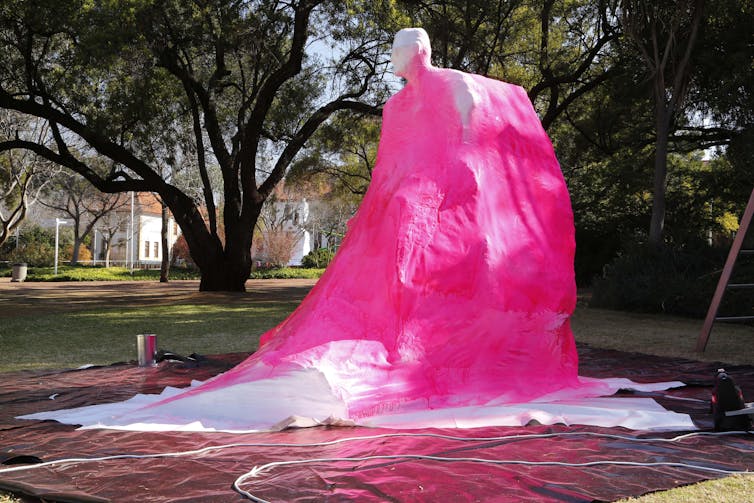
    CR Swart sculpture preparation for “Plastic Histories” by Cigdem Aydemir, 2014. The work is being sprayed pink.
    paul mills

    In apartheid South Africa, images that challenged the status quo tended to be suppressed, and their creators were threatened. Visual discourse related to Afrikaner nationalist ideals and values ​​was also celebrated.

    South Africans had limited opportunities to view state propaganda through a critical outsider’s lens. The country’s pariah status and academic and cultural boycotts limited opportunities for international connections.

    influence of whiteness

    White South Africans who were born and came of age during apartheid tend to fully realize its effects only in hindsight. Repeated exposure to biased rhetoric meant that even those who attempted to criticize nationalist views were influenced by that bias.

    In an article titled “How to live in this strange place?” Samantha Bice, published some 16 years ago, called for shame and withdrawal from public life as the appropriate response for white South Africans to the appalling racial injustice perpetrated on them.

    Although controversial, her position highlights the fact that ten years after the end of apartheid, people are still coming to terms with the long-term effects of its rule.
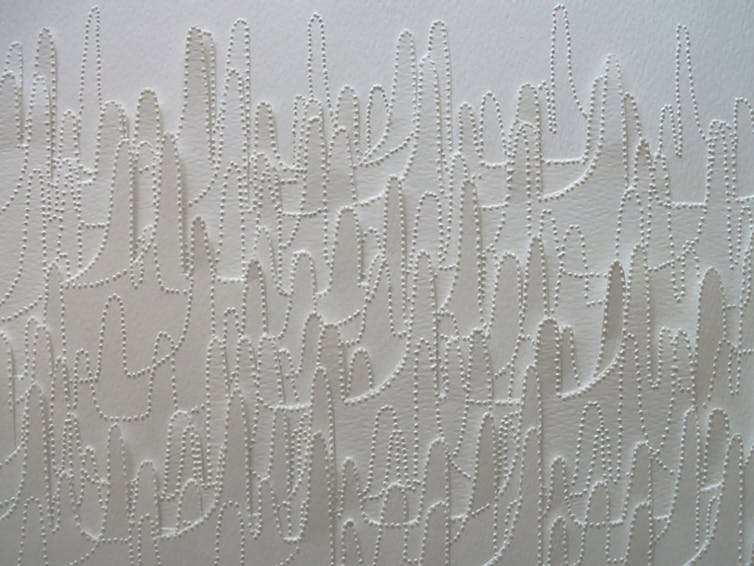
    Tar (Language) I (Details), 2012, by Mea Ox. This work uses the format of an Afrikaans monument located in South Africa.
    Mare Ochs/Lithermore & Associates

    For white South Africans, this involved critically engaging with questions about their own responsibilities. The rise in critical whiteness studies in the new millennium is also firmly linked to the need to question the pre-1994 South African discourse. And that includes visual discussion.

    It stands to reason that the current reclaiming of an active blackness from decades of systematically imposed inferiority should be accompanied by a critical rethinking of whiteness and its strategies of domination and domination.

    living monument

    Images celebrating images of Afrikaner nationalism remain visible and sometimes even prominent in South Africa. The public domain contains a large number of sculptures commemorating key figures of white Afrikaner fictional character.

    South Africa has a significant amount of architectural monuments remaining. There is the Voortrekker Monument in Pretoria, the Women’s Monument in Bloemfontein and the Language Monument in Paarl. Their conservation can be understood in the light of the National Heritage Resources Act (1999). It aimed to ‘enable and encourage local communities to nurture, preserve and pass on their heritage to future generations’.
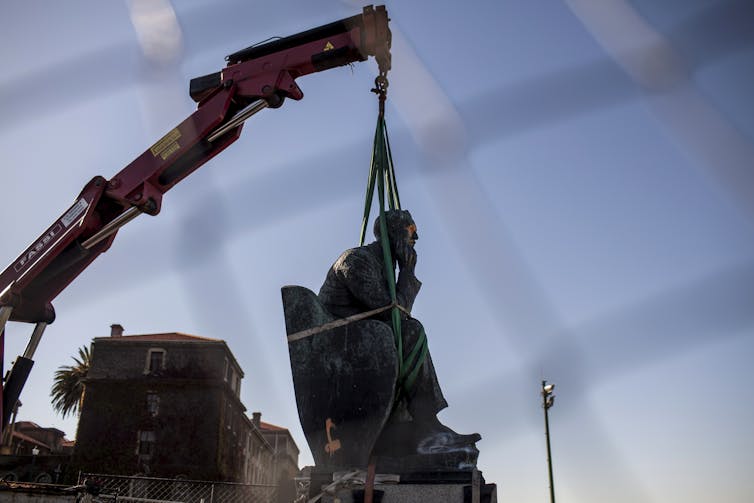
    A controversial statue of Cecil John Rhodes was removed from the University of Cape Town during protests in 2015.
    Charlie Shoemaker/Getty Images

    However, the appropriateness of this approach is increasingly being questioned. Since Marion Walgate’s sculpture of Cecil John Rhodes was removed from the University of Cape Town, many monuments in South Africa have suffered some form of desecration.

    In this context, the discussion of Africana nationalism and visual images raised in this book seems timely.

    Troubling Images: Visual Culture and the Politics of Afrikaner Nationalism is available from Wits University Press. Order your copy here.

    Africa Africana apartheid art build helped nationalism South
    Share. Facebook Twitter Pinterest LinkedIn Reddit WhatsApp Telegram Email
    Previous ArticleWill Africa win the race for critical minerals? Mining leaders respond to geopolitical changes
    Next Article Rapid growth in renewable energy and private sector initiatives make Zambia’s power grid expansion an urgent priority
    Xsum News
    • Website

    Related Posts

    Ecobank holds 3rd +234 Art Fair to promote creative enterprises and start-ups

    March 6, 2026

    Digital trust is the new currency for small and medium-sized businesses in Africa | Wall Street in Kenya

    March 6, 2026

    Rio Tinto gives green light to RBM’s R8.5bn Zulti South project

    March 6, 2026
    Leave A Reply Cancel Reply

    Top Posts

    African Development Bank Group and Nedbank Group sign multi-billion rand funding partnership to transform housing access and boost African trade

    December 19, 202529 Views

    A United Continent on the Move: Ambassador Kouyateh’s Call for an African Logistics Renaissance

    November 20, 202529 Views

    Eni secures multi-million dollar loan for African FLNG project

    January 26, 202622 Views

    African Development Fund and WHO collaborate to save Sudan’s health system

    November 17, 202521 Views
    Don't Miss
    African Development Bank March 6, 2026

    African Development Bank Group (AfDB) launches pan-African aviation finance platform to turn growth into sustainable profits

    As Africa looks to become the world’s fastest growing aviation market, policymakers and industry leaders…

    Ecobank holds 3rd +234 Art Fair to promote creative enterprises and start-ups

    Digital trust is the new currency for small and medium-sized businesses in Africa | Wall Street in Kenya

    A hidden African real estate strategy for US investors?

    Stay In Touch
    • Twitter
    • Instagram
    • YouTube
    • LinkedIn
    • TikTok

    Stay Updated.

    Get the latest Africa-focused business & infrastructure news and more directly to your inbox.

    About Us
    About Us

    Xsum News is Africa’s digital window into the future of business. We tell stories of innovation, enterprise, and investment that are shaping the continent’s economic rise. African Business, Added Up.

    X (Twitter) Instagram YouTube LinkedIn TikTok
    Our Picks

    African Development Bank Group (AfDB) launches pan-African aviation finance platform to turn growth into sustainable profits

    Ecobank holds 3rd +234 Art Fair to promote creative enterprises and start-ups

    Digital trust is the new currency for small and medium-sized businesses in Africa | Wall Street in Kenya

    Most Popular

    African Development Bank praises Algeria’s development model, aims to replicate its success across the continent

    Considering the redefinition of African capital by UBA and Arauba

    G20 Energy Investment Forum brings together Africa’s top finance, insurance and technology leaders

    © 2026 Xsum News. All Rights Reserved.
    • 🌍 About Xsum News
    • 📬 Contact us
    • Privacy Policy
    • Terms & Conditions
    • Disclaimer

    Type above and press Enter to search. Press Esc to cancel.