


As climate shocks intensify, costing the world more than $300 billion a year, cities and businesses are recognizing resilience as a key market opportunity.
Building resilient, low-carbon infrastructure across low- and middle-income countries will require up to $821 billion annually through 2050, protecting trillions of dollars in future value.
The private sector is also responding, with climate-resilient technologies and services across infrastructure, agriculture, and water management potentially attracting more than $1 trillion in private capital by 2030.
In the United States, only one-third of disaster losses are insured, leaving communities and governments at risk. Approximately 1 in 5 homes, worth an estimated $8 trillion, face severe hurricane risk without proper protection. These widening protection gaps increase fiscal and financial instability.
Investing in resilience can yield tenfold returns through avoiding losses, creating jobs, and strengthening local economies. Leading investors are now treating adaptation as a new asset class – one that protects value and drives returns.
Influential investors are now incorporating climate change adaptation into their portfolios, viewing resilience as a new asset class that protects value and generates returns.
By aligning incentives for cities, investors, insurers, and developers, a global market for resilience is emerging.
“This is about more than just strengthening infrastructure,” said Lina Lyakow, managing director of Resilient Cities Network. “By creating resilience portfolios that attract private capital, we are making resilience practical, measurable and investable.”
“The scale of climate risk is too great for any city or business to tackle alone,” said Jeff Merritt, head of urban transformation at the World Economic Forum.
“We will need deep collaboration across sectors and regions to deliver the investment, innovation and partnerships needed to build resilient systems that strengthen both our communities and our competitiveness.”
Bending the risk curve is essential
The intensifying threat of climate change and growing economic losses have increased the urgency to reduce physical and financial exposure to climate shocks.
From San Francisco to South Florida, climate change is reshaping local economies, straining infrastructure and exposing vulnerabilities in global risk systems. Unchecked climate risks are rapidly becoming uninsurable, unpayable, and unsustainable.
In the insurance sector, creating sustainable risk models as climate change intensifies requires cross-sector collaboration, bringing together local planning, public finance, financial innovation and risk modeling to enable proactive adaptation rather than reactive recovery.
However, the solution is multifaceted. Zoning codes, land use decisions, and building codes all determine whether a community can withstand and recover from a shock.
Encouragingly, new partnerships are making progress. For example, the Insurance Institute for Business and Home Safety partners with policymakers and industry to develop science-based building codes that reduce losses from high winds, hail, and wildfires.
Insurers are increasingly acting as resilience partners, developing products that reward climate-smart design and encourage prevention.
”
The report recommends a “portfolio approach” that combines resilience planning with strategic capital mobilization to help cities proactively build and sustain critical resilience projects even when they are underfunded.
“Insurance must go beyond paying,” said Brad Irick, managing executive officer and international co-head of Tokio Marine Holdings. “By partnering with cities from the beginning, we can help with affordability and risk mitigation, mobilize capital, and protect long-term economic competitiveness.”
From crisis management to resource mobilization
Cities are moving from reactive disaster response to proactive, investment-ready resilience planning.
Global experience shows that resilience depends on the mobilization of capital, not only as protection against losses but also as a driver of sustainable economic growth.
In New York City, Hurricane Sandy prompted a new approach to resilience finance. Last year, the Department of Environmental Protection convened a Resilience Finance Task Force with public and private stakeholders to prioritize resilient capital projects and fund ongoing maintenance.
The task force’s recommendations led the city to consider value-at-risk modeling and evaluate different value capture approaches that align insurance incentives with citywide risk mitigation.
Already, the Fellowship has partnered with 12 cities around the world, including Norfolk, Auckland, Glasgow, The Hague, Lagos and Cape Town.
In Los Angeles County, partnerships with local governments, utilities and technology providers connect wildfire management, water security, and equitable climate adaptation.
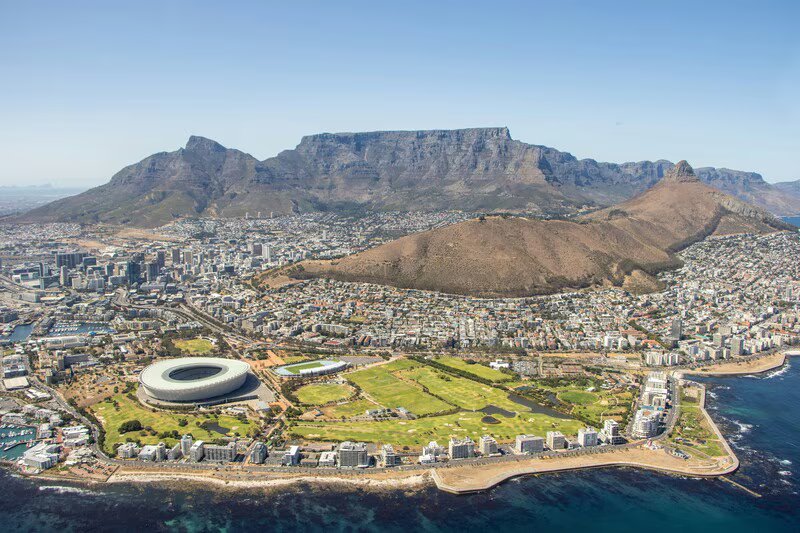
Cape Town is embedding resilience into strategic planning, project management and financial decision-making, linking data on infrastructure, service delivery and revenue collection with financing tools such as green bonds and development bank partnerships to free up capital while maintaining flexibility across the portfolio.
In Broward County, Florida, climate vulnerability from hurricanes and sea level rise is driving a proactive, data-driven recovery strategy.
Under the Chief Resilience Officer, the county is integrating technical risk assessments, stakeholder engagement, and cost-benefit analysis into infrastructure plans such as stormwater harvesting, pumps, and elevated levees, and linking these to municipal finance and insurance markets to make climate adaptation projects effective and investable.
“While the business community generally supports resilience planning, it was clear that support for large-scale plans that require significant amounts of money depended on counties’ ability to base their plans on flood risk and economic indicators,” said Dr. Jennifer Jurado, chief resilience officer for Broward County, Florida.
The evolving relationship between the private sector and climate risks
The private sector is redefining its relationship with climate risk across industries, moving from managing losses to mitigating risk and creating long-term value.
Insurers are increasingly acting as resilience partners, developing products that reward climate-smart design and encourage prevention. These include premium discounts for resilient buildings, coverage linked to validated adaptation measures, and partnerships that help cities set prices and reduce risk from the start.
Similarly, Tokio Marine’s acquisition of Integrated Design & Engineering Holdings Co., Ltd. will enable insurance companies to integrate engineering insights with risk modeling, helping cities and businesses design climate-resilient infrastructure and reduce potential losses before disasters occur.
Investors are also treating resilience as a measurable asset class. Through blended finance, resilience bonds, and impact funds, we mobilize capital for projects that strengthen infrastructure, protect supply chains, and stabilize local economies.
Structured financing vehicles, such as those offered by Vermont Bond Bank, allow small municipalities to access adaptive capital through pooled products and portfolio approaches and consider new tools such as parametric insurance to attract private investors and lower borrowing costs.
Developers and infrastructure leaders are incorporating climate protection into urban projects through flood-resilient design, green infrastructure, and adaptive land use, strengthening both bankability and community outcomes.
The Urban Climate Resilience Program, led by the Zurich Foundation, is a prime example of this collaboration, working across nine countries to support urban communities facing extreme heat and flooding risks, while linking local action to global resilience goals.
A call to collective action: Preparing for urban resilience
Resilience preparedness is about building tangible dividends, enabling financing through partnerships with insurers and developers, integrating robust data into investment decisions, and targeting resilient supply chains and infrastructure that can withstand and adapt to future shocks.
The stakes are no more. Climate risks are increasing, and so are the opportunities to create investable, impact-driven urban solutions.
Achieving the resilience dividend will require collective action: collaboration across sectors, innovation in financing and governance, and a common commitment to converting planning into flows of capital that strengthen communities and local economies.
The World Economic Forum and the Resilient Cities Network work together across a global network of cities and industries to foster private investment in urban resilience. At October’s Urban Transformation Summit, city governments, insurers, investors, and developers explored new models for closing the $4.3 trillion annual resilience investment gap and turning climate adaptation into a driver of long-term competitiveness.
