


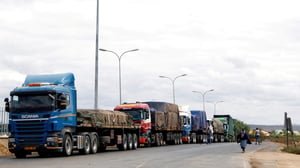
African logistics startups are positioned to play a key role in the African Continental Free Trade Area (AfCTA), the world’s largest free trade area by number of participating countries, which was launched on January 1.
As companies that tend to think about expanding into multiple markets from the outset, startups could help address some of the agreement’s biggest goals, such as a common payment system and a common user experience, said Onyekachi Izukanne, co-founder and CEO of Lagos-based Trade Depot, which distributes consumer products from manufacturers to retailers in the three countries.
“While we recognize that there is still considerable work to be done, we are very supportive of the increased market access that the agreement facilitates,” Izkanne said. “I see this agreement as a promise of integration.”
Technology can help tackle some of the biggest issues hindering trade growth in Africa, such as reducing red tape and easing supply chain bottlenecks. But startups can’t do it alone. Governments need to work together to build infrastructure and ensure that regulations don’t set things back.
Sluggish intra-African trade
AfCTA covers a market of 1.2 billion people with a total GDP of $3 trillion. The trade area’s cornerstone agreement has been signed by 54 of the African Union’s 55 countries, and ratified by 36 countries as of February 5.
The main objective of the agreement is to create a single market for goods and services in Africa and deepen the economic integration of the continent. One way we seek to achieve this is by phasing out tariffs on merchandise trade.
African countries do not trade much with each other, hurting their ability to diversify their economies. In 2017, intra-African exports accounted for 16.6% of total exports, followed by 68.1% to Europe and 59.4% to Asia. Furthermore, intra-African trade (average imports and exports) was about 2% from 2015 to 2017, compared to 47% in the United States and 61% in Asia.
Eliminating import tariffs could increase intra-African trade by more than 50%, while reducing non-tariff barriers could double trade volumes.
Despite AfCTA’s potential benefits, the agreement faces long-standing obstacles. These include poor infrastructure, unfriendly regulatory regimes and trade laws, border bureaucracy, red tape, and inadequate access to trade information. Due to these obstacles, logistics costs remain high.
E-logistics companies help transporters in different regions of the continent save costs and increase profits by providing technology that simplifies pricing, payments, and smooth movement of goods. It also includes data that provides valuable business intelligence. Some startups shined during the height of last year’s coronavirus lockdowns, allowing goods to flow into the country despite supply chain and border restrictions.
Our experience in using digital solutions to make logistics on the continent more efficient and transparent could help determine whether a free trade area will be successful. But they cannot tackle these problems alone.
“This treaty alone is not enough to ensure that we receive the intended benefits,” says Jean-Claude Homawu, co-founder and chief product officer of Loli Systems, a Nairobi-based e-logistics startup with operations in six countries. “Implementation is key here.”
Challenges create opportunities
Given that startups are already facilitating the work of large logistics companies, Homawu says the obstacles that stand in the way are opportunities. One example is Imperial, an Africa- and Europe-focused provider of market access and logistics solutions. Using Lori System’s proprietary technology platform, Imperial will provide carriers in southern Africa with access to software applications and data to help them manage their fleets and operations more efficiently.
Startups can help governments automate the registration, tracking and border crossing of freight forwarders, increasing government visibility in free trade zones, Homawu said. Technology can also help form valuable insights by collecting data about the movement of objects and people, he says. Additionally, Homawu said technology can continue to be used to collect customs duties on products that are subject to customs duties.
Kobo360, a Lagos-based e-logistics platform serving more than 19 countries, is building a global logistics operating system that it hopes to use to enhance trade and e-commerce enabled by AfCTA, said Dennis Katurima, country manager for Kenya and Uganda. The platform will incorporate logistics elements such as transportation, clearing and forwarding, and warehousing services.
AfCTA is “still in its early stages, but we are rooting for it,” Katurima said.
In a sign of confidence in the potential boost they will receive from the AfCTA, African e-logistics startups are attracting investment from organizations such as the World Bank. The International Finance Corporation is pumping about $82 million into global e-logistics companies, including Kobo360, in the hope that they can tackle some of the challenges hindering the development of trade between African countries.
Opportunity for startup expansion
Brian Laung Aoaeh, co-founder and general partner of REFASHIOND Ventures, a US venture capital firm specializing in supply chain, says AfCTA also provides an opportunity for technology startups to expand across the continent under a single set of rules and regulations.
Much will depend on how the agreement is actually implemented on the ground, said Aoe, who also teaches supply chain and operations management at New York University. However, there is great potential to reduce the regulatory burden on technology startups. This will only happen if startups and other businesses are not burdened by a new set of rules they must abide by.
“This makes it very likely that continental giants will emerge from Africa’s tech startup ecosystem, creating companies that can compete on the global stage,” Aoe says.
Sign up here for the Quartz Africa Weekly Brief to get news and analysis about African business, technology and innovation delivered to your inbox.
