


Most businesses in Kenya first rely on internal resources to establish their operations before considering financing from banks or SACCOs. Family and friends are still common alternatives. Only when these options have been exhausted, many entrepreneurs approach banks and cooperatives, but they often encounter challenges such as lack of collateral, the perception that small and medium-sized enterprises are a higher lending risk, and several other structural barriers.
At this stage, corporate investors emerge as an important source of equity funding, as they can invest in companies of all sizes. Their decisions are based on an assessment of the company’s prospects and do not require the provision of financial security.
Venture capital provides an additional means of financing. Particularly suitable for start-ups and high-growth companies that require investments without immediate repayment obligations.
While venture capital is common in developed countries, it is less common in Africa due to a combination of factors. First and foremost, Africa’s venture capital landscape is not well developed, with much of the capital coming from overseas investors. However, these investors do not really understand the unique context of investing in Africa and the African continent. The perceived risks of investing in Africa have significantly hindered the flow of capital. This is why Africa attracts less than 2% of global capital movements. This leaves African businesses starved of much-needed capital.
The few investors wishing to invest in Africa blame the lack of a strong set of investor-ready or bankable businesses. Most entrepreneurs don’t easily pitch their business ideas to venture capitalists. One reason for this is a lack of awareness about how to target and apply this group.
Furthermore, most companies do not have the appropriate organizational structure and operational methods in place to make their business attractive to venture capital investors.
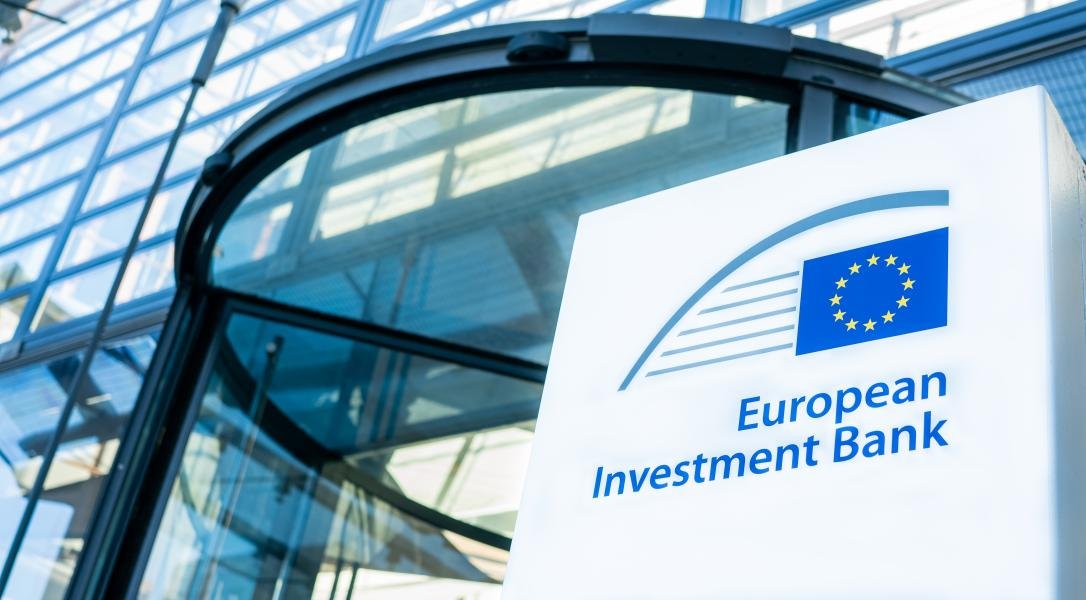
With these challenges in mind, the European Investment Bank established the Boost Africa Initiative. The initiative, launched in collaboration with the African Development Bank (AfDB) and supported by the European Commission, aims to bridge the existing funding gap in venture financing in Africa, while providing technical and capacity-building support to young Kenyan and African entrepreneurs to launch and sustainably grow their innovative business ideas.
“At a higher level, Boost Africa supports incubators, accelerators, early stage and growth stage fund managers who invest in companies ranging from establishment to growth stage and more mature companies,” said Edward Klassen, Head of EIB’s East Africa Regional Hub.
Claassen points out that for the venture capital industry to play a more substantial role in supporting young companies and the private sector as a whole, significant funding is needed, a need that cannot be met by the public sector alone.
“We needed to find a way to attract private sector capital into these venture capital funds because the amount of capital required is huge,” he added.
XENO Investments, one of Boost Africa’s beneficiary companies, is a digital platform that helps individuals, families and organizations plan, save and invest towards their financial goals.
Founded by Aeko Ongodia, XENO started as a small startup struggling with traditional funding. “No bank wanted to touch us because we were a young company with no collateral and no revenue track record,” Ongodia said.
That changed after XENO secured seed investment from Seedstars Ventures, an EIB-backed venture capital fund, through Boost Africa. This funding enabled the company to dramatically accelerate its growth, expanding its customer base and doubling its assets under management in less than a year.
“Through the Boost Africa program, we received significant funding and technical support to transform our business,” Ongodia said. “In less than a year, our customer base has grown from 120,000 to more than 500,000, active users have doubled from 30,000 to 60,000, and assets under management have grown from $15 million to $30 million.”
From startup struggles to scalable growth
XENO’s growth story shows that EIB’s Boost Africa approach goes far beyond finance. Through its Technical Assistance Facility (TAF), the program provides management training, development and governance support to ensure sustainable business growth.
“Thanks to the support we received, we were able to strengthen our internal systems, improve operational efficiency, and attract top talent. It wasn’t just funding, it was the knowledge and structure we needed to grow responsibly,” said Ongodia.
Technology is at the heart of XENO’s model. Its digital platform allows users to plan their financial future, select investment goals, and track their progress in real time. This user-friendly innovation allows users to invest with one tap, a breakthrough in a region where financial inclusion remains a key development challenge.
For EIB, supporting companies like XENO is consistent with our broader vision of using finance as a catalyst for inclusive growth. The Bank has committed billions of euros to projects that foster digital transformation, innovation and entrepreneurship across sub-Saharan Africa.
“EIB’s engagement through Boost Africa demonstrates how strategic investments combined with technical expertise can unlock Africa’s entrepreneurial potential. Our goal is to empower businesses to create jobs, drive innovation and expand access to essential services,” said Ato Dia, Boost Africa’s Country Lead for Kenya.
Building Africa’s financial future
Today, XENO is one of East Africa’s promising financial technology companies, providing digital investment tools to hundreds of thousands of users across the region. That journey highlights the transformative power of EIB-supported blended finance.
“The growth we achieved through EIB support would have taken years with traditional funding,” Ongodia reflected. “Boost Africa has helped us unlock our potential and prove that with the right partnerships, African innovation can compete on a global scale.”
The European Investment Bank continues to position itself as a key partner in Africa’s development story, empowering entrepreneurs, accelerating digital transformation and ensuring inclusive growth reaches every corner of the continent.
