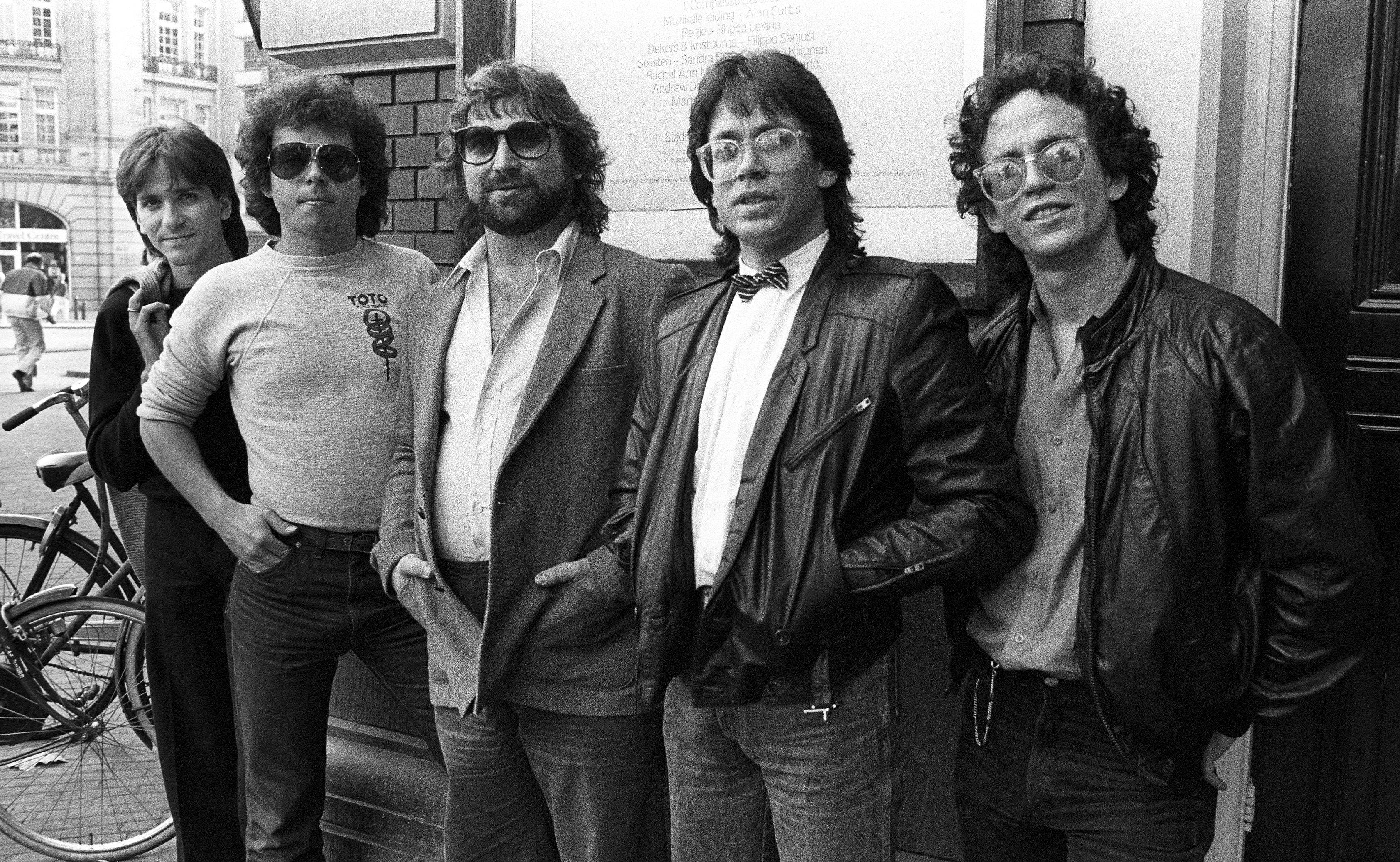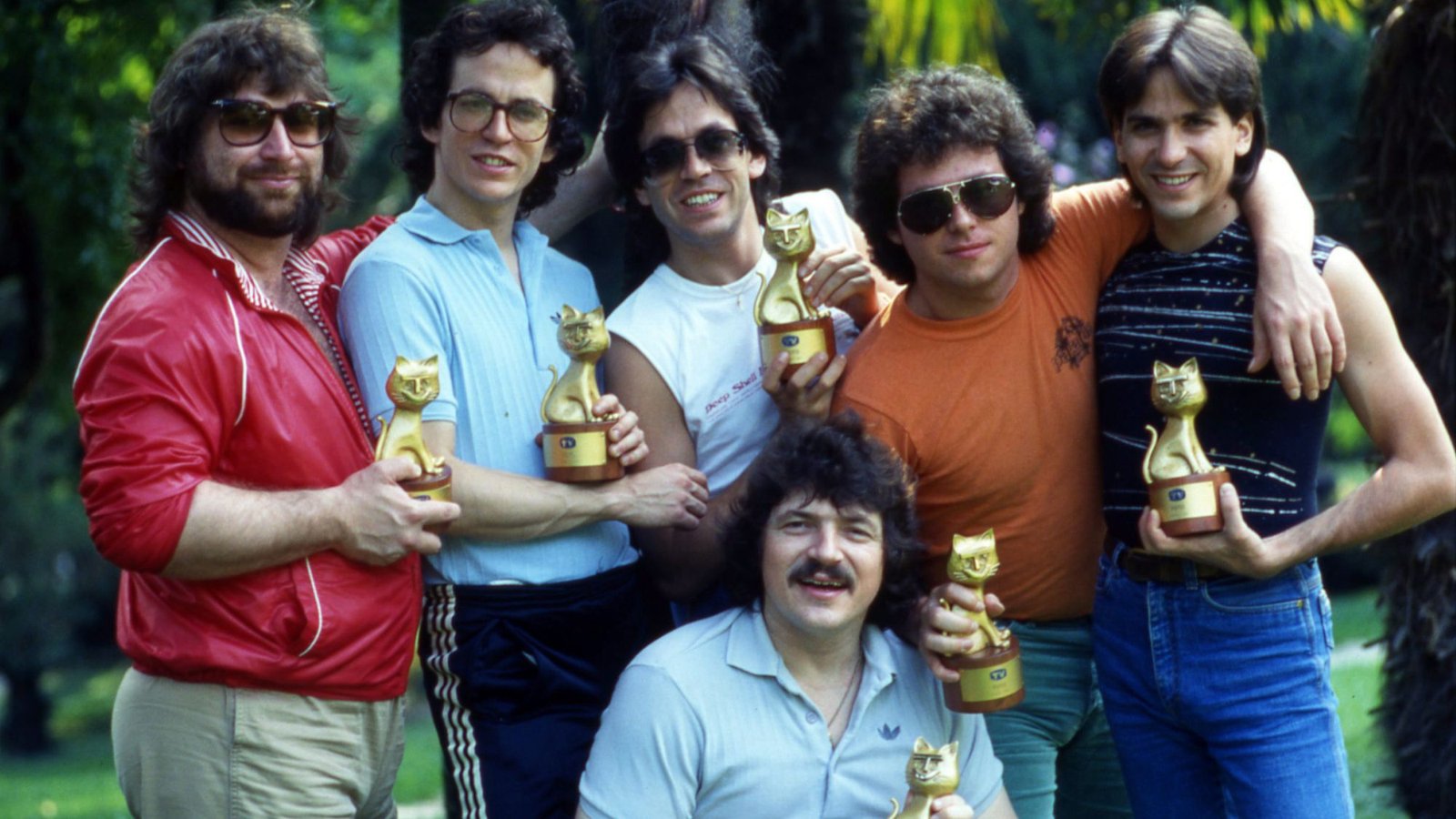
It has been dismissed, criticized (especially by the band), accused of cultural appropriation, and its video accused of racism. But more than 40 years after its release, TOTO’s Africa seems indestructible.
The song has been streamed more than 1 billion times on Spotify and 1 billion times on Youtube, and its appeal has spanned generations, appearing on countless TV shows from Stranger Things to South Park, from Family Guy to The Simpsons, and in thousands of memes.
There is also a sound installation in the Namib Desert that uses solar power to play in a constant loop. As long as the Sun continues to produce light and heat (that is, for at least the next 5 billion years), all life forms that cross the Sun will hear it. Africa will outlast humanity.
you may like
In 1981, it was an afterthought. Back then, Toto needed a hit. It’s been three years since their blockbuster hit Hold the Line, and their subsequent albums, 1979’s Hydra and 1981’s Turn Back, performed modestly. Steve Lukather explained to CBS News in 2022, “They[the record company]decided to do it right away.” “We were like, if we don’t put out a song now, it’s over. So we just said, let’s get back to what we’re doing, write and record good songs.”
So the band started working on a new album, and with Rosanna in the bag, they were convinced they had something that could beat Columbia. “African” was the last song recorded for Toto IV, and composer David Paich had to convince his bandmates to commit fully to the song.
watch on
In a 2005 interview with Mix magazine, Paich explained how he came up with the idea for the song: “For years I had been fascinated by the pictures of Africa and starving children in UNICEF ads. I always wanted to do something to connect with that and bring more attention to the African continent. I wanted to go there too, so I invented a song that sounded like I was in Africa.”
“I heard a melody in my head, and I sat and played the music for about 10 minutes. Then the chorus came out. I sang the chorus as I heard it. It was like God was channeling it. I thought, ‘I have talent, but I’m not that talented. Something happened here!’
Famously, Paich had not yet set foot in Africa (nor did he have any band members) when he wrote these lyrics. “It was completely ambitious,” he told CBS. “I just wanted to see the world. It was just me writing ‘What if…what if…?'”
Paich called drummer Jeff Porcaro and convinced him of the idea of making percussion a central part of the track. “Jeff brought out an African stick with a bottle cap that his father (Joe Porcaro) had used in a National Geographic movie. He brought in a marimba and something like a wooden xylophone. This was before synthesizers. There were no samples back then. You hear another instrument, a bass marimba, and you hear probably one of the first loops ever done.”
Porcaro and percussionist Lenny Castro created the rhythm with bass, snare drum, hi-hat, and congas. I overdubbed cowbell and shaker on it. Speaking to Modern Drummer magazine in 1988, Porcaro recalled: “We went back out there, cut the tape, and created a one-bar tape loop that went around.”
you may like

watch on
“We took that tape, moved it to another 24 tracks for six minutes, and David Paich and I went out to the studio. The song started and I was sitting there with a complete drum set and Paich was playing.
“When he got to the fill before the chorus, I started playing the chorus, and when the verse or intro came back, I stopped playing. Then I had the piano and drums on tape. Then I had to play the quarter notes with bongos, jingle sticks, and a big shaker. I probably layered two tracks of sleigh bells, two tracks of big jingle sticks, and two tracks of tambourine, all on one track. I was trying to get the kind of sound you hear on National Geographic. ”
We set up a percussive bed and overdubbed the rest of the band. Paich recorded the opening refrain on a Yamaha CS80. “Then David Hungate put down the bass, Steve put down the guitar, and I put down more piano,” Paich told Mix.
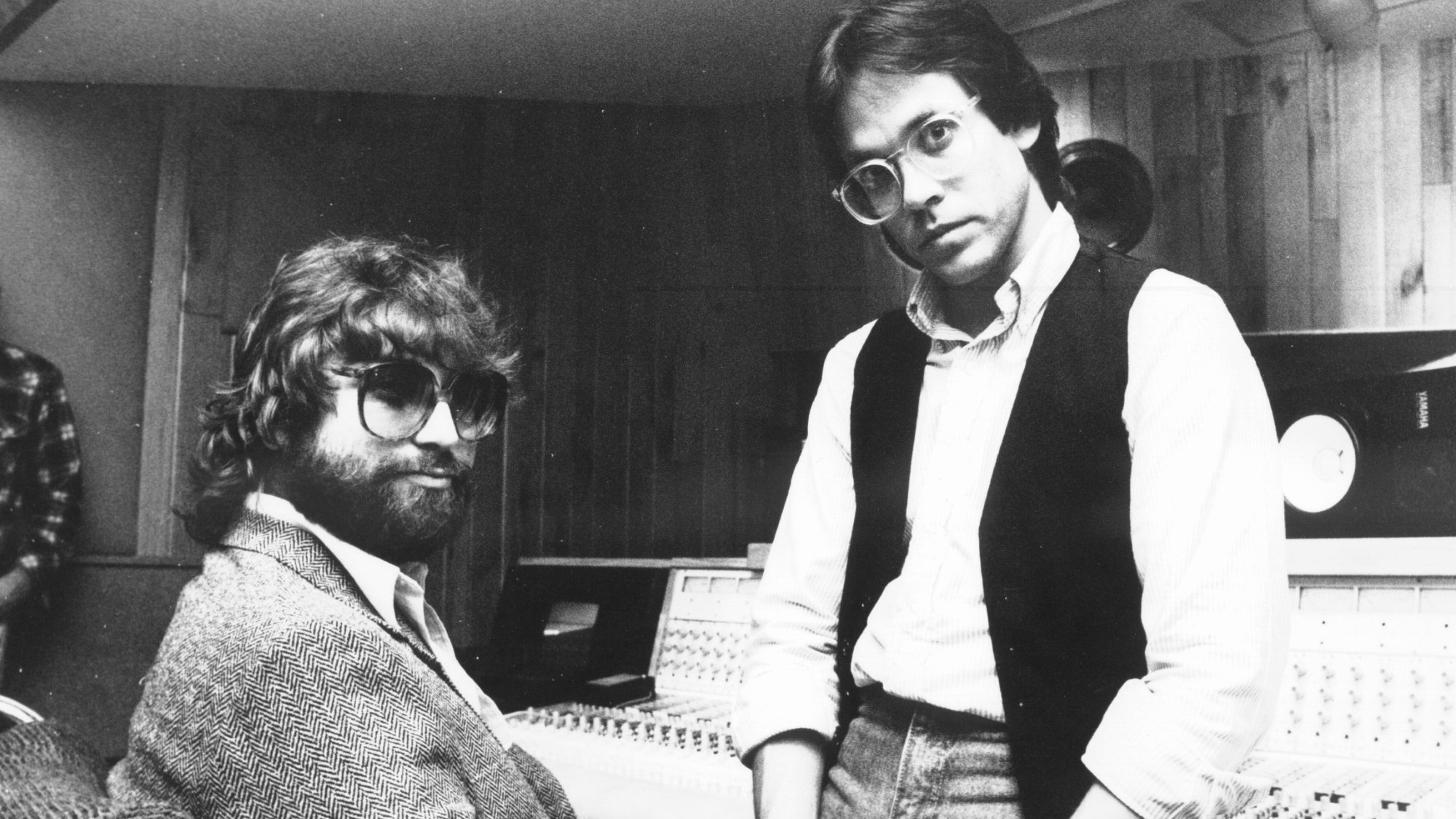
“We made the track and I was still thinking of the lyrics. Everyone tried to sing the song. There were a lot of lyrics to fit into a small space. Bobby (Kimball) tried to sing it but couldn’t get it right. Steve tried to sing it too. But I ended up singing it by default. I’m a fan of Elton John, and he applies a lot of the words to his songs. When it came to the chorus, the legendary Jim Horn came in. I played the recorder on the second verse.
However, having spent so much time on this track, the rest of the band grew tired of Africa, and Paich had to fight his corner to have the song included on Toto IV. “I didn’t think this song should be on the album,” synthesizer player Steve Porcaro told Billboard in 2018. “That doesn’t mean I wouldn’t have killed myself with it. I’ve never thought about ‘Africa’. We worked hard on it. But all along, we just didn’t think it should be on the album. We just didn’t think it was right for us. Lukather felt the same way.”
The guitarist famously claimed he would run naked down Hollywood Boulevard if Africa became a hit. “It’s not the groove or the track’s fault,” he insisted to Billboard in 2018. “But it’s because of the lyrics! It’s like, ‘We’re from North Hollywood! What the hell do we have to sing about Africa?'”
Nevertheless, despite Lukather’s misgivings, the song completed the album, and lead single “Rosanna” became a much-needed hit for Toto, reaching No. 2 on Billboard in the summer of 1982. When club DJs started covering Africa, the record company decided to release the song as a sequel.
Speaking to Billboard in 2018, Paich recalled: “Sony, who was in New York at the time, started releasing this song at dance venues and discos, and it started to get popular. So they followed suit and thought, ‘Okay, let’s release one last song here,’ and decided to put it out there.”
“Africa” reached number one on Billboard in early 1983 and even cracked the top three in the UK at a time when soft rock wasn’t exactly the song of the month. Along with Toto IV, this album rebooted the band’s career. The album went four times platinum in the United States alone, and the band won six Grammy Awards in 1983.
But since then, Africa has been home to a lot of life. Soft rock fell out of favor and the song became something of a sitting duck. Featuring hairy white men singing about continents they had never visited, the song symbolized the self-satisfaction and complacency that came to be associated with that generation of American rock.
The video has drawn accusations of racism (reviewing the video for Stereogum in 2020, David Breihan called it “shockingly racist”), as well as accusations that marimba and kalimba-like sound synths are used to represent “ethnic groups.” But while contemporaries like Genesis’ “Illegal Alien” remain tucked away in the dusty recesses of rock’s wardrobe, Africa’s popularity continues to grow. why?
Part of the reason must be two converging trends: guilty pleasures and a resurgence of interest in so-called yacht rock. For much of the 1990s and 1990s, TOTO and their pudgy contemporaries were dismissed as old-fashioned jokes, but since the advent of streaming, there’s been renewed interest in their melodic, lavishly produced music.
At the heart of the guilty pleasure phenomenon was the repurposing of songs that were once considered outrageous and critical. Africa fits perfectly in this regard. This is a hard song to stomach. Undeniably catchy and musically well-crafted, Paich’s lyrics, when viewed through the lens of history, have a certain clumsy, well-intentioned, endearing quality to them (best captured by the line about Kilimanjaro looming “like Olympus above the Serengeti”; in reality, they’re more than 100 miles apart from each other).
Critic Carl Wilson said of Africa in a 2018 Billboard article, “It’s gone from being an ’80s joke to an evergreen, humorous, yet earnest classical level of acceptance. It’s kind of taken itself out of its context.”
“I think it’s extremely stupid to insult your own intelligence by seriously criticizing it. For example, if you were to say, ‘I’m about to seriously talk about Toto’s Africa,’ you’d be the biggest fun giver in the world about your politics.”
The band has been memed, talked about, debated, laughed at, poked at and prodded over its 40 years of existence, but even the band’s once doubtful members have now made peace with it. Steve Lukather told the Guardian in 2018: “I have to sit here and chew my words because Africa has become the standard, and I’m so proud of David for that.”
“I mean, I’ve been playing it since 1982. But we’ve lived through the haters, and that’s been very good to me. I’ve never run naked down Hollywood Boulevard. These days, you’re lucky to drag it down.”