


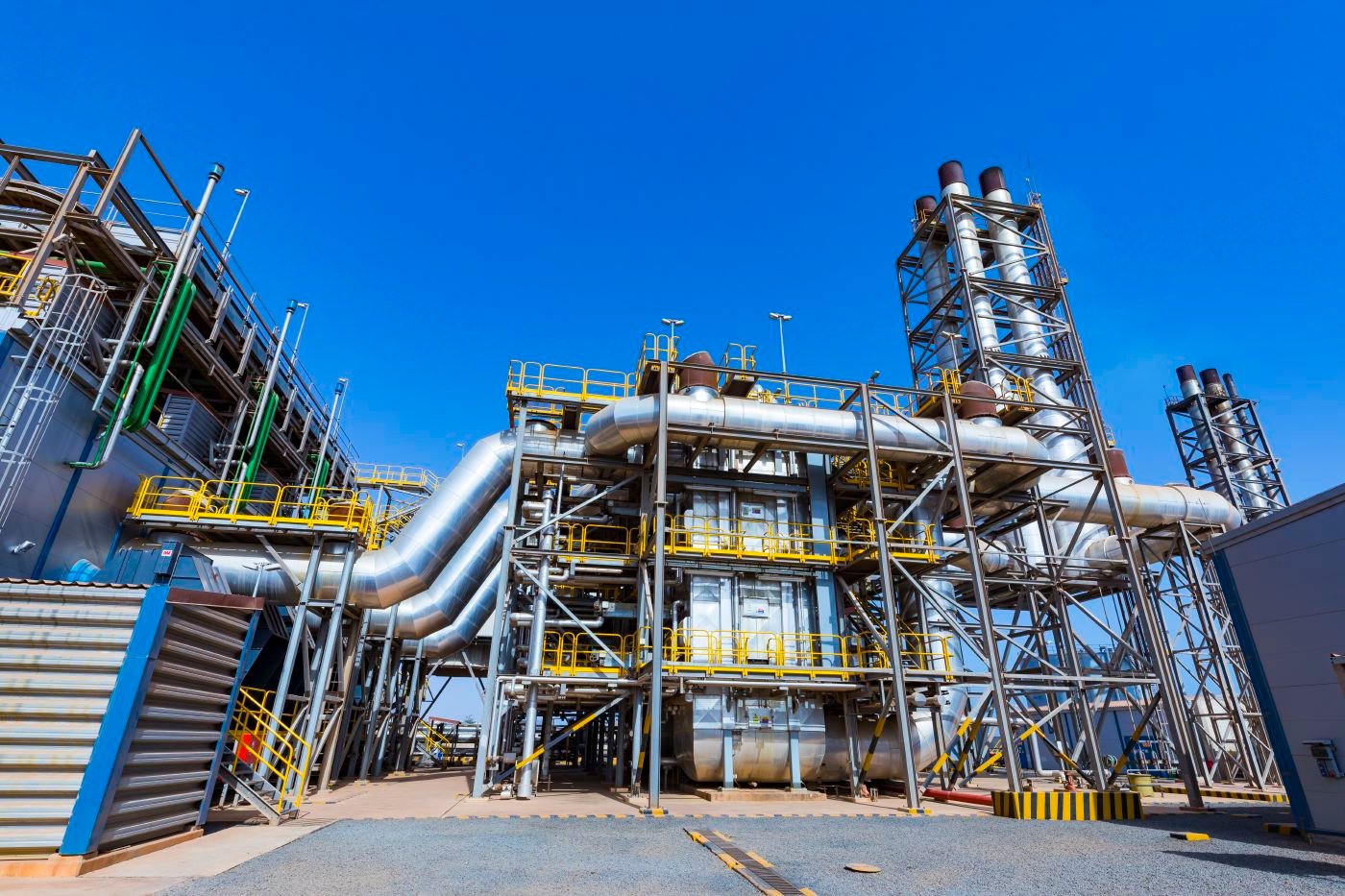
For better or worse: Senegal’s Cap des Biches is an 86 MW thermal power facility developed and constructed in two phases by Contour Global. Photo: Contour
As Africa faces deepening debt, climate shocks and energy poverty, the World Bank’s private arm is quietly approving new fossil gas projects.
Two investments backed by the International Finance Corporation (IFC) expose dangerous contradictions at the heart of global climate finance.
At a time when Africa is bearing the brunt of a climate crisis it did not cause, IFC, the private lending arm of the World Bank Group, is quietly moving to approve two new fossil gas-related projects on the continent.
Although these investments are framed as pragmatic, transitional, and development-friendly, they instead reveal troubling patterns. That means fossil fuel infrastructure continues to be prioritized over people, renewable energy and long-term resilience.
One of the projects in question is the Sahara LPG Project, a $100 million multilateral investment in new liquefied petroleum gas (LPG) storage terminals across Ghana, Nigeria, Kenya, and Tanzania, combined with IFC-backed trade finance for fossil fuel distribution.
Another project is the Cap des Biches (CdB) gas conversion project in Senegal, which aims to convert thermal power plants from heavy oil to liquefied natural gas (LNG).
Taken together, these projects raise serious questions not only about the response to climate change, but also about transparency, consultation, debt, and whose interests international financial institutions are truly serving in Africa.
Another name for gas
IFC has continued to promote fossil gas as Africa’s “transition fuel,” but this framework is neither aligned with climate science nor with African realities.
LPG and LNG are not harmless band-aids. It requires long-term infrastructure, locking countries into volatile import markets and redirecting scarce public and private capital to renewable energy systems that are cheaper, faster to deploy, and better suited to expanding energy access for the continent’s 600 million people living in remote, rural areas.
The Sahara LPG project exemplifies this contradiction. IFC plans to finance four new “greenfield” LPG storage terminals in some of Africa’s most congested and environmentally sensitive port and industrial zones (Tema, Apapa, Mombasa, and Dar es Salaam), as well as underwrite trade finance facilities that will support the procurement, transportation, storage, and distribution of LPG, LNG, and other fuels across Africa.
This is not a marginal intervention. This is the creation of regional fossil fuel logistics. Gas is also known as gas. That infrastructure expansion is still fossil fuel expansion.
Retrofit consultation
One of the most alarming aspects of these projects is how little and how slowly information is released to the public.
Communities living near ports, pipelines, and power plants are once again being asked to accept major energy infrastructure with minimal disclosure, limited opportunities for participation, and no meaningful say in decisions that will shape their environments and livelihoods for decades to come.
In the case of Sahara LPG, there is no evidence that early country-specific consultations were conducted in all four host countries.
Disclosure documents are technical, inaccessible, and often published in formats and languages that exclude affected communities.
The cumulative impacts of expanding fossil fuel storage in already overburdened industrial areas – air pollution, safety risks, and land use pressures – remain largely unaddressed.
In Senegal, the Cap des Biches gas conversion project is progressing, even though the nearest area is only 500 meters from the power plant. Little is clear about whether residents were consulted before key project decisions were made or whether they were given meaningful information about the safety risks associated with relying on LNG infrastructure and pipelines.
This approach is contrary to IFC’s own performance standards. This performance standard requires consultations to be timely, comprehensive and iterative, not an eleventh-hour check-off exercise.
The silent power of trade finance
Perhaps the most insidious element of the Sahara LPG project lies in its trade finance component. IFC’s “risk participation” in large-scale trade finance arrangements arranged by commercial banks could enable fossil fuel expansion without the oversight that typically applies to project finance.
Trade finance obscures end use. It fragments accountability.
This would allow international financial institutions to continue funding fossil fuel supply chains through the back door while claiming alignment with climate goals.
This model is particularly dangerous for African countries, which are already suffering from debt crises and balance of payments pressures. Fossil fuel imports, particularly LNG, are subject to global price fluctuations, currency risks and long-term contractual obligations.
Pakistan’s LNG crisis should serve as a warning, not a blueprint.
Lock-in at the worst possible time
Supporters of Senegal’s gas transition project argue that switching from heavy oil to LNG will reduce emissions. However, this framework ignores the big picture. LNG infrastructure is capital intensive and has a long lifespan. Once built, there would be strong incentives to keep gas flowing, crowding out investment in renewable energy and storage solutions that Senegal and other African countries are already well-positioned to scale up.
Africa does not lack clean energy potential. There is a lack of political and financial support to deploy it quickly and at scale.
Every dollar invested in new gas infrastructure is a dollar not invested in solar mini-grids, wind power, battery storage, grid upgrades and energy efficiency – solutions that can provide energy access without exacerbating climate vulnerability or debt.
Who is this development for?
Both IFC projects disproportionately benefit private companies and international financiers. Sahara Energy Resources Limited, Société Générale, Contour Global and KKR stand to benefit from IFC’s risk mitigation and capital mobilization. Meanwhile, African communities inherit environmental risks, safety concerns, and economic risks.
This is a common pattern. International financial institutions are socializing risks and privatizing profits while invoking development rhetoric to justify fossil fuel expansion in the Global South. A similar project would be politically unfeasible in the Global North.
timing is not neutral
The timing of these disclosures is important. Information on both projects was released during the year-end holidays, when many civil society organizations and community representatives are on hiatus. The board approval date is in early February, leaving little room for scrutiny or challenge.
This is not transparency. It’s procedural minimalism designed to move the project forward before the opposition unites. Civil society organizations such as Don’t Gas Africa and The Big Shift Global submitted a letter outlining concerns from organizations in Africa and around the world.
Africa deserves better
Africa is not looking for charity. We want consistency, accountability, and respect. If IFC is serious about alignment with the Paris Agreement, a just transition, and sustainable development, it cannot continue to approve fossil gas projects under the guise of pragmatism, especially when cheaper and cleaner alternatives exist.
Development finance should expand countries’ options, not lock them into outdated energy systems.
We must prioritize talent over pipelines, resilience over profits, and the future over fossil fuel nostalgia.
The Sahara LPG and Cap des Biches projects were not decided in isolation.
They are signals. And now the signals from IFC are very alarming.
Africa deserves an energy future that is clean, democratic and truly progressive. It was not secretly mortgaged through gas contracts approved behind closed doors.
Karabo Mokgonyana is Energy Co-Leader at PowerShift Africa.
