


InfraCredit is set to launch Africa’s first credit guarantee for solar panel manufacturing in March 2026, this can be exclusively revealed to Energy Capital & Power.
The agency is mobilizing Nigeria’s pension fund funds for large-scale infrastructure and supporting a $497 million decentralized renewable energy pipeline while maintaining a AAA domestic credit rating.
InfraCredit’s model has been replicated in Kenya, Pakistan and Cambodia, with the African Development Bank supporting further expansion on the continent.
InfraCredit Nigeria plans to announce a guarantee for its local solar panel assembly plant in March 2026, Ojulu Adeniji, Vice President, Power Generation and Structures, told Energy Capital & Power. The transaction combines concessional capital from the Industrial Bank and represents the first credit guarantee for solar PV manufacturing infrastructure on the continent.
“There is a lot of potential and growth in solar panel assembly,” Adeniji said. “We are planning to announce infrastructure credit guarantees for solar panel manufacturing plants soon, but we are still in the process of approval and documentation.”
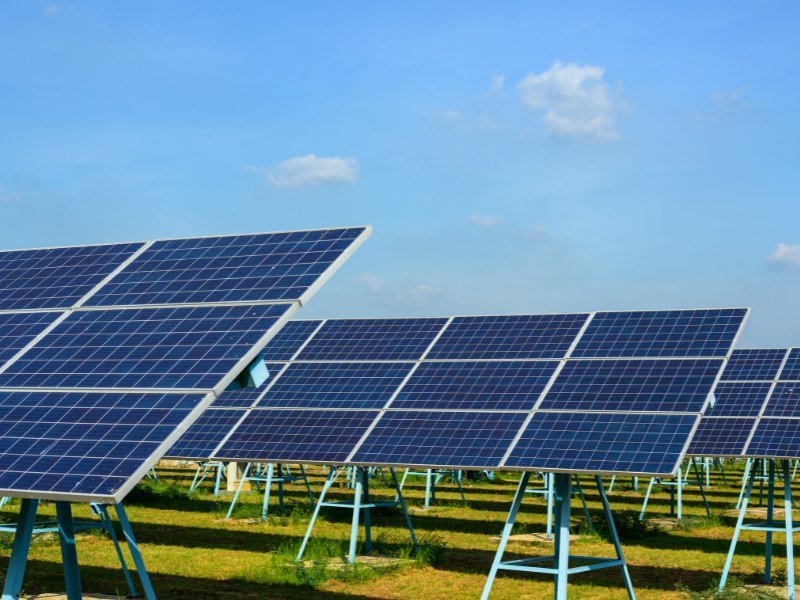
This move places infrastructure credits at the center of Nigeria’s drive to localize solar power. The country imported approximately 1.72 million kW of Chinese-made panels in the 12 months ending June 2025, making it Africa’s second-largest importer after South Africa. Two assembly plants are in operation, Auxano and Blue Camel, and two more are under construction.
A zero-tariff policy on solar cells, a key input for panel production, has already been introduced. In October 2025, Nigeria signed a $435 million renewable energy manufacturing contract as part of a plan to develop 4GW of domestic solar power manufacturing capacity.
Utilize pension assets on a large scale
InfraCredit’s core model focuses on directing Nigeria’s pension fund funds to infrastructure. This was achieved through a combination of AAA domestic credit ratings from Agusto & Co. and Global Credit Ratings and the support of major capital providers such as the Nigeria Government Investment Authority, GuarantCo, British International Investment (BII), KfW and African Finance Corporation.
“It took some education to get pension funds to accept guarantees from uninspected entities,” Adeniji said. “By showing them that we are a capital provider, we gained a lot of trust from them.”
This model has proven to be reliable and the InfraCredit guarantee has never been invoked. In November 2024, BII committed to a $30 million risk-sharing and blended local currency cofinancing facility, combined with a $20 million counterguarantee and $10 million in concessional financing through the Climate Finance Blending Facility, to expand support for DRE projects.
Regulatory tailwind
Several policy changes have expanded InfraCredit’s addressable market. The unbundling of Nigeria’s electricity sector and the new autonomy of state-level electricity markets has created opportunities for decentralized solutions. The removal of fuel subsidies has sharply increased the price of diesel-dependent electricity, prompting commercial and industrial users to turn to solar power. The World Bank’s DARES program has further enabled business models such as rural agro-processing hubs and production use clusters. InfraCredit highlighted First Electric, a mesh grid initiative serving MSMEs, as a pipeline deal with significant development impact.
A model aiming for the continent
InfraCredit supported the launch of Dhamana Warranty Company in Kenya. The company officially launched in September 2024 and completed its first transaction in late 2025. This is a KES 2.5 billion guaranteed loan to solarize Safaricom’s base transceiver stations. Dhamana covers East Africa, while Pakistan’s InfraZamin follows a similar blueprint inspired by InfraCredit.
“What has helped us is standardization,” Adeniji said. “We have standardized our products, the areas we go into, and how we review them.”
InfraCredit is currently investigating Zambia and in discussions with partners in other African markets. The African Development Bank, which acquired a $10 million stake in Damana in 2024, said it plans to replicate the infrastructure credit model across Africa.
