


These infrastructure construction projects reveal a precise and very modern design logic of anticipating vulnerabilities. Build systems that can absorb crises rather than react to them.
On a global scale, the link between infrastructure development and security is further strengthened by the introduction of ever more advanced technologies. This is the case for major dams, which are the backbone of entire nation’s energy and industrial systems. For example, the Grand Ethiopian Renaissance Dam (GERD), a vast complex built by Webild using water from the Blue Nile, has achieved an installed capacity of 5,150 MW, the equivalent of three medium-sized nuclear power plants.
The GERD dam is the largest hydropower project ever implemented in Africa, as well as a world-class infrastructure that will strengthen Ethiopia’s energy autonomy and ability to establish itself as a regional energy hub.
Regional stability also depends on the fundamental anchors of bridges and maritime corridors. In Turkey, the three bridges across the Bosphorus (two of which were built by Webbuild Group) form a true structural framework connecting Europe and Asia, supporting daily movement and trade between the continents.
Even more obvious is the case of the Grand Navigation Canal, which runs from Suez to the Panama Canal and is an important element for maritime transport and the passage of warships. Again, security across a geographic area depends on the robustness of the infrastructure.
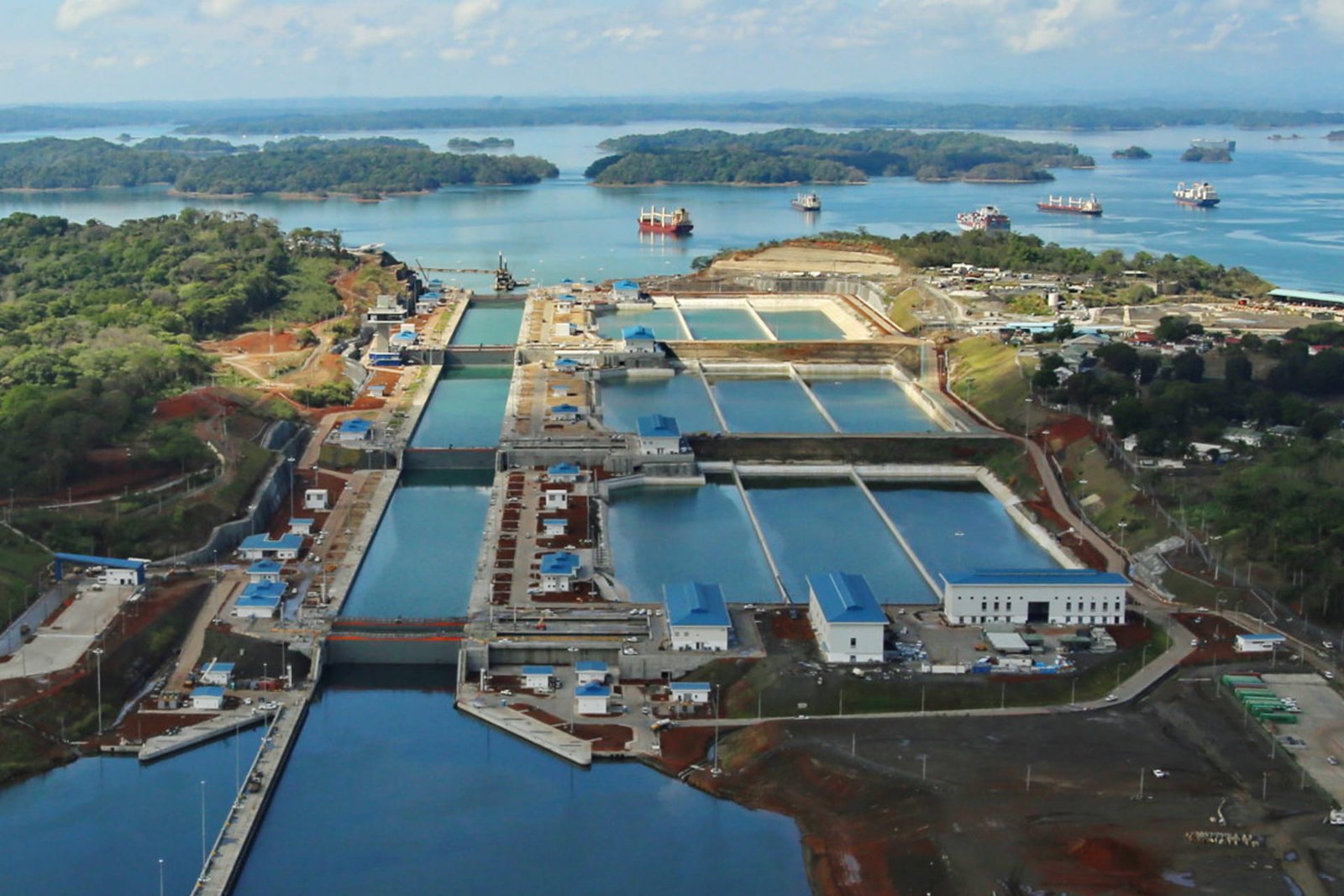
The Panama Canal, expanded by Webbuild in June 2016, has strengthened its role as the world’s maritime logistics hub. In 2025, 13,404 ships sailed between the Atlantic and Pacific Oceans, transporting approximately 489 million tons of goods and generating $5.7 billion in revenue.
These two canals, one a nexus between Africa, Europe and Asia, and the other a universal gateway connecting the entire Americas with the rest of the world, are increasingly identified as strategic safeguards for the continuity of global maritime trade and distribution chains.
Such continuity will be strengthened by the development of a high-speed, high-capacity rail network that is essential for connections with major roads and water arteries. In Italy, one of the most rail-oriented countries in Europe, Webuild has signed all of the most important rail mobility projects.
With over 13,648 km of railway lines built around the world, Webuild is now one of the world’s leading companies in the design and construction of railways, from Europe to the Americas, from the Arab world to Australia. From early infrastructure developments to modern, high-speed, high-capacity networks, ongoing projects will reduce average journey times by 41%, provide around 34 million people with a safe, efficient and low-emission transport system, and contribute to an estimated 6.6 million tonnes of CO₂ savings per year.
From 20th century highways to modern aqueduct tunnels, what unites these experiences is a cultural continuity before a technological one. Infrastructure investment and development is a way for societies to manage risk, space and time. This reduces uncertainty, keeps complex systems operational, and maintains confidence in the future.
This is the vision that also emerges from the cultural project Evolutio. The exhibition, which runs until April 7 at the Leonardo da Vinci National Museum of Science and Technology in Milan, showcases more than a century of infrastructure construction, understood not just as a series of constructions, but as a process by which communities and regions have built stability and security.
