


A green mobility revolution is spreading across Africa. But challenges such as the prohibitive costs of electric vehicles (EVs) and inadequate infrastructure have raised questions about whether the continent’s clean mobility movement will really take off.
Cyclical increases in fuel prices, demand for cost-effective transportation, and environmental concerns are driving an electric vehicle revolution in Africa. Meanwhile, countries around the world are exploring innovative ways to decarbonize road transport, which currently accounts for 15% of global emissions.
EV race
African governments and private companies are striving to capture a share of the rapidly growing electric vehicle sector, which is expected to reach US$21.39 billion by 2027, up from US$11.94 billion in 2021. This rapid increase presents both opportunities and challenges.
Rwanda, for example, is a pioneer in the transition to EVs, introducing a number of policy interventions and incentives to attract investors. These include free land for charging stations, lower electricity prices for electric vehicles, and exemptions from value added tax, import duty and excise duty on electric vehicles and spare parts.
The Tunisian side reduced tariffs on electric vehicle charging equipment to 10%, while reducing VAT by 7%.
Uganda, which produced Africa’s first electric bus in 2016, has also exempted all electric vehicles from VAT, while exempting two and three electric vehicles from import duty. It has also introduced special electricity rates at charging stations.
Meanwhile, the country’s private sector is increasingly determined to embrace green mobility through partnerships with governments and the entry into local aggregations of vehicles with little or no tailpipe emissions.
In Kenya, up to 40 local e-mobility startups have raised US$52 million in funding, the highest amount on the African continent.
Startup companies leading the EV revolution
These startups offer a variety of services, including local assembly and sales, asset financing, and batteries as a service.
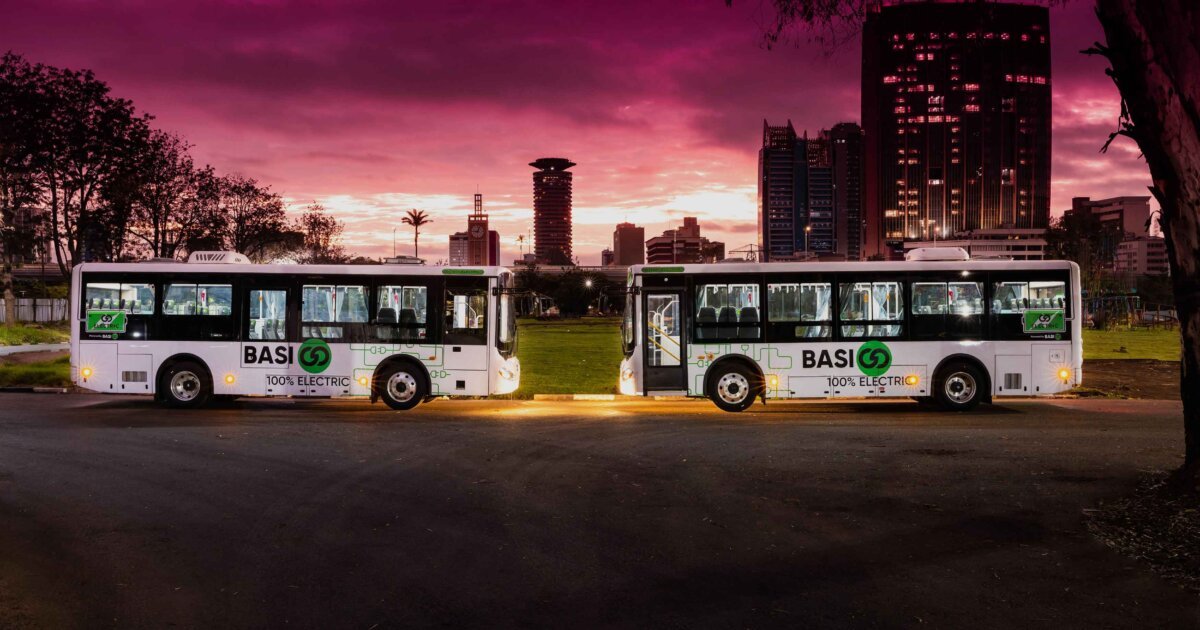
BasiGo is one of them. The green mobility startup, which launched a pilot with two public transit buses in 2022, has now grown its fleet to 17.
In total, the buses have traveled more than 1 million kilometers, carried more than 1.3 million passengers and prevented the release of more than 200 tons of carbon dioxide.
“Kenya, and by extension Africa, is poised for a green mobility revolution,” BasiGo Chief Revenue Officer Moses Nderitu told FairPlanet.
“When we first entered the market and rolled out mass transit buses, we thought passengers were excited because it was a novel idea. But two years later, that enthusiasm is still there. More and more commuters prefer electric buses to diesel-powered buses.”
“Currently, the bus company has 400 buses on its waiting list. If there is no demand, the bus company will not arrange buses.”
Additionally, to streamline clean transportation through mass transit buses, BasiGo has installed three charging stations and hopes to open seven locations by the end of 2024.
The company is working with oil marketing companies to install charging stations at oil marketing companies’ gas stations, allowing buses to charge at night when electricity usage is low.
Eventually, the company hopes to start assembling buses locally and operate 1,000 electric buses in Kenya by 2026, expanding into Rwanda and eventually other African countries.
“Over the past year, e-mobility in Kenya has moved from being on the fringes to being discussed at the highest levels, with the president actively championing the introduction of clean vehicles,” Nderitu said. “This shows that the future of mobility is green.”
SolarTaxi is a Ghana-based startup that provides clean and environmentally friendly commuting solutions, and also assembles and maintains electric vehicles such as cars, bicycles, and tricycles. Since its founding in 2018, the company’s services have expanded to include charging unit installation, battery pack manufacturing, bicycle modification, and more.
To strengthen its business operations, the startup has trained around 100 women in mechanical and automotive engineering through the Women’s Engineering Academy. Women will be responsible for assembling and maintaining EVs and charging units.
Jorge Appia, CEO of Solar Taxi, told Fair Planet: “We are committed to contributing to a clean and healthy environment through sustainable transportation.”
“The desire to empower women, evident in our workforce and training programs, adds an important social dimension to our mission.”
The e-mobility company maintains seven branches in Ghana and is also expanding into Nigeria and Ivory Coast to meet growing demand.
“We are seeing increased awareness and acceptance of electric vehicles in the market driven by environmental concerns, rising fuel prices and, most importantly, the need for cost-effective transportation solutions,” Appiah said.
bumpy road
However, it hasn’t always been a smooth road for players in the sector. The initial cost of purchasing an electric vehicle and prohibitive charging infrastructure have made it unpopular with some customers.
Up to $9 billion will be needed to finance sustainable electric two-wheeler markets in Kenya, Nigeria, Uganda, Rwanda and Ethiopia by 2030, according to a Shell Foundation report.
“Electric two-wheeler assemblers and importers are unable to import on a large scale because they cannot pay upfront fees,” the report said.
In countries like Kenya, considered a pioneer in the continent’s electric vehicle sector, limited investment has put a brake on the scale of EV manufacturing, even as many companies have started operations.
However, companies in the field have become innovative to increase production. For example, BasiGo has introduced a financing model called “Pay as you drive,” which allows owners to pay for their electric buses as they use them, rather than paying in full upfront.
They pay BasiGo based on the kilometers they drive each day. It is also possible to purchase a bus without batteries, but this will consume a large portion of the final purchase cost.
Another option is to pay the deposit and balance according to the agreed terms and get the bus and battery.
Meanwhile, SolarTaxi has introduced a range of affordable solutions for those who cannot prepay for a vehicle. This includes rental options specifically for e-bikes. Those interested can rent a two-wheeler for an agreed amount and period.
Lease-to-own options, on the other hand, allow users to lease an electric vehicle for a predetermined period with agreed payment terms. At the end of the lease period, you can purchase the vehicle at a predetermined price.
Stakeholders recommend other financing models, such as tapping into carbon markets, to make EVs more affordable.
“If someone were to use 80 per cent renewable energy, save 50 tonnes of carbon dioxide per year from buses, and monetize that carbon as the fleet grows, then renewable energy in public transport would become attractive, given that 60 per cent of journeys in a country like Kenya are made in public vehicles,” Nderitu said.
Athletes are also dealing with poor infrastructure, including a lack of sufficient electricity, power outages, and inadequate charging stations. BasiGo said it is working with utility companies to increase charging stations and vehicle charging at night, when power consumption is minimized.
Popular reluctance to adopt green mobility, influenced by limited information and the industry’s perception that electric vehicles are a threat to the automotive sector, also hinders uptake.
“The electric vehicle sector is an alternative, not a replacement for diesel vehicles,” Nderitu said.
“The transition to green mobility is inevitable. Think of how computers have replaced paperwork. There may be apprehensions, but the benefits this sector brings in terms of job creation, environmental protection, people’s health, urbanization and streamlining the transport sector are hard to come by.”
SolarTaxi’s Appiah agrees. “We see the electric vehicle industry not as a threat, but as an opportunity for innovation and growth,” he said.
“Embracing sustainable practices is the future and the automotive industry can evolve by adapting to these changes.”
Is green mobility the future?
As countries aim to reduce emissions by 2030 and reach net-zero status by 2050, electric vehicles are emerging as a vital driver to reach that goal. However, the sector continues to face challenges related to policy, legal frameworks and commercial hurdles.
“The transition to green mobility will give the planet a fighting chance in this (era) of climate change,” Nderitu said.
“If we can reduce emissions around the world using electric vehicles and other clean transportation technologies, that is a step in the right direction and we should embrace this.”
Image by BasiGo.
