


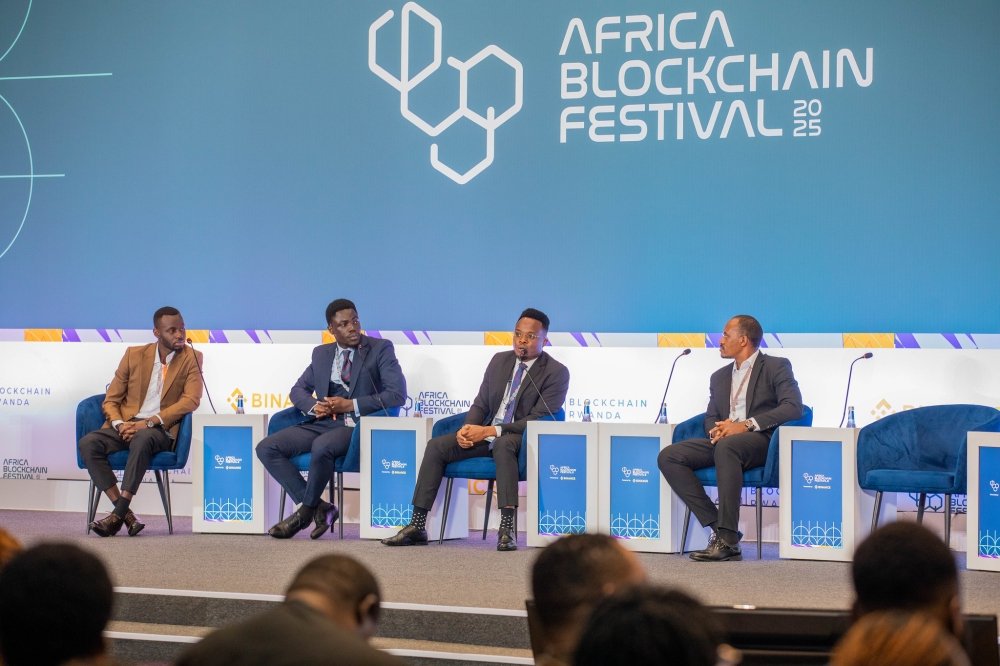
As Africa continues to embrace digital transformation, experts say it needs to move from being a passive consumer of technology to being an active creator and innovator. They emphasized that indigenous blockchain and artificial intelligence (AI) solutions are essential to promoting inclusive and sustainable development.
The call was made during the first African Blockchain Festival (ABF) held at the Kigali Convention Center from November 7th to 10th. The festival brought together more than 1,000 attendees, including regulators, investors, fintech leaders, policymakers and academics, to explore how blockchain and AI can shape the future of Africa’s economies.
Unlike traditional conferences, the festival format combines culture, creativity and collaboration, symbolizing unity and innovation aimed at inspiring the entire continent.
Also read: Why lenders need to adopt AI-powered credit scoring, blockchain technology
The inaugural ABF aimed to showcase how blockchain and artificial intelligence (AI) can transform African economies, boost financial inclusion, attract global investment, and build a connected community of African innovators.
Speaking at the opening ceremony, the festival’s chief convener, Olubunmi Febanwo, described the event as a “dream come true” in an effort to position Africa as a global innovator rather than a reluctant adopter of technology.
“We have worked tirelessly with the unwavering belief that Africa is poised to move from being a mere consumer of technology to a global innovator,” Mr Febanwo said.
He praised the Government of Rwanda, the Ministry of ICT and Innovation, and partners such as the Rwanda Blockchain Association (RBA) and Binance (title sponsor) for their help in organizing the event. Other major sponsors of the event include Mexc, Tether, Hyperbridge, Okx, Bybit, Obiex & Stellar.
“We didn’t build this just as another conference. We built this because we saw critical needs, fragmentation, and innovators being built in silos,” he said.
“We have built the Africa Blockchain Festival to be that solution: a single platform built on three core pillars: policy, innovation and capital.”
Febanwo also unveiled plans for ABF Labs, a new initiative to turn festival discussions into actionable projects. These institutes bring together innovators and government agencies to research and address Africa’s most pressing challenges in data systems, infrastructure, agriculture, and civil services.
Also read: How Rwanda is leveraging blockchain technology to facilitate land transactions
In addition, ABF Labs will also house a Venture Studio, which aims to work with innovators to ensure that they receive both technical support and a clear structure for their integration into the corporate world.
Rwanda’s digital transformation efforts
Oreste Lurangwa, Permanent Secretary of Rwanda’s Ministry of ICT and Innovation, reiterated that technologies such as blockchain and artificial intelligence are essential tools in achieving Africa’s vision.
“Technology should help bridge the gap, not widen it. We want a future where farmers in rural villages have the same access to market information as traders in big cities,” Lurangwa said.
“And we also want a future where a patient’s medical history is securely available wherever care is needed.”
Lulanwa highlighted the government’s commitment to Vision 2050 to position Rwanda as a regional innovation hub, adding that policies such as the upcoming Virtual Assets Act under the Capital Markets Authority are aimed at attracting responsible investment in emerging technologies.
“We are using blockchain to build trust not only in finance but also in other important areas such as governance, where we are testing blockchain for land registration and public procurement to ensure records are secure and cannot be tampered with,” he added.
He also mentioned the Central Bank Digital Currency (CBDC) pilot, which will explore new ways to foster innovation and financial inclusion, alongside AI applications in healthcare, agriculture, and public services.
“Let us align our policies and connect our digital systems so that innovations born in Kigali can grow across the continent. Africa’s digital future will not be built by one country or company. It will be built by everyone in this room together,” he added.
The pilot phase of Rwanda’s digital currency is scheduled to begin in 2024, according to the Central Bank of Rwanda. At a joint session of the two chambers on December 1, Central Bank Governor Soraya Hakjiaremiye said a preliminary pilot round with financial sector staff would begin to test cross-border transactions to help assess both efficiency and cost.
From regulation to innovation
Norbert Haguma, Chairman of the Rwanda Blockchain Association (RBA), reflected on the association’s growth since its establishment in 2017 and its role in shaping Rwanda’s blockchain ecosystem.
He highlighted the association’s long-standing resilience in encouraging local and regional community growth and policy change, describing the current situation as a post-regulation era.
“This is a time when innovation is finally clear. It’s a time when investments, jobs and real-world applications start to flourish,” Hagma added.
“This is not just a milestone for Rwanda; it is a signal to Africa and the world that our continent is ready to lead in the blockchain era. For too long, Africa has been a testing ground for other people’s technologies.”
He noted that Rwanda’s example has inspired other African countries, and regional cooperation is now extending to Nigeria and South Africa, helping to shape policy debates and broader implementation of the ABF.
What can we expect as ABF advances?
In addition to insightful discussions and cultural exchanges with leading speakers from around the world, the festival will feature workshops and training, live exhibitions, startup pitch competitions, business matching, and more.
