


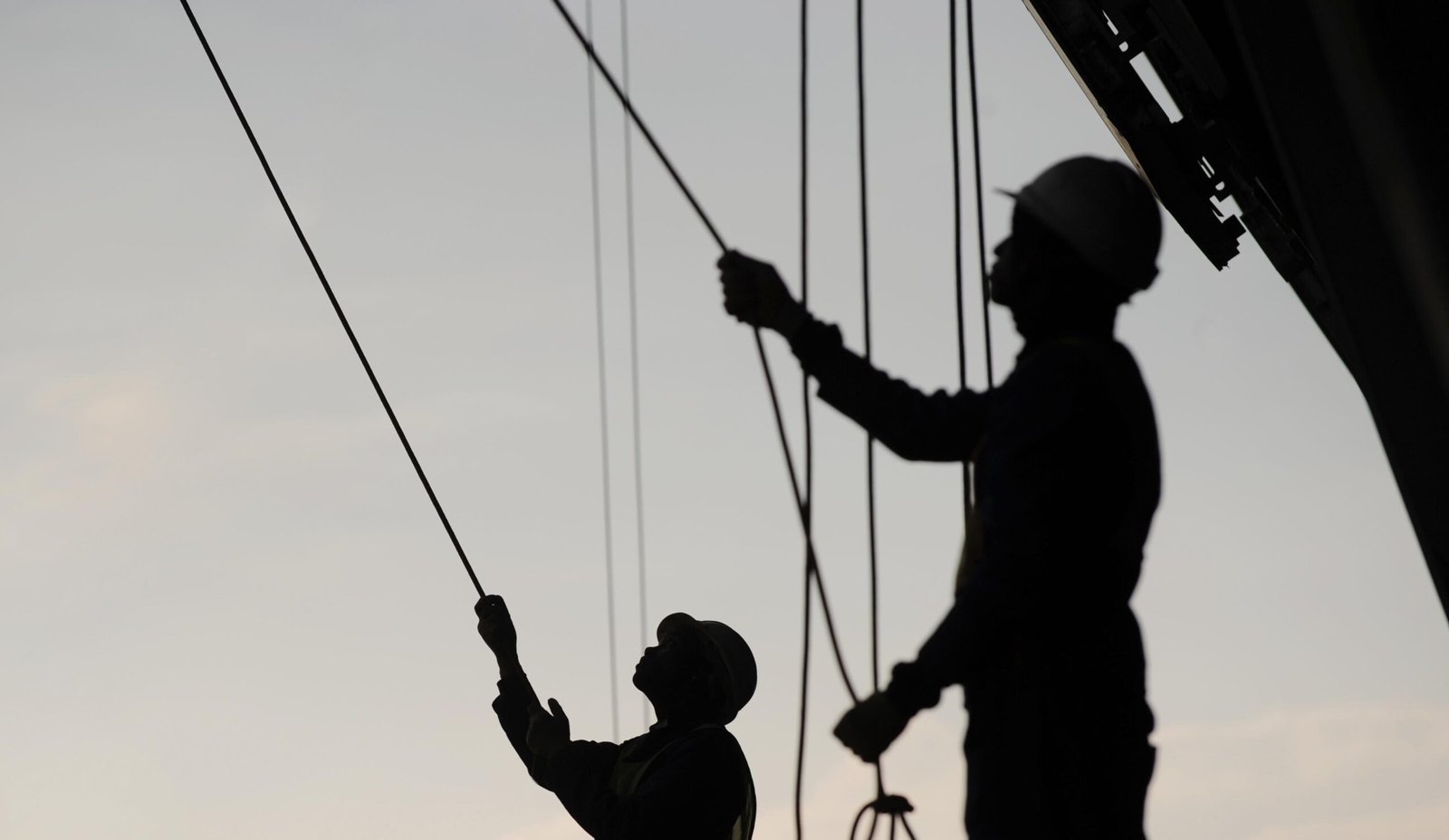
The main focus of this year’s Tokyo International Conference on African Development (TICAD), like previous events, is to channel Japanese investment into Africa’s infrastructure. In theory, Japan is an ideal partner for African countries seeking to develop energy, transportation, and communications infrastructure. Most of Japan’s largest financial institutions have strong balance sheets and seek to invest in projects that provide long-term returns.
Japanese investors are often in a position to provide capital on relatively attractive terms due to low domestic interest rates. Progress has been made in promoting cooperation. At the last TICAD in 2022, Japan announced a target of $30 billion in public and private sector investment in Africa, much of it going to infrastructure projects. Japan’s Ministry of Foreign Affairs claimed in a report last year that it “continues to make good progress” towards achieving this goal.
In reality, however, Japan’s role in Africa’s infrastructure development is being overshadowed by some of its geopolitical competitors.
While Chinese construction teams have long been a common sight across Africa, with many high-profile projects funded and developed by companies backed by the Chinese government, Japan has played a less prominent role.
Airi Ikedo, strategic director at Index Strategy, a project management firm specializing in public-private partnerships (PPPs) in the infrastructure sector, says there is still a “lack of understanding” among Japanese companies about the risks and opportunities available in Africa’s infrastructure sector. “When we have initial discussions with Japanese companies, one of the reasons they are reluctant to enter the African market is basically the distance from Japan.”
Deepening understanding and addressing misunderstandings are essential for the Japan-Africa infrastructure relationship to develop.
build a bridge
Perhaps the most famous Japanese project in Africa is the Bridge of Freedom over the Nile in Juba, which opens in 2022. Before its construction, residents of South Sudan’s capital relied on a single bridge.
A rickety intersection. The new $91 million steel arch bridge was funded by JICA, Japan International Cooperation Agency. The Japanese company Dainippon Construction was the prime contractor, and the work was supervised by another Japanese company, CTI Engineering International.
This is one of several infrastructure projects that Japanese private companies are working on in close collaboration with other Japanese public institutions such as JICA and the Japan Bank for International Cooperation.
Ikedo told African Business that the Japanese government started trying to promote PPP over the past decade. JICA has a system called Private Investment and Loan, which allocates funds to cover the cost of feasibility studies to Japanese companies that are willing to invest in projects.
Index Strategy is currently working on a PPP road construction project in Ghana. The project stems from a Memorandum of Understanding signed between the governments of Ghana and Japan after TICAD 2019. A feasibility study has now been completed and Index Strategy has arranged a consortium that includes Japanese engineering firm Maeda Construction and partners from Portugal and Ghana.
The consortium hopes to sign a “base agreement” at this year’s TICAD that will serve as the basis for contract negotiations ahead of the project’s first phase of construction, which begins next year.
Ikedo believes that eventually more Japanese companies will become involved in infrastructure projects in Africa, but added that patience is needed.
“We think it will take time and we need success stories,” she said, adding that the lack of proven success stories in PPP projects is an obstacle in persuading Japanese companies to invest in infrastructure.
important minerals
Another area where cooperation between Japan and Africa can be expected is in the area of so-called critical minerals, which are essential for digital technologies and energy systems. Although Japan is a major industrial country, it has almost no mineral resources and relies on imports for raw materials. Given that strategic industries such as shipbuilding, electronics and semiconductor manufacturing depend on critical minerals, securing this supply is a key priority.
The Japan Metals and Energy Security Agency (JOGMEC) has signed agreements with Namibia, the Democratic Republic of the Congo and Zambia in 2023, with the aim of securing investment opportunities for Japanese companies in the development of critical minerals.
Ankit Khandelwal, head of African sovereigns, development finance institutions (DFIs) and blended finance at Mitsubishi UFJ Bank, says major Japanese companies are keen to invest in this area.
“Japanese trading companies are focused, motivated and interested in investing in natural resources and significant mineral assets,” he says. “And when you invest in natural resources, especially in the mining sector, you also need to build the infrastructure associated with that. And I think there is investment going on there as well.” Khandelwal believes Japan does not want to fall behind its geopolitical rivals in the race to strengthen security of supply. “We focus on
“It’s being looked at by other regional powers like the US and China, and I’m sure Japan will invest in this area as well,” he says.
The Lobito Corridor, which connects mining operations in the Democratic Republic of the Congo with rail and port infrastructure through Angola, could be a model that Japan seeks to emulate. Under the Biden administration, the United States worked to repair infrastructure along the corridor. The plan is “a perfect example of what can be achieved with government support,” Khandelwal said. “It wasn’t a Japan-centric project, it was a US-centric project. But it could be a template for how we can look at these projects.”
The final frontier of infrastructure
Japan is a major player not only in more traditional energy and transportation infrastructure projects, but also in digital and satellite technologies that are becoming increasingly important in the delivery of essential services. Indeed, the country’s renowned technological prowess means Japanese companies are well-positioned at the intersection of infrastructure and technology.
One example is Space Shift, a Japanese company that uses artificial intelligence to provide insights from multiple types of high-resolution satellite imagery. This includes data from synthetic aperture radar satellites, which perform observations based on reflection information captured by radio waves. “Africa is a huge opportunity for us,” says CEO Shigeo Kanemoto. “This is a frontier for us to expand on.”
Kanemoto says a key use case in Africa is the ability to monitor agricultural land. For example, Nigeria is currently working on a project to monitor farmers’ historical land use.
This information helps farmers receive a credit score that can be used for microfinance evaluation.
Satellite crop growth monitoring can also help predict seasonal yields. Authorities can use this information to advise farmers on crop selection, harvesting, and planting times.
Spaceshift is supported by JETRO, the Japan External Trade Organization, to find business partners in Africa. “We cannot expand our business in Africa alone,” Kanemoto says. “There’s a cultural barrier, a language barrier.” Working with local partners to bring technology to African customers will be key to future success, he says.
Ultimately, Kanemoto is confident that Japanese technology provided with the help of space infrastructure will be enthusiastically accepted in Africa. “I feel a hunger for new technology,” he says.
