


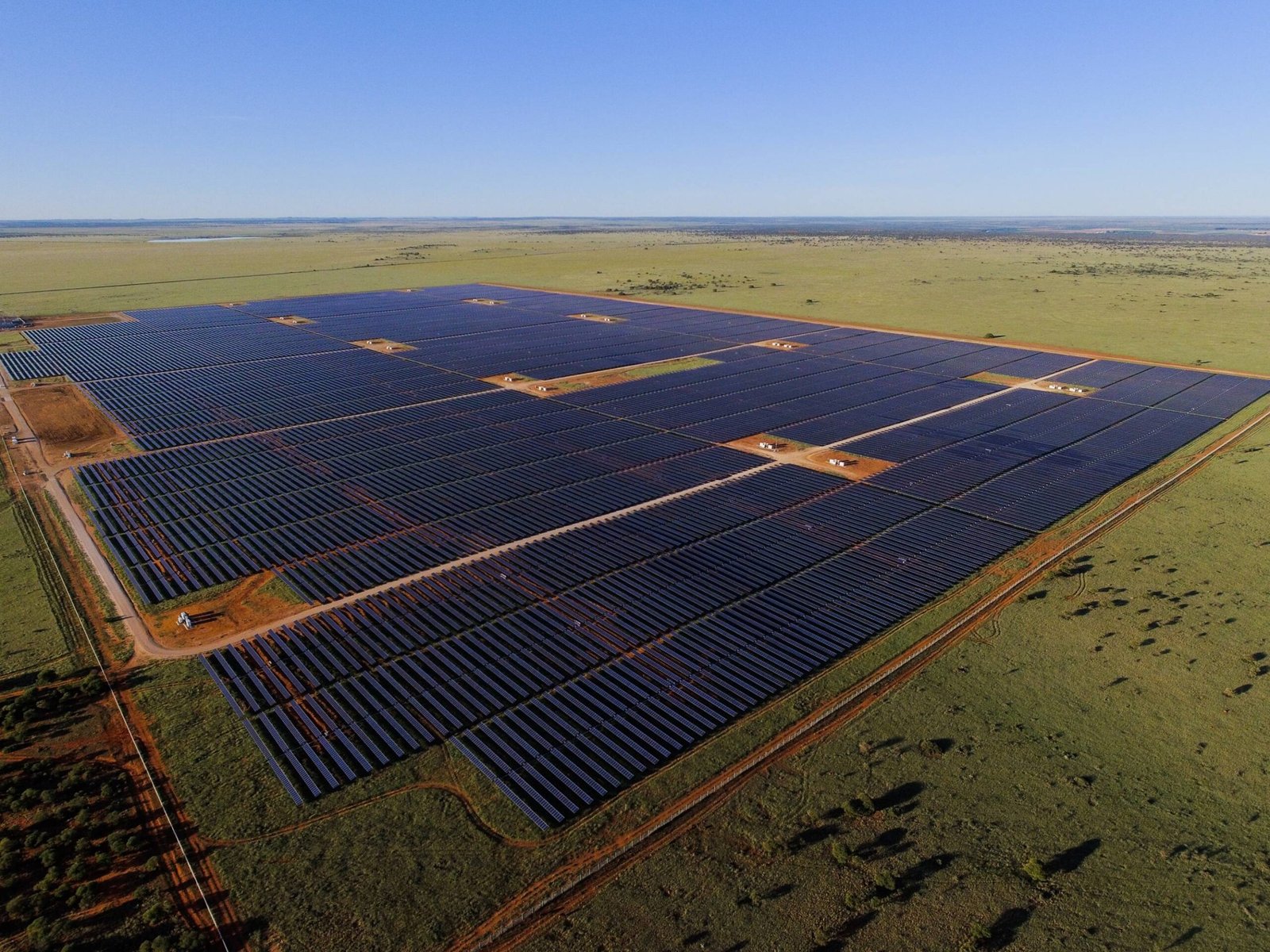
Juwi Renewable Energies has announced that it will begin construction of three solar power projects in South Africa in 2025 with a total capacity of 340 MW and an investment of more than R6 billion (US$321.3 million). The company will also operate and maintain the facility.
The project includes a 120MW solar photovoltaic (PV) facility for data center provider Teraco Data Centers in the Free State province, which will supply energy to data centers across the country. Once fully operational, the power plant is expected to generate more than 338,000 MWh per year.
Another project scheduled to begin construction is the 120MW Parde Valley solar power facility in Mpumalanga for local chemical and energy company Sasol and French industrial company Air Liquide. Juwi will undertake the project in partnership with France’s TotalEnergies’ Independent Power Producer (IPP) team and local Mulilo and Reatile Group, which achieved financial completion of the project in November 2024.
Sasol and Air Liquide signed a power purchase agreement (PPA) for the Paarde Valley facility in February 2023. The plant will decarbonize Sasol’s Secunda site, where Air Liquide operates the world’s largest oxygen production plant. It is scheduled to begin commercial operation at the end of 2026.
The third project that Juwi will undertake in 2025 is the 100MW Sonvangar solar farm in the Free State province, in partnership with local company Pere Green Energy. The power plant will supply power to ferrochrome smelters operated by a joint venture between Swiss mining company Glencore and local Melafe Resources in the north-west, Mpumalanga and Limpopo provinces.
Together, these schemes are planned to generate more than 1 million MWh of clean energy per year, enough to power 200,000 South African homes and contribute about 5% of the country’s total solar capacity. The project will also create more than 2,000 jobs during construction.
“These projects highlight the critical role of private sector leadership in driving South Africa’s energy transition,” said Richard Doyle, managing director of Juwi Renewable Energies.
According to the company, the start of 2025 marked significant progress for South Africa’s energy sector, with the Electricity Regulation Act coming into force in August last year and the announcement of preferred bidders in Tender Window 7 of the government’s Renewable Energy Independent Power Producer Procurement Program (REIPPPP) in December.
The Electricity Regulation Act sets out wide-ranging reforms to South Africa’s electricity sector to increase competition, reduce energy costs, increase investment in new generation capacity and establish an independent transmission company to oversee the national grid. The law also provides for an open market platform to enable competitive wholesale and retail buying and selling of electricity.
Meanwhile, REIPPPP bid slot 7, launched in December 2023, has eight bidders appointed with a total contracted capacity of 1,760MW, targeting a capacity of 5,000MW, including 1,800MW of solar power and 3,200MW of onshore wind.
South Africa’s latest Integrated Resource Plan (IRP), released in November 2024, targets 26 GW of new renewable energy capacity by 2030, requiring the installation of an average of 6 GW of wind and solar power per year.
“Achieving South Africa’s renewable energy and greenhouse gas reduction targets requires urgent and decisive action from the country’s most energy-intensive sector,” said Letabir Melam, CEO of the South African Solar Power Industry Association (SAPVIA).
“Private sector investment is essential, especially given the high dependence on coal and the carbon-intensive nature of the economy. These projects (implemented by Juwi) will not only accelerate the transition to clean energy, but also highlight innovative business models and solutions, while strengthening the industry’s resilience and global competitiveness.”
Photo: 86MW Drugfontein 2 solar power plant built by Juwi (Source: Juwi)
