


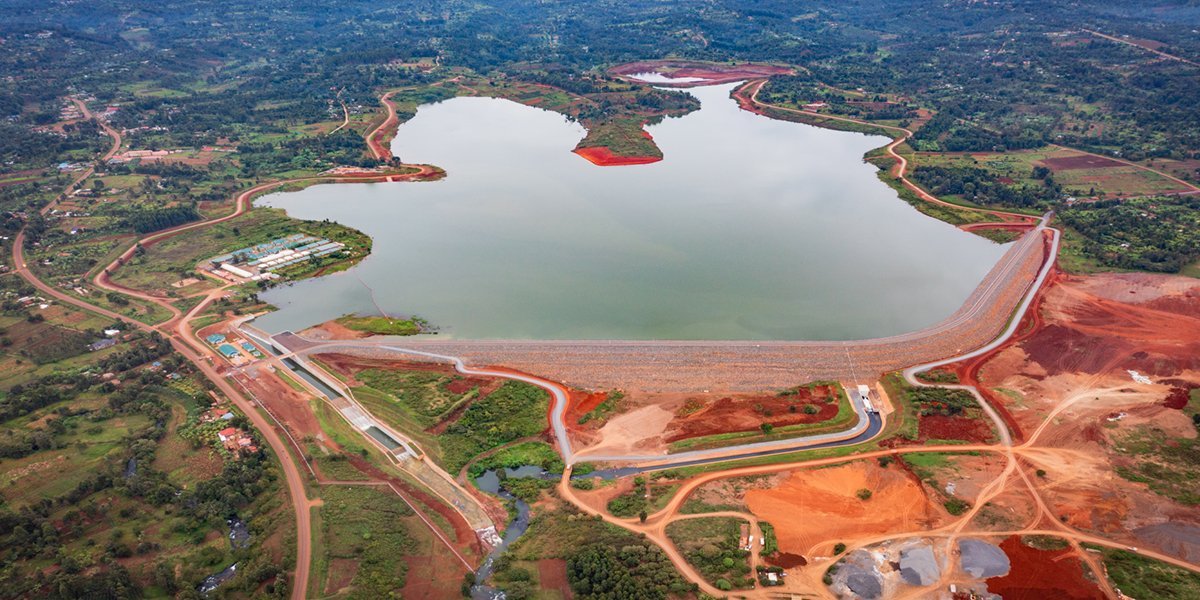
Kenya’s irrigation mega-dam project moved forward this week following high-level talks between government officials and the World Bank aimed at coordinating financing, project preparation and private sector participation ahead of construction on six priority dams scheduled for 2026.
The initiative brought together CPA Principal Secretary for Irrigation Efantus Kimoso and Principal Secretary for Water and Sanitation Julius Korir, along with a World Bank delegation led by World Bank Principal Secretary of State Gillian Rogers. Discussions focused on project construction, risk mitigation, and mobilization of institutional capital for irrigation and water infrastructure.
The World Bank reaffirmed its position as a long-standing development partner in Kenya’s water and irrigation sector. That support includes the National Irrigation Sector Investment Plan, the Mwache Dam project in Kwale County, the national WASH program, and regional cooperation under the Horn of Africa Initiative.
19 dams planned for construction, 6 ready in 2026
During the meeting, the state irrigation department reported on the progress of the 19 mega dam pipeline. Six locations have reached “project-ready” status, securing land for dam construction and downstream irrigation infrastructure. these are:
Gharana Rowat Radat High Grand Falls Basilinga Tusi
The six priority projects are scheduled to begin construction in 2026 and are built on a model in which agricultural grantees develop irrigation schemes and pay for water. Officials said this approach aims to strengthen fiscal sustainability and reduce fiscal pressure.
Private capital mobilization and market structuring
To move this initiative into a bankable program, PS Kimoso outlined four interventions targeting private and institutional capital. These include the use of capital market instruments such as technical advice for deal preparation, structured market sounding through investor engagement, credit enhancement tools and project note issuance.
According to the ministry, the aim is to align the Kenya Irrigation Megadam Project with global mixed finance practices and enable the participation of development finance institutions (DFIs), pension funds, insurance pools and regional capital markets.
Ensuring bankability through SPV and guarantees
Key discussion topics included the construction of coordinated projects through state-owned special purpose vehicles (SPVs) supported by viability gap financing (VGF) and credit enhancement mechanisms. The source of income is expected to depend on water charges and land rental fees.
PS Kimotho proposed establishing a joint working group between the Ministry, the World Bank and IFC Kenya to accelerate deal preparation and investor interface work.
Comprehensive coordination of water and sanitation
The State Department of Water and Sanitation outlined complementary areas for cooperation, including technical assistance for project preparation, financing for non-revenue water (NRW) reduction, and improving social and climate resilience outcomes across the broader water sector.
Non-revenue water reduction remains a key efficiency objective for utilities around the world, improving service delivery, operational performance, and long-term water security.
strategic results
Officials said the Kenya Irrigation Megadam Initiative is expected to contribute to multiple national priorities, including food security, multi-purpose water storage for climate adaptation, hydropower-related components under some dams, expanding agricultural value chains and improving regional water security in the Horn of Africa.
Additionally, the program is positioned to support Kenya’s medium-term planning framework by reducing weather-related agricultural losses, stabilizing irrigation-dependent production, and enabling the integration of smallholder and commercial agriculture. Officials noted that dams could strengthen livestock resilience in arid and semi-arid counties where drought cycles remain a major cause of vulnerability and food insecurity.
This initiative is in line with Kenya’s broader transition to climate-resilient, multi-sector water investments, supported by mixed finance structures. The consultation is part of ongoing collaboration between development partners and the Government of Kenya on the implementation of the National Water Investment Plan and the National Irrigation Sector Investment Plan, both of which prioritize coordinated infrastructure development, increased private sector participation and sustainable financing models.
