


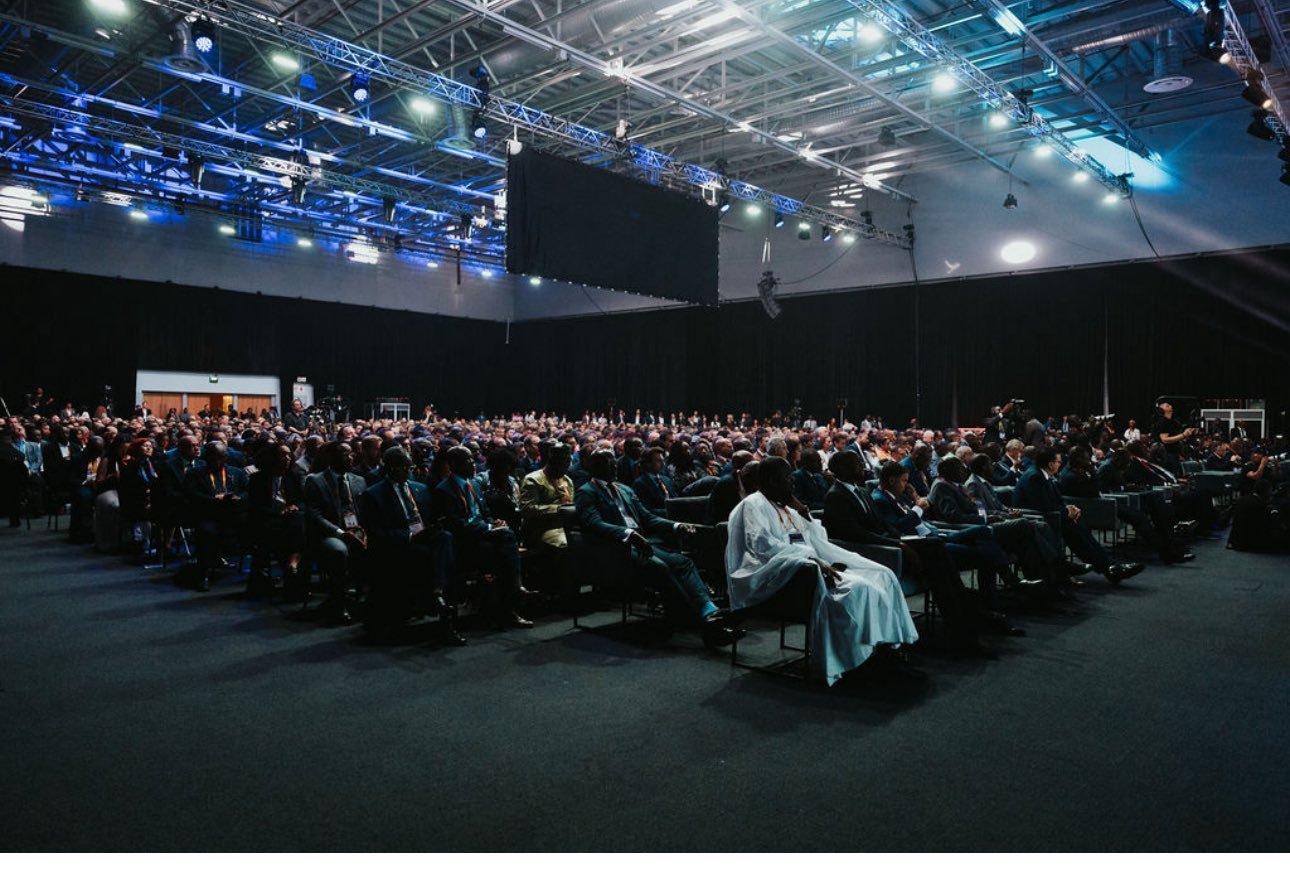
The 2025 Africa Energy Week (AEW), held in Cape Town earlier this month, reinforced Africa’s position as the world’s energy hub, bringing together heads of government, IOCs, NOCs and development agencies to discuss investment, policy and growth strategies. Beyond the dialogue, the AEW produced concrete commitments and important outcomes, including renewed confidence in exploration, LNG as a strategic tool, critical minerals as a growth driver, and improved regional policy alignment. The next Africa Investment in Energy (IAE) Forum in Paris, returning in April 2026 as the official deal-making platform and predecessor of AEW, will build on these foundations and provide the space to translate these trends into concrete investments, partnerships and energy projects.
New confidence in oil and gas exploration in Africa
AEW 2025 highlighted the resurgence of African exploration. From Rhino Resources’ gas condensate discovery at Namibia’s Volans-1X to Angola’s etu energias securing structured financing for its Block 17/06 Begonia tieback project, exploration momentum is clearly returning. Across the continent, Equatorial Guinea launched the EG Ronda 2026 licensing round offering 24 offshore blocks, and Namibia advanced its Orange Basin program for First Oil, signaling a significant frontier opportunity. The IOC and African independents alike emphasized rapid multi-well development programs, while Kosmos Energy, Total Energy, Ceplat Energy and Enerjan all confirmed long-term commitments.
Key Takeaways: Investors are now reassessing Africa as a high-potential, investment-ready upstream market with early entry opportunities in both frontier and untapped basins. IAE 2026 will likely expand on these stories with a focus on profitable projects, streamlined licensing, and partnerships that can efficiently scale.
LNG expansion remains a key challenge
Despite concerns about global oversupply, Africa’s LNG sector is gaining momentum. Mozambique’s Coral LNG continues to attract investment, with Eni committing up to $3 billion to local content and community development. Nigeria has introduced stranded offshore gas opportunities encouraged by the government’s new executive order. ExxonMobil is considering an LNG project in South Africa. Regional initiatives such as the Greater Torchu Ahmaim LNG Phase 2 are also progressing. Discussions emphasized balancing export ambitions with domestic gas monetization, demonstrating LNG’s dual strategic role in revenue and energy access.
Key takeaway: Although the global LNG market faces potential oversupply, African projects can still grow by focusing on strategic advantages. These include leveraging proximity to key markets, securing long-term offtake agreements, and ensuring robust infrastructure development to maintain viability in an evolving energy market.
Strategic importance of critical minerals
Africa’s critical minerals are now at the center of the global energy transition. The African Mining Week 2025, held in parallel with AEW in Cape Town, discussed the continent’s vital role in supplying essential materials such as lithium, cobalt and rare earth elements. Experts stressed that global demand for these minerals will need to increase by nearly 500% by 2050 to meet climate change goals, and Africa will be a key player in this surge. Meanwhile, the traditional model of exporting raw minerals is being challenged. Leaders from Zimbabwe, Ghana and Namibia outlined their benefit transition strategies, aiming to increase value addition locally and keep more revenue within the continent.
Key Takeaway: Cross-border mineral partnerships, ESG-aligned mining and frameworks for integrating African minerals into global green energy value chains will take center stage in 2026 and beyond. As investors increasingly focus on sustainable practices alongside the economic potential of Africa’s mineral resources, discussions about balancing industrial growth with environmental stewardship and social responsibility will become important.
Strengthening regional cooperation and policy collaboration
Regional cooperation and policy certainty were central themes at the AEW, highlighted at the OPEC-Africa Roundtable, US-Africa and Russia-Africa consultations, and the West Africa Transformation Margin Panel, which emphasized harmonization of fiscal, licensing and environmental standards. Sierra Leone’s accession to the IEF and the expansion of regional electricity and gas infrastructure initiatives signal progress in continental integration, while ministers from Nigeria, Ghana, Senegal and Gabon emphasized the importance of local content, governance reforms and cross-border frameworks to enable financeable and scalable projects.
Key Takeaways: Paris will be an opportunity to formalize regional policy alignment, accelerate cross-border project development, and establish clear governance structures that reduce risk and foster investment. Key partners and stakeholders who were actively involved in AEW, including the United States, Russia, and the UAE, are likely to continue to advance strategic cooperation and support efforts to unlock Africa’s upstream and energy transition potential.
