


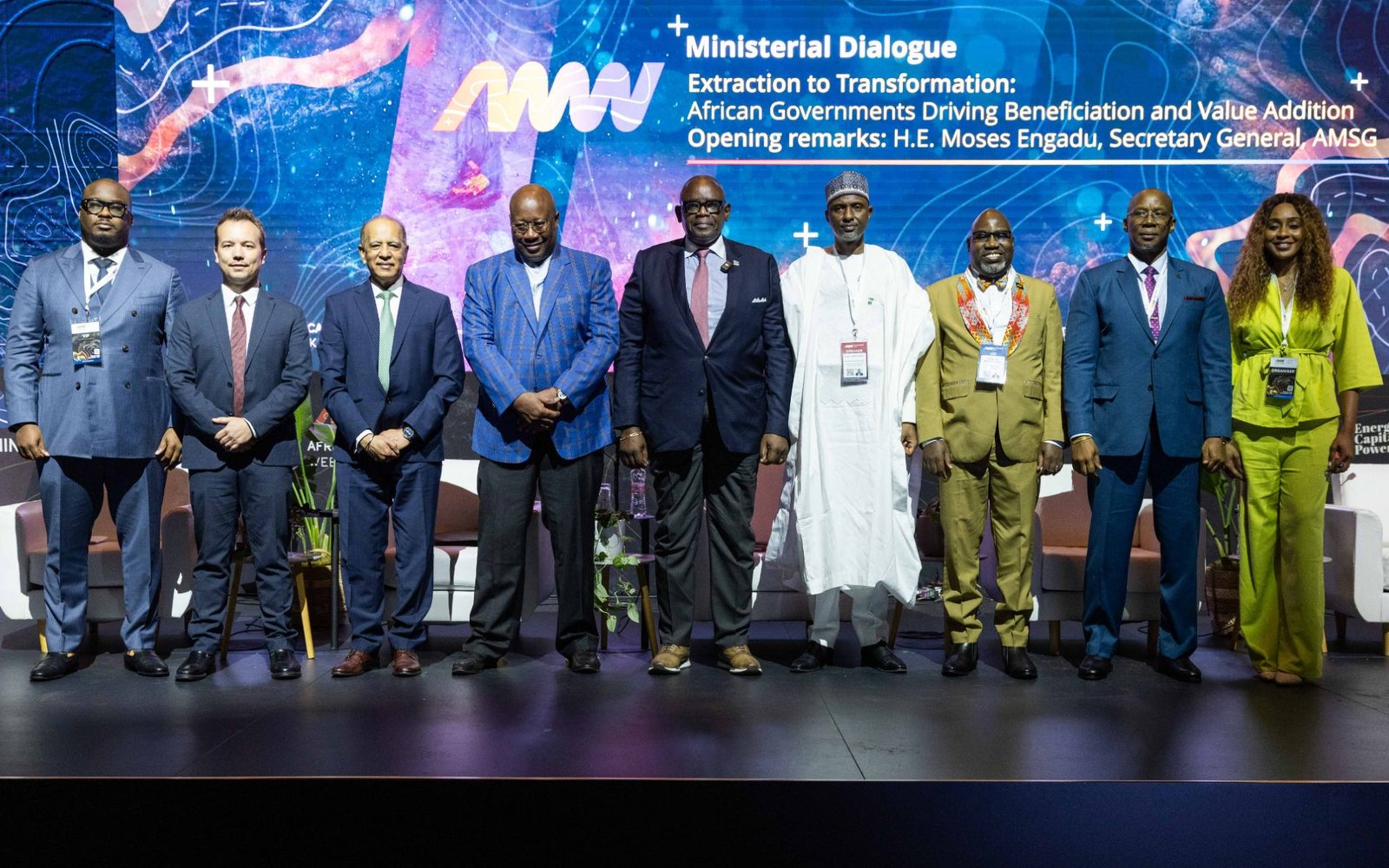
African Mining Week 2025, held in Cape Town from 1 to 3 October, brought together key stakeholders from across Africa and the global mining ecosystem to explore how technology, financial innovation, local benefits and regional cooperation can enhance Africa’s place in the global mining value chain.
Sessions at the event highlighted emerging market trends and practical strategies to address persistent challenges such as limited access to capital, lack of infrastructure, and insufficient industrialization across mineral-rich economies.
Local profits create new investment frontiers
A strong call has arisen for Africa to extend local benefits beyond the export of raw minerals. Speakers emphasized that increasing domestic value addition is key to attracting infrastructure investment, creating jobs and increasing export earnings.
Louis Watum Kabamba, Minister of Mines of the Democratic Republic of the Congo (DRC), highlighted how the Democratic Republic of the Congo is leveraging special economic zones to channel an estimated $24 trillion worth of untapped mineral resources to develop local industries. Zimbabwe’s Mines and Mining Development Minister Winston Chitando has highlighted continued efforts to expand lithium processing capacity and develop three industrial parks near Hwange, Beitbridge and Harare to strengthen the country’s mineral processing ecosystem.
Regional collaboration drives scalable market opportunities
Policy coherence and cross-border cooperation are also emerging as catalysts for large-scale investment. Discussions centered on the development of cross-border trade corridors to enable policy harmonization, infrastructure sharing and more integrated value chains.
Moses Michael Engadou, Executive Director of the Africa Minerals Strategy Group, urged African countries to negotiate with global partners as a unified bloc and adopt a collective approach to mineral diplomacy. Similarly, Nigeria’s Permanent Secretary for Mines, Mr. Yusuf Faruq Yabo, stressed the urgency of developing a continent-wide critical minerals strategy to position Africa as a cohesive and competitive player in the global market.
Technology unlocks efficiency and transparency
AMW 2025 featured prominently the transformative role of technology in reshaping Africa’s mining landscape. The discussion highlighted that digitization, automation and traceability tools are key to increasing efficiency and combating illegal mineral trade. Minister Kabamba shared how AI-driven exploration models are helping to reduce discovery timelines in the DRC from more than a decade to just a few years. Companies such as Minexx and Typhoon showcased blockchain and tokenization solutions designed to enhance transparency and traceability of minerals throughout the supply chain.
Financing models are moving towards sustainability and regional integration
AMW discussions highlighted the need for innovative and locally tailored financing mechanisms, as up to $450 billion will be needed by 2030 to develop transitional mineral projects and meet the 2050 net-zero target. African Finance Corporation and South African Industrial Development Corporation both emphasized the importance of public-private partnerships, targeted incentives and strong ESG frameworks in improving project bankability. Participants also noted that increasing the formalization of artisanal and small-scale mining is essential to expand access to finance and promote equitable growth.
Africa Mining Week will resume in November 2026, bringing together African and international mining leaders once again to build partnerships, secure investment and drive a shared vision for sustainable sector growth. The next edition will build on this year’s momentum and present investors with a deeper pipeline of projects, partnerships and policy coordination opportunities across the continent.
