


The Orange Research Institute, a bellwether of South Africa’s rich cultural heritage, is facing difficulties with reports of unfinished construction.
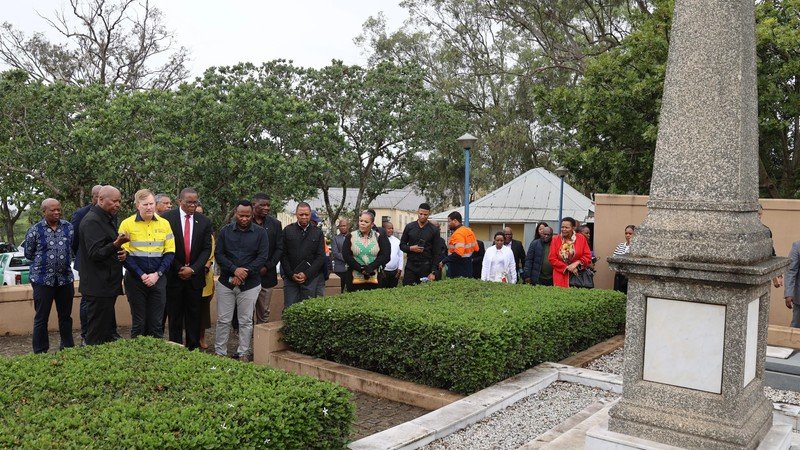
Minister of Public Works and Infrastructure Dean Macpherson on Monday paid an inspection visit to the institute, founded by Dr. John Langaribalele Dube and his wife Noctera, to highlight problems with the long-delayed project and seek solutions.
KZN Amafa and Research Institute CEO Dr Mxolisi Drumka said that while the Aulange Institute is a national and world heritage site, the state government owns the site.
“This project is an example of a mismanaged project,” Drumka said.
Drumka explained that the National Ministry of Sports, Arts and Culture appointed the Independent Development Trust (IDT), but concerns arose about the quality of the workmanship and an independent evaluator determined that the work was inconsistent with the remuneration received, leading to IDT’s removal. A subsequent inspection of the amphitheater structure by a service provider determined that the amphitheater structure was unsound and the existing work was “worthless”, requiring partial demolition. The new implementing agency proposed a R10-million “floating roof” solution, bringing the total cost of the amphitheater to around R29-million by the time the roof was blown off by a storm in 2023.
Drumka said the home purchase was partially completed. Documents say the R1.7 million was paid into a family trust for the ceremony, not for the purchase of the house. A further R1.3 million was required to purchase the house, but the deal did not materialize.

He said that despite unresolved issues, the amphitheater was transferred to eThekwini Municipality last year. Unable to be used due to safety risks and lack of chairs, it remains as a mere structure.
Regarding lessons learned, Drumka said that all stakeholders (national, state, and municipal) must be involved when implementing this type of project.
He said stakeholders must come together to find a solution to revive the project.
Drumka said another pressing issue is that the World Heritage Committee will be knocking on the door, as the site is part of a serial nomination, and that important structural issues, especially the housing part, must be resolved immediately.

IDT board chairman Zimbini Hill said the project had stalled for “a variety of reasons, particularly the availability of funds.”
He explained that the Department of Arts and Culture issued a memorandum of agreement (MOA) in 2012 with a budget of R31 million, which expired in 2016. The budget covered Phase 1 (renovation of the monument) and Phase 2 (fencing and exterior works). IDT has completed approximately 96% of the project at a cost of R21 million.
Hill reported that the fence around the tomb and mansion is 100% complete, and the amphitheater is 92% complete (remaining work includes restrooms, painting, fencing and electrical work).
He said the IDT is prepared to continue its work if reappointed.

KZN public works and infrastructure representative Nkosi Vilakazi said R1.3 million was paid to a conveyance lawyer to complete a property transaction in 2013, but the necessary documents were not signed by all parties. The utility has payment records and is currently negotiating to recover R1.3 million.
Mr Vilakazi confirmed that R1.7 million was paid into a family trust.
His recommendation is for the utility to expedite the recovery of the R1.3 million and carry out a reassessment of housing costs in order to ultimately complete the purchase and transfer.
Mr McPherson said he wanted to see what liability was taken or not meted out to the original contractor.
“I want that money to come back to us. We should liquidate these individuals in their individual capacities and take that money. We’re starting to do that,” McPherson said, adding that they must stop awarding contracts to incompetent entities.
(email protected)
