


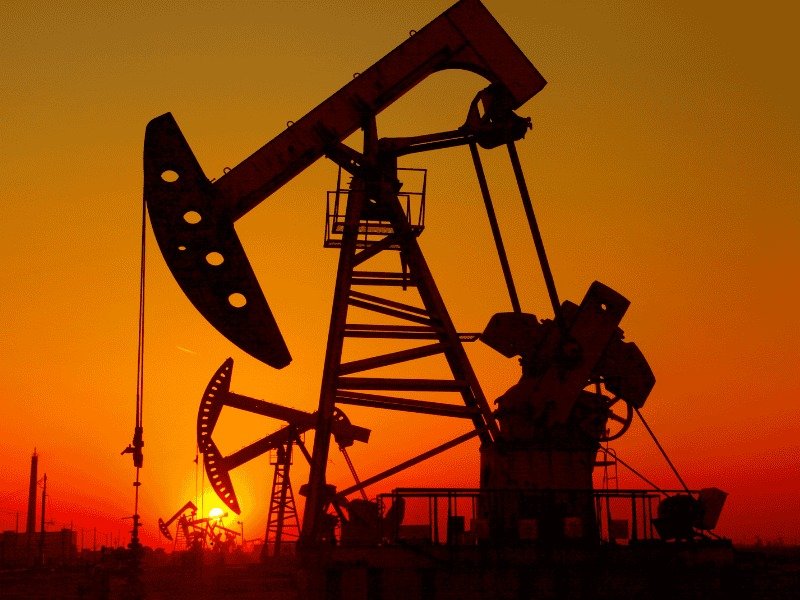
Production at the Mabrouk field has surged to 25,000-30,000 barrels per day (bpd) following the successful start-up of a new initial production unit. This rapid technology upgrade represents a crucial victory for the country’s subnational National Oil Corporation (NOC) in revitalizing dormant infrastructure.
The recovery of this critical asset will act as a catalyst for broader macroeconomic stability across North Africa’s fragmented landscape. By turning the tap back on, Libya signals a transition from instability to a disciplined, resource-driven recovery. Can this momentum really transform a fragile nation into a global energy powerhouse?
Infrastructure recovery: Mabrouk takes the lead
The restart of the Mabrouk oil field, located on the coast of the Sirte Basin, follows a decade of intermittent closures due to instability in the region. The field, managed by Mabrouk Oil Operations, a joint venture between NOC and energy giant TotalEnergies, utilizes new pumping infrastructure to stabilize initial flows. The technical team is currently optimizing these units to ensure sustainable daily production volumes.
Current operations are focused on integrating Mabrouk’s production with the Al Jurf offshore field, located near the Tunisian border. NOC plans to increase total production from these two assets to approximately 40,000 barrels per day by the end of March 2026. This maritime-onshore linkage is essential to maximizing the efficiency of existing infrastructure.
Mabrouk’s restart is part of a series of facility restarts nationwide. In early 2026, the NOC also reported that the Sinawen field in the Narut region had been reinstated and the Al Salil refinery had reached full capacity. These systematic restarts demonstrate that the country’s energy backbone is being steadily, albeit locally, regenerated.
Target: 1.6 million barrels
Libya has set a firm production target of 1.6 million barrels per day by the end of 2026, up from around 1.38 million barrels per day currently. Achieving this will require more than $3 billion in infrastructure investment and the modernization of aging export terminals. The government considers these targets essential to securing national revenue.
In an exclusive interview with Energy Capital and Power in January, Libya’s Minister of Oil and Gas, Dr. Khalifa Abdulsadegh, stressed that the drilling of additional wells and debottlenecking facilities would “unlock the full potential” of the country’s assets. This strategy is bringing major international companies back to the market. Superbigs Eni and BP recently resumed drilling in the Ghadames Basin, while Total Energy and the US’s ConocoPhillips signed a 25-year, $20 billion deal to expand their stake in Waha Oil Company. U.S.-based companies such as Weatherford and ExxonMobil have also announced new initiatives.
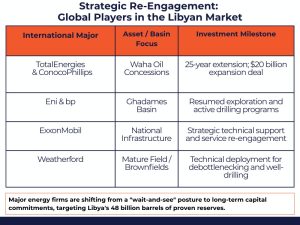
Future prospects depend on whether Libya can maintain an influx of foreign expertise and capital to unearth its 48 billion barrels of proven reserves. While technological advances are evident, long-term growth depends on a stable regulatory environment. The “Renaissance” is moving from a period of recovery to a strategic period of industrial expansion.
Strategic path to sovereign growth
The response to Libya’s energy ambitions can be seen in the consistent technical implementation seen in Mabrouk and Al Jurf. Although political challenges remain, the economic imperative to reach 1.6 million barrels per day will be a stabilizing factor for the national economy. Oil production remains a major driver of national finances and future prosperity.
If NOCs maintain this pace of operations, the current recovery is likely to evolve into an era of durable sovereign growth. The successful implementation of early production units suggests a resilient model for revitalizing mature assets. Libya is once again establishing itself as a large and reliable partner in the global energy market.
